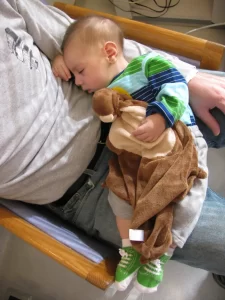
This was quite the experience. James had an at home video EEG (VEEG) over the past couple of days to record his seizure/infantile spasm activity. He is currently on 4 antiseizure meds to control his seizures and spasms which make him sleep most of the day. We’re hoping that we can eventually get him off some of them so he is not so sleepy all the time. So, let’s get to the fun of doing an at home video EEG.
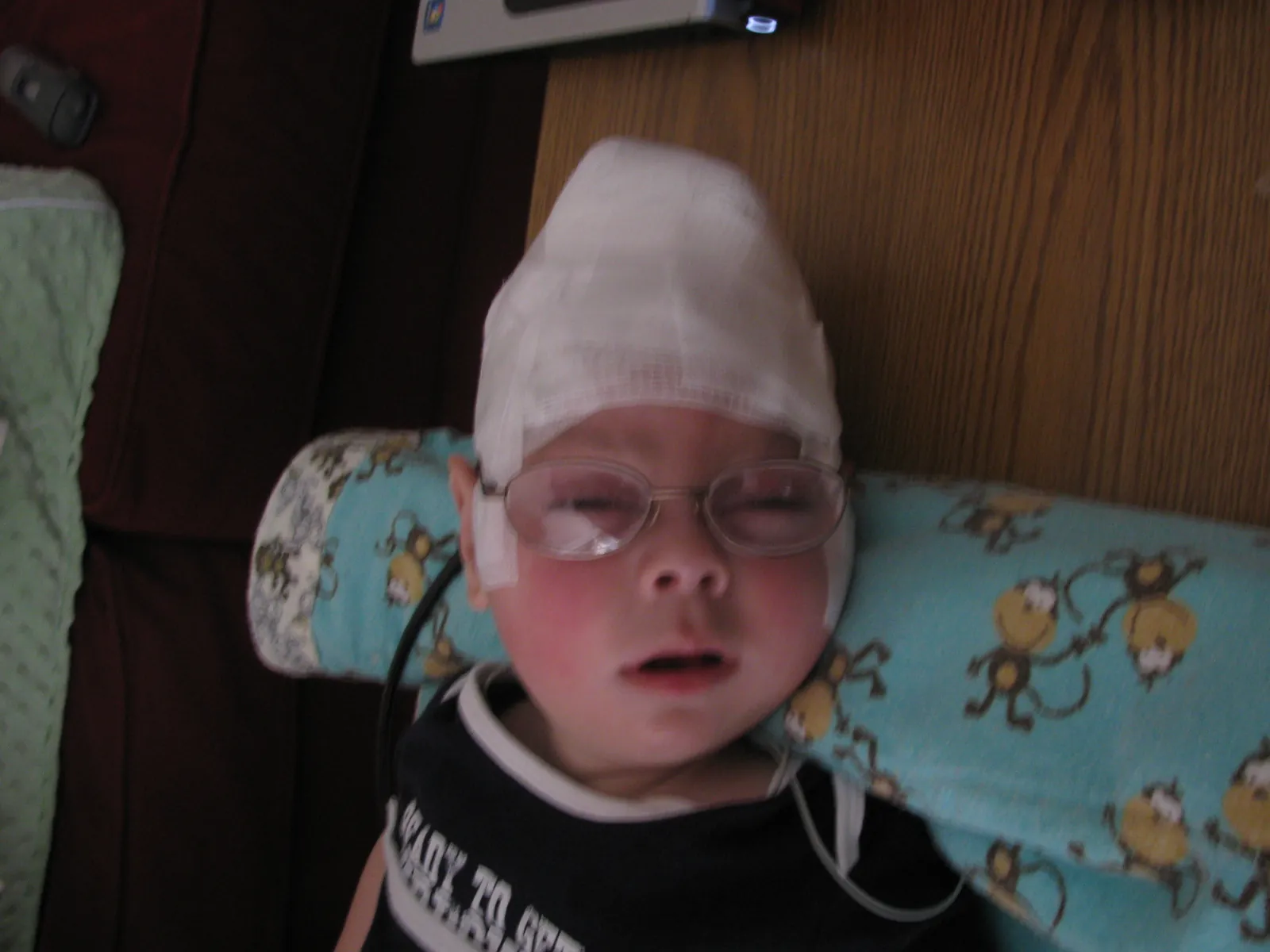
On Wednesday we took James to a local sleep clinic to have all of the EEG wires put on his head and brought home a portable camera/computer that recorded his brain activity over the past two days. If you have ever had an EEG or seen someone taking an EEG, you know how many wires they attach to your head. Then, to make sure all the wires stay in place, they wrap your head with gauze. In a hospital setting this usually isn’t an issue…you are laying on a hospital bed and don’t need to move much. After James had all of the wires put on and his head wrapped, we had to get him home. And since James is unable to hold his head up as it is, we had to take extra care with his head with the extra weight on it. I really wish we had taken a picture of James in the car, but we didn’t think to take one. So here is what James looked like when we got home (sorry it’s a bit blurry):
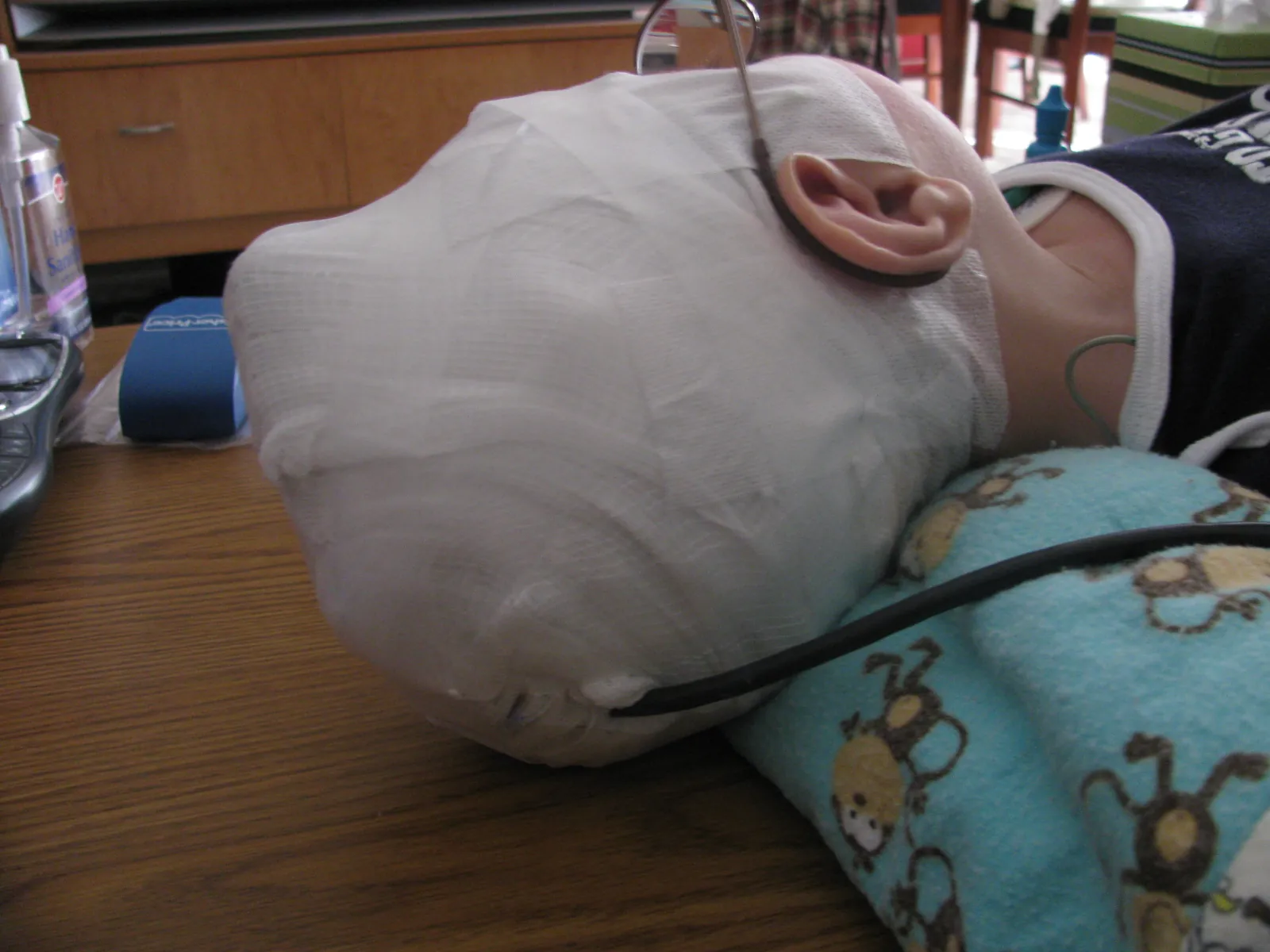
You can’t see all of the wires attached to his head because of the gauze, but all of those wires come out the top of his head as a single cable, which was nice:
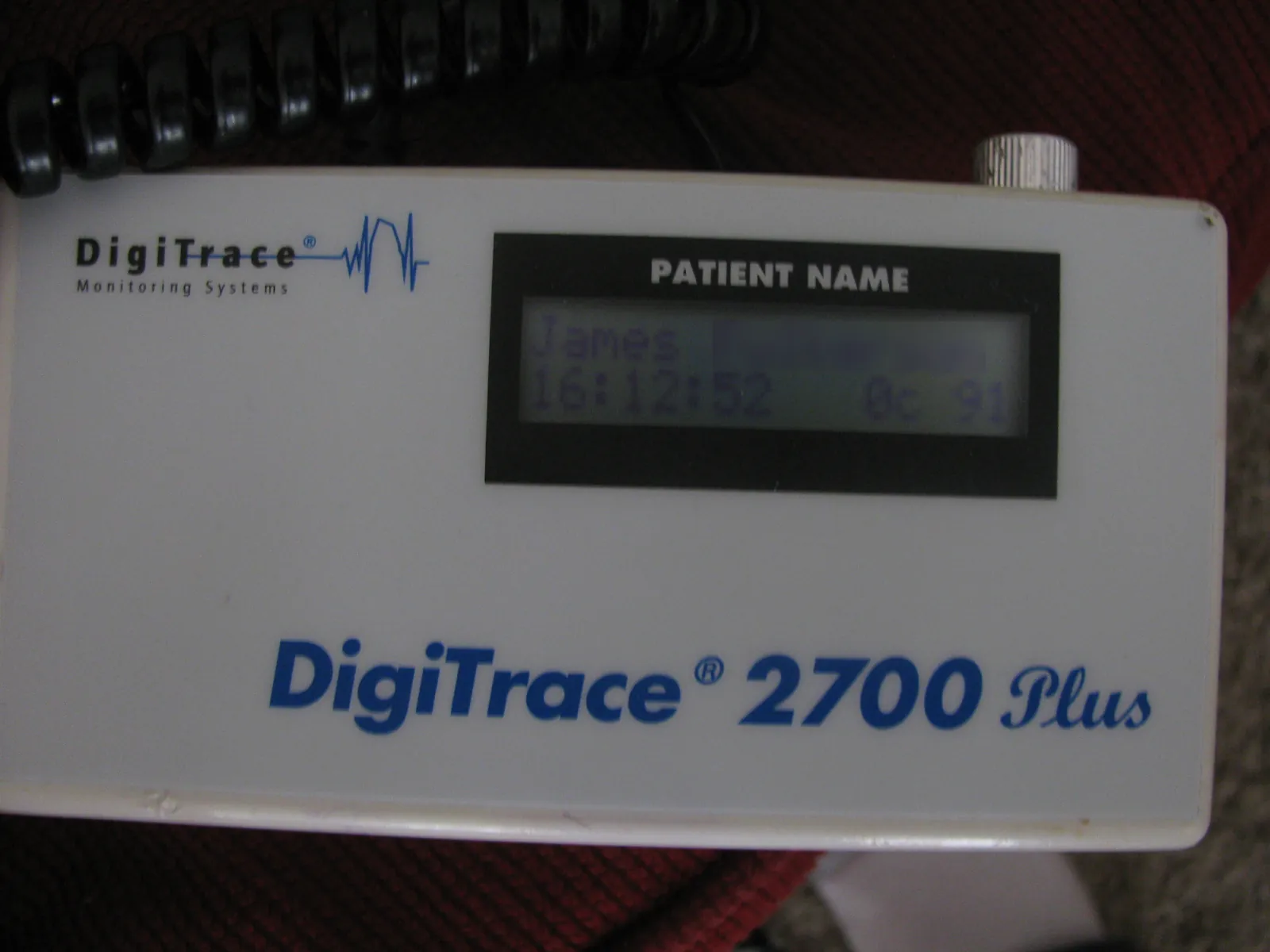
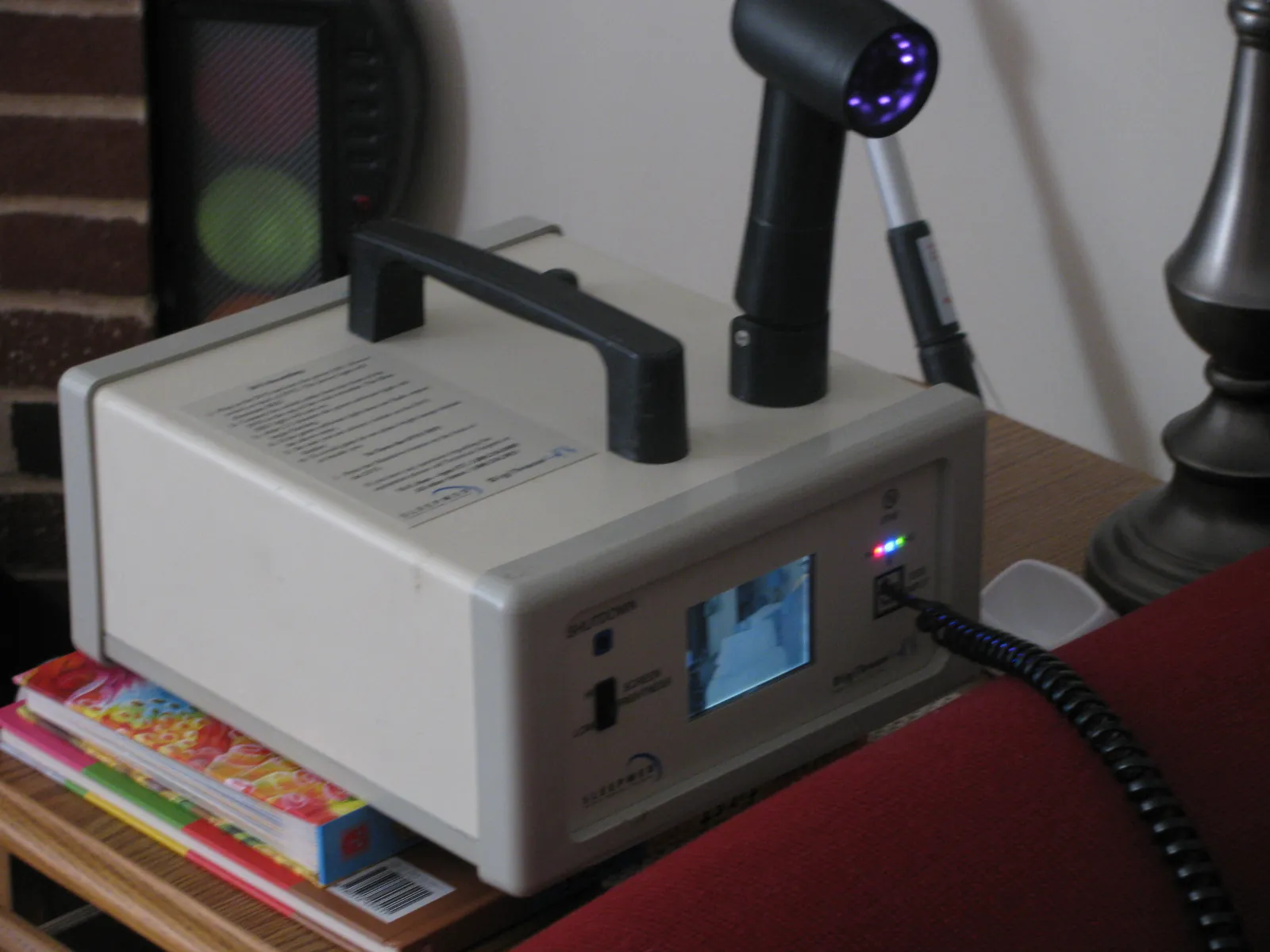
That cable was attached to a device that recorded his brain activity:
And then that device was attached to the camera:
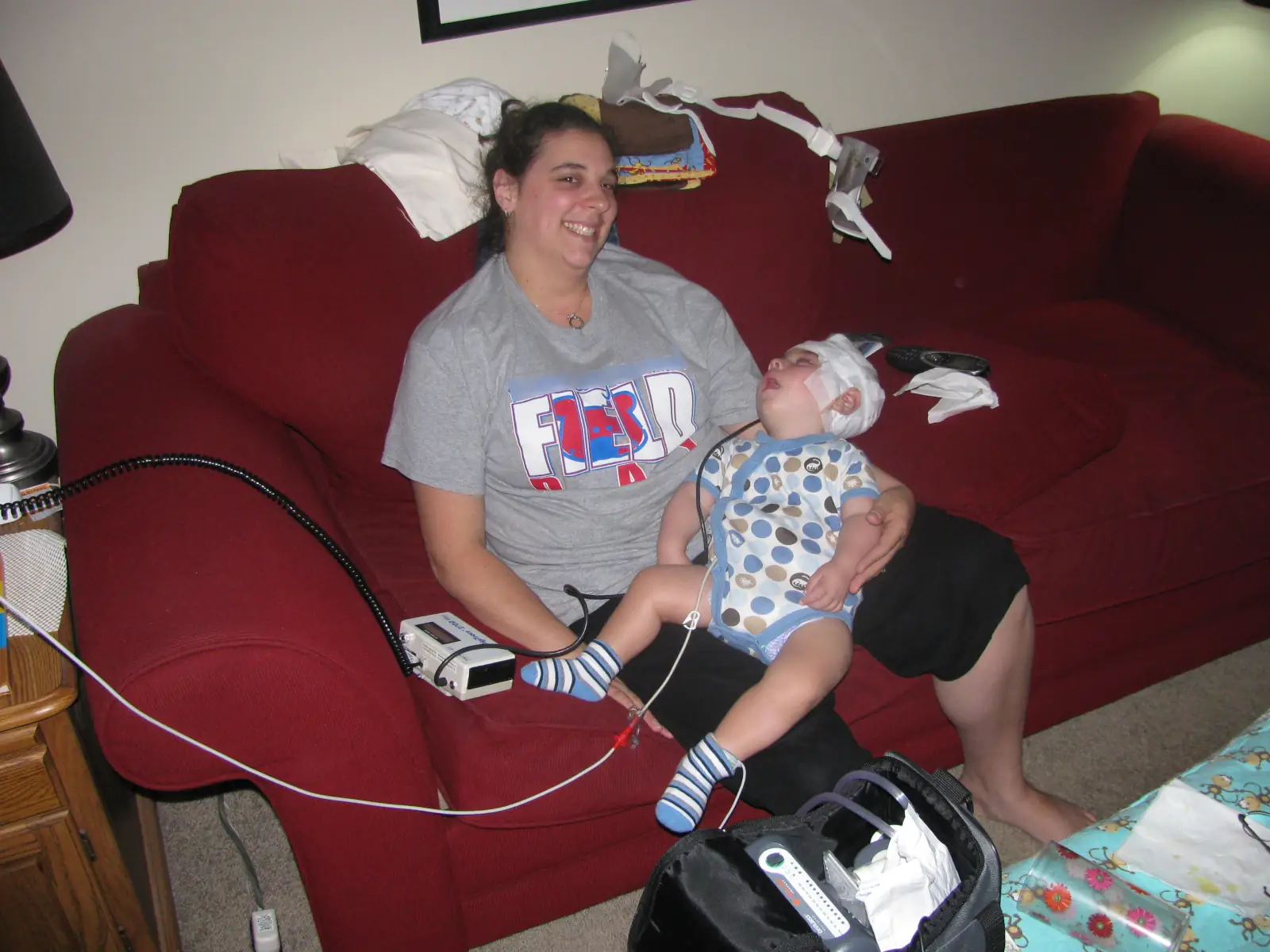
It was quite a setup. You can imagine how much fun we had getting James and all of his equipment up the stairs and getting it all setup. Here’s a pic of Stacy holding James on the couch after we got him all hooked up:
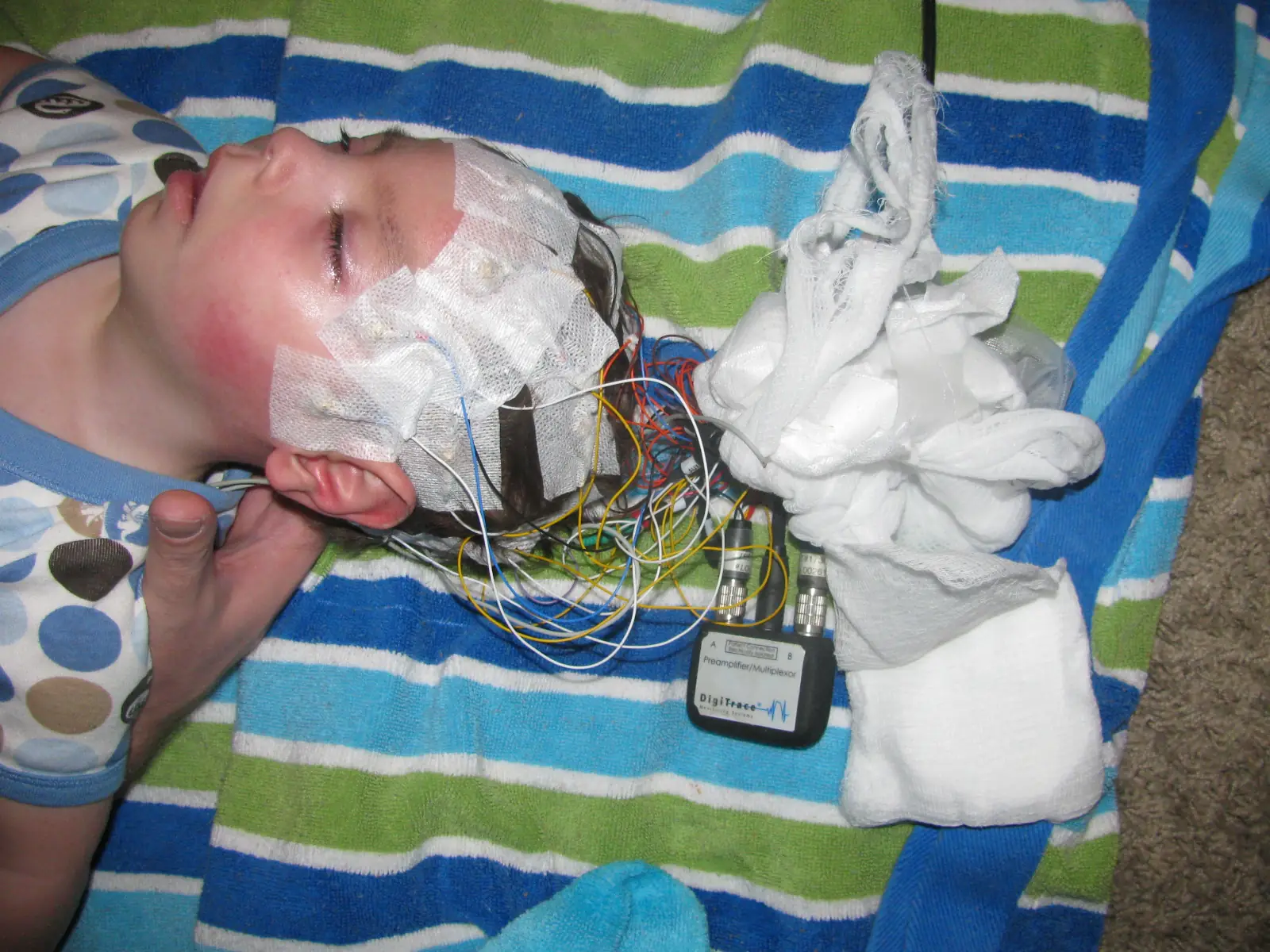
Today we had the fun job of taking everything off of his head so that we could return the computer/camera and all of the wires. This is what it looked like when we took the gauze off of his head. All of those colorful wires connect to that black box (which was also under the gauze). The single black cable that I pointed out in an earlier picture comes out of that box.
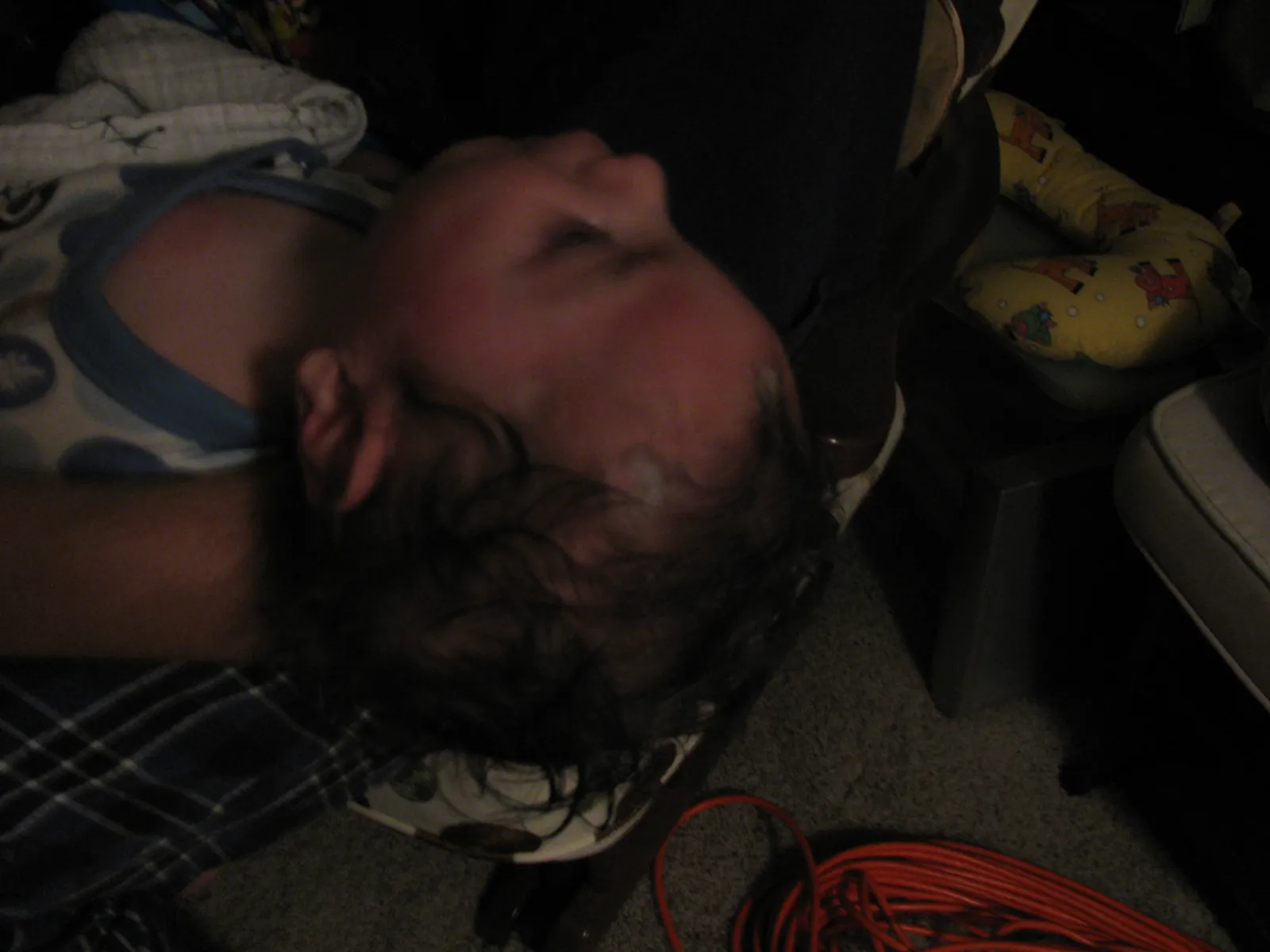
Whatever they use to attach the EEG leads to the head is very sticky so we did our best to wash it out of his hair:
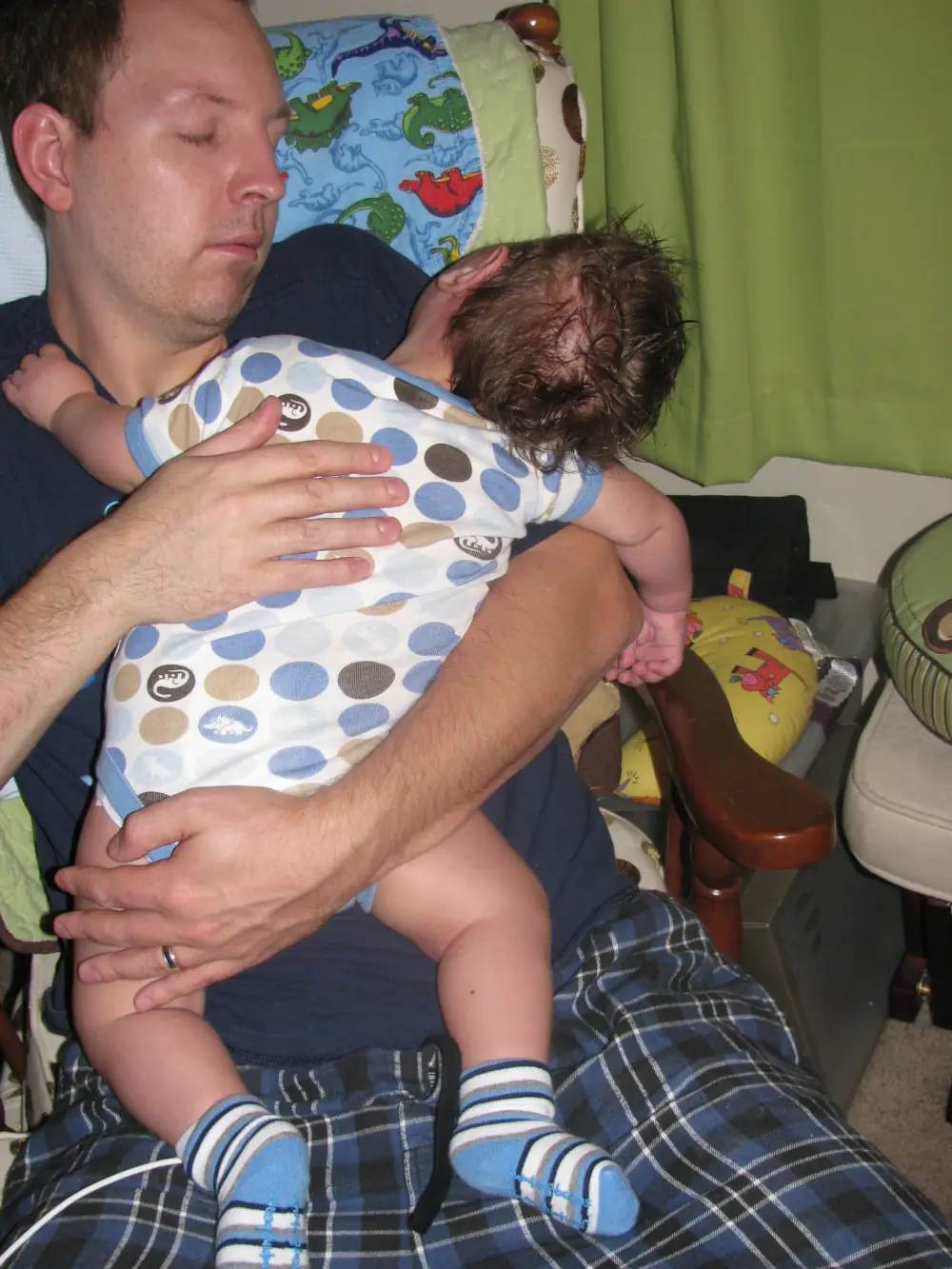
I don’t know who was more tired from this experience, James or his parents:
We’re not sure how long before our neurologist gets whatever was recorded and has time to go over it, but hopefully we’ll get the results soon.