• Post category:Educational / Epilepsy
  • Reading time:4 mins read

Here we are, halfway through Epilepsy Awareness Month. If you follow James on Facebook, you’ve probably already seen these epilepsy facts. For those of you that don’t follow James Facebook page (and I don’t know why you wouldn’t), Stacy has been posting these pictures every day this month and will continue to do so throughout November. This post will include days 1 through 15 and I’ll plan to post days 16 through 30 on the 30th.

Thank you, Candlelight Concert for Epilepsy Awareness, for creating these images to help raise awareness about epilepsy.


Day 1

James was officially diagnosed with epilepsy when he was 5 months old, but we believe he had 1st seizure the Tuesday before he was born. Stacy was at lunch with her folks when all of a sudden, she started feeling a bunch of kicks in her belly. It was very strange because James had been very laid back and didn’t move or kick at all throughout the pregnancy. As a matter of fact, the ultrasound tech often had a hard time getting him into the position she wanted him in to take measurements. It wasn’t until after he was born that they discovered he had a stroke in utero, maybe as early as the first trimester.
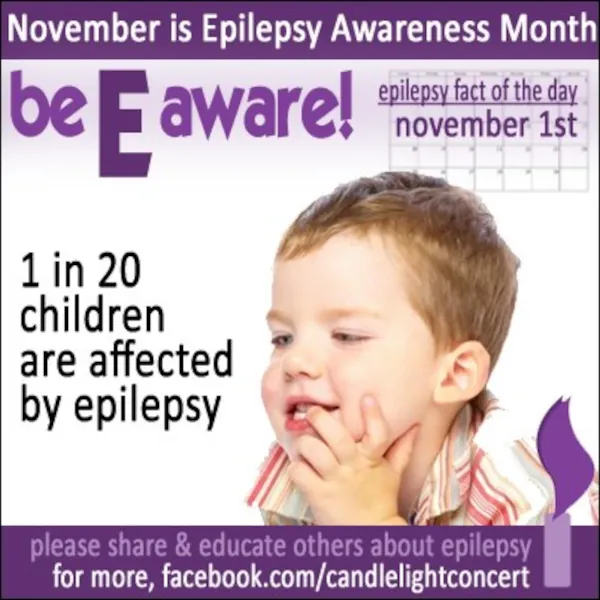
 

Epilepsy Awareness Month poster featuring a young child with a thoughtful expression. A purple awareness ribbon appears beside text noting that November is Epilepsy Awareness Month, with a highlighted fact stating that 1 in 20 children are affected by epilepsy. Additional text encourages sharing and educating others, along with a link for more information.


Day 2

James started out having bicycling seizures. We were told that if we can’t stop his legs, he is having a seizure. His seizures turned into Infantile Spasms where he would just throw his body front or back. Now we are dealing with fencing seizures, which are over in just a few seconds, but he can have up to 50 a day!
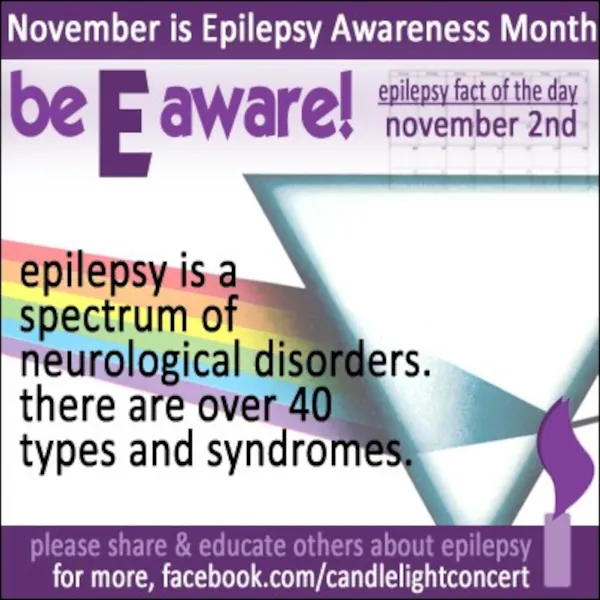
 

Epilepsy Awareness Month poster with a purple background featuring a prism casting a rainbow beam of light. Text highlights that November is Epilepsy Awareness Month and presents a fact of the day noting that epilepsy is a spectrum of neurological disorders with over 40 types and syndromes. Additional text encourages sharing and educating others, along with a link for more information.


Day 3

Stacy likes this fact because she remembers hearing the opposite when she was younger. In our case, James never closes his mouth so there is nothing for us to worry about.
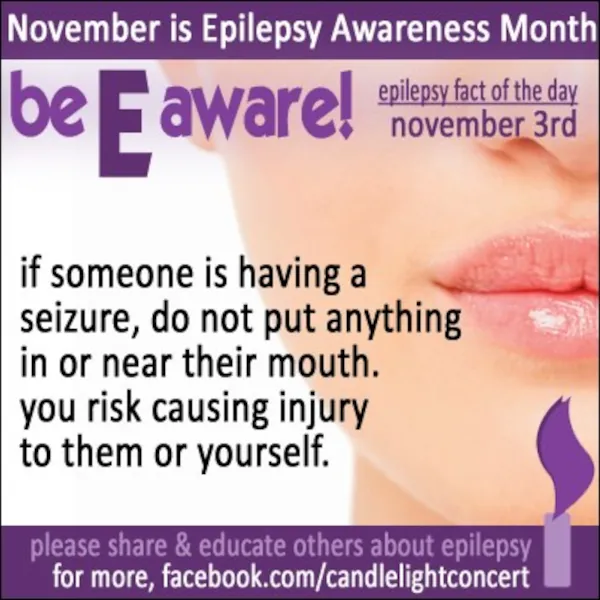
 

Epilepsy Awareness Month poster with a purple background, featuring a close‑up of a person’s lips on the right side. Text on the left highlights the November 3rd fact of the day, explaining that nothing should be put in or near someone’s mouth during a seizure to avoid injury. Additional messaging encourages sharing and educating others, along with a link for more information.


Day 4

James was officially diagnosed with epilepsy at 5 months old when he was diagnosed with Infantile Spasms, a type of epilepsy.
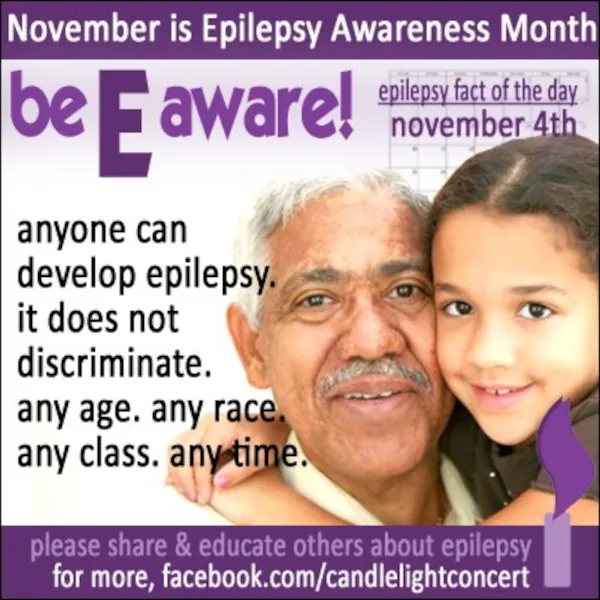
 

Epilepsy Awareness Month poster with a purple background featuring an older adult and a child smiling and embracing. Text highlights the November 4th fact of the day, emphasizing that anyone can develop epilepsy regardless of age, race, or social class. Additional messaging encourages sharing and educating others, along with a link for more information.


Day 5

We have had some control over James’ seizures with various treatments, but then he changes it up and starts a new kind of seizure. Sometimes a treatment that was working seems to stop working. It’s as if the seizures are stronger or become more resistant to whatever treatment we throw at them! We are looking forward to trying CBD oil soon.
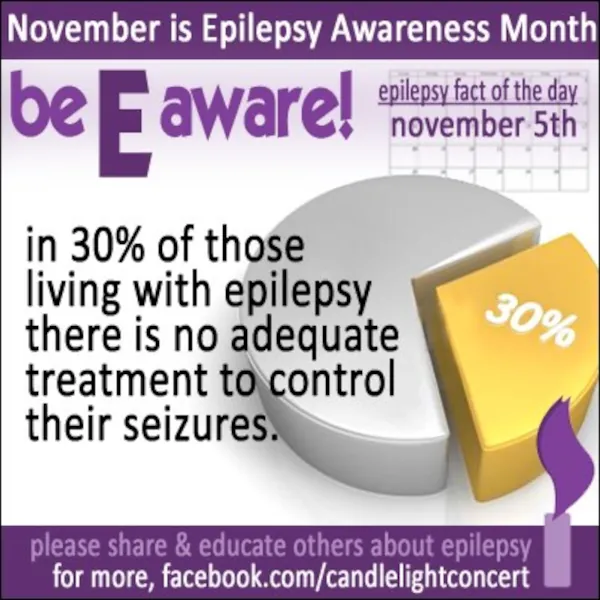
 

Epilepsy Awareness Month poster with a purple and white design featuring a circular pie chart showing a highlighted 30% section. Text presents the November 5th fact of the day, noting that in 30% of people living with epilepsy, seizures cannot be adequately controlled with available treatments. Additional messaging encourages sharing and educating others, along with a link for more information.


Day 6

James was diagnosed with cerebral palsy (CP) at birth due to a stroke he had in utero, so he suffers from both CP and epilepsy!
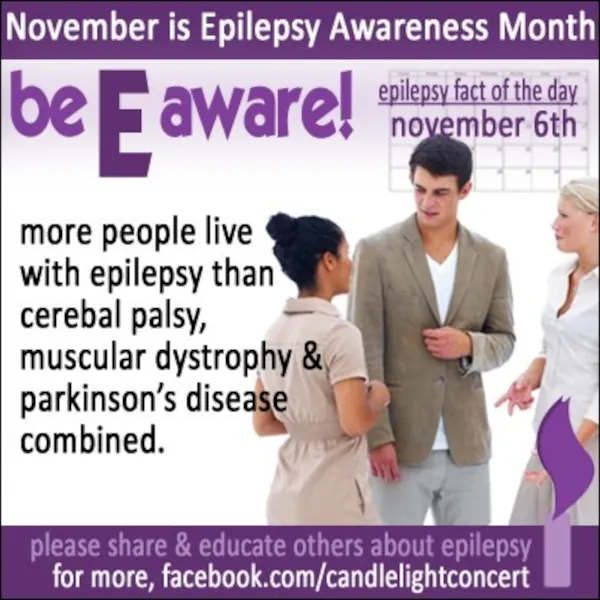
 

Epilepsy Awareness Month poster with a purple background showing three people standing together and talking. Text highlights the November 6th fact of the day, noting that more people live with epilepsy than with cerebral palsy, muscular dystrophy, and Parkinson’s disease combined. Additional messaging encourages sharing and educating others, along with a link for more information.


Day 7

Since James was born in 2009 and we became “members” of the special needs/cerebral palsy/epilepsy communities, Stacy estimates that we have lost about 15+ kids under the age of 10 to epilepsy or Epilepsy related problems. Stop for a minute and think about that. In six years, we have known 15 families that have lost a child to epilepsy. That’s more than 2 kids a year. Now think about that on a global scale.
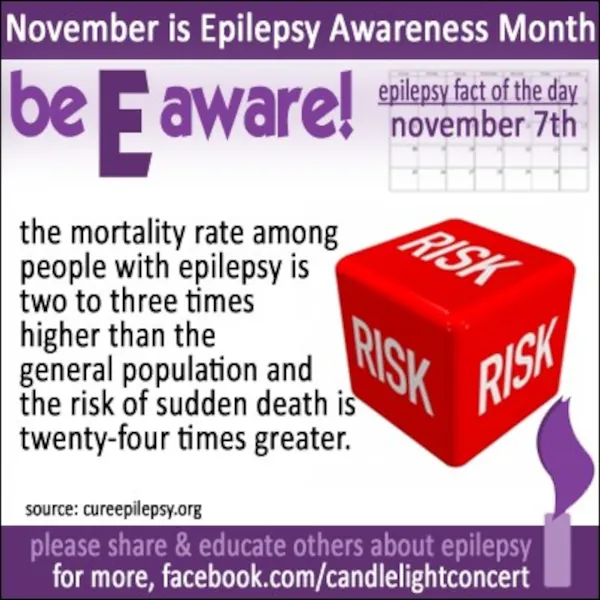
 

Epilepsy Awareness Month poster with a purple and white layout featuring a red cube labeled “RISK.” Text highlights the November 7th fact of the day, explaining that the mortality rate for people with epilepsy is two to three times higher than the general population and that the risk of sudden death is significantly elevated. Additional messaging encourages sharing and educating others, along with a source citation and link for more information.


Day 8

James is non-verbal so he can’t really express how he is feeling, but we think that James does feel depressed some days. He gets so quiet and just stares or sleeps.
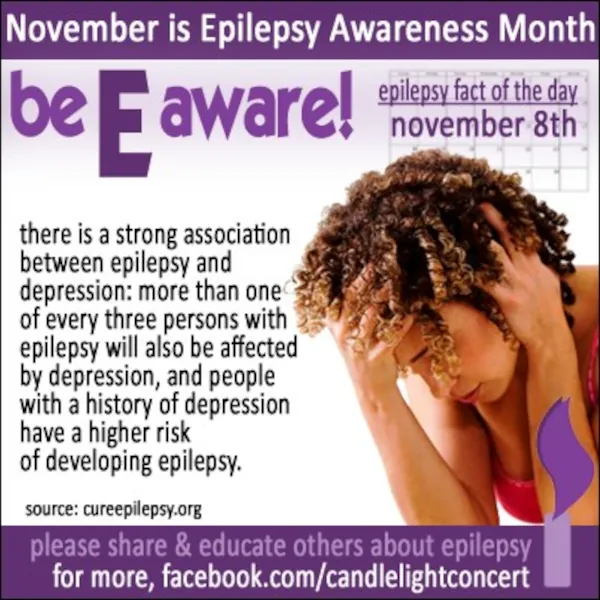
 

Epilepsy Awareness Month poster with a purple background featuring a person with curly hair holding their head, conveying emotional strain. Text highlights the November 8th fact of the day, explaining the strong association between epilepsy and depression: more than one in three people with epilepsy experience depression, and a history of depression increases the risk of developing epilepsy. Additional messaging includes a source citation and encourages sharing and educating others.


Day 9

3 million. And that is just in the United States.
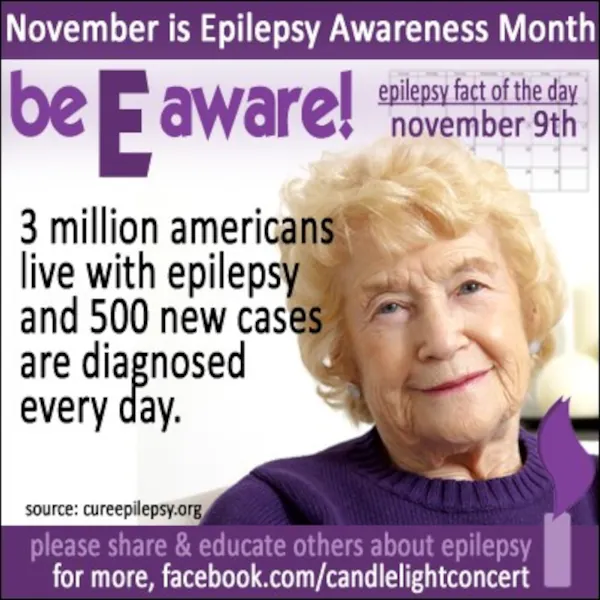
 

Epilepsy Awareness Month poster with a purple background featuring an older adult wearing a purple top. Text highlights the November 9th fact of the day, stating that 3 million Americans live with epilepsy and 500 new cases are diagnosed each day. Additional messaging includes a source citation and encourages sharing and educating others.


Day 10

You can have a single seizure and not have epilepsy. You need to have at least two seizures to be diagnosed with epilepsy.
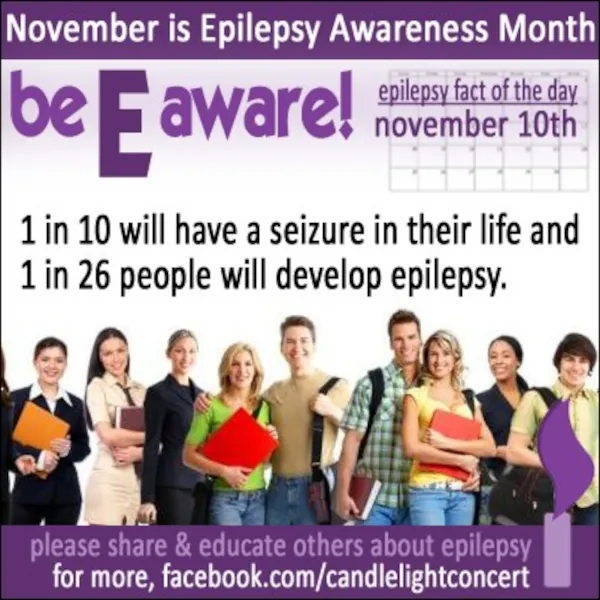
 

Epilepsy Awareness Month poster with a purple background featuring a group of people standing together holding books and folders, suggesting community and education. Text highlights the November 10th fact of the day, stating that 1 in 10 people will experience a seizure in their lifetime and 1 in 26 will develop epilepsy. Additional messaging encourages sharing and educating others, along with a link for more information.


Day 11

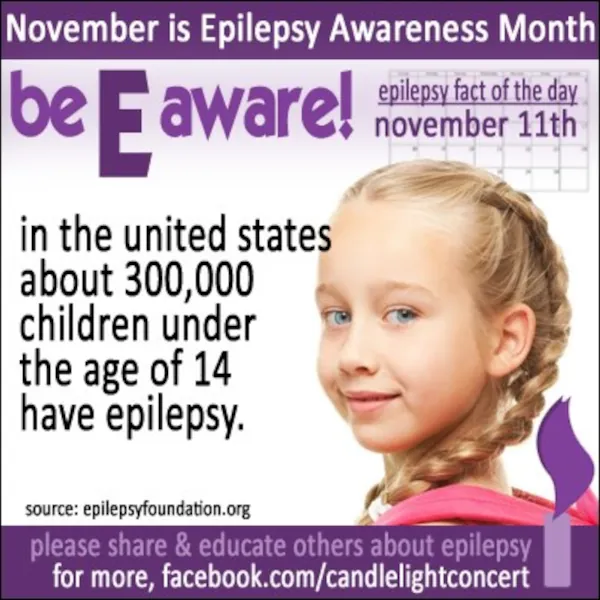
300,000!


Epilepsy Awareness Month poster with a purple background featuring a young child with braided hair and a calm expression. A purple ribbon appears beside the text, which highlights the November 11th fact of the day: in the United States, about 300,000 children under age 14 have epilepsy. Additional messaging includes a source citation and encourages sharing and educating others.


Day 12

Traumatic brain injuries (TBI) can cause epilepsy. In James’ case, it was more than likely the stroke, which is a non-traumatic brain injury (NTBI), that caused his epilepsy.
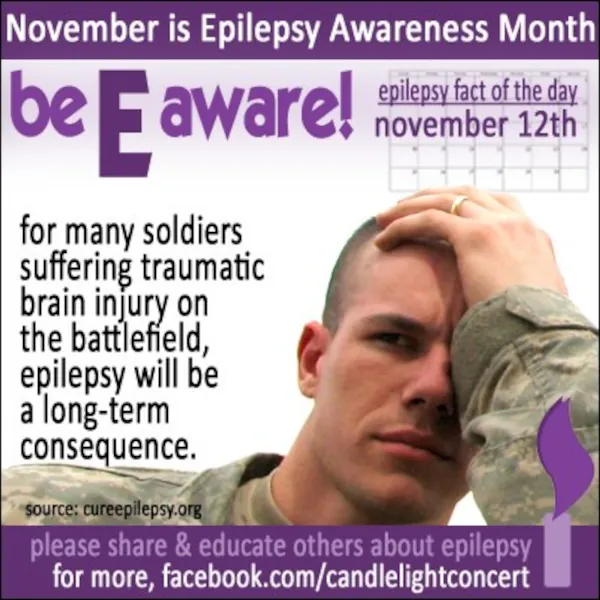
 

Epilepsy Awareness Month poster with a purple background featuring a person in military uniform holding their forehead, suggesting the impact of traumatic brain injury. Text highlights the November 12th fact of the day, explaining that for many soldiers who experience traumatic brain injury on the battlefield, epilepsy can become a long‑term consequence. Additional messaging includes a source citation and encourages sharing and educating others.


Day 13

Sad, but true. There is no cure for epilepsy…yet. All we can do for now is help the symptoms. Some might become seizure free, but most will never utter those words.
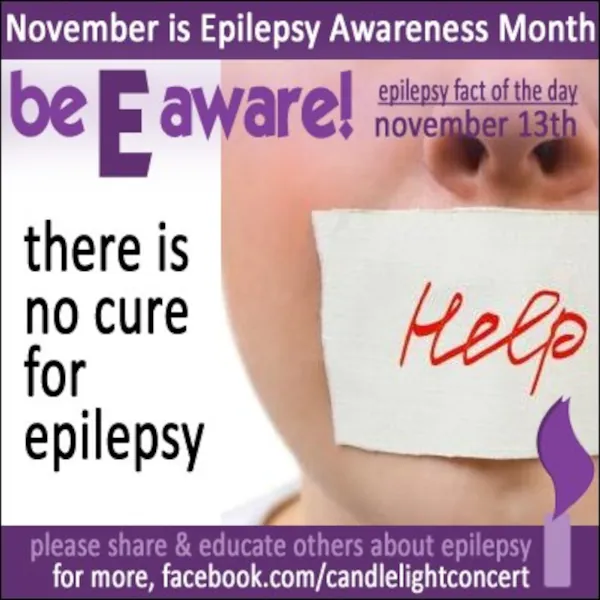
 

Epilepsy Awareness Month poster with a purple background featuring a close‑up of a person’s face. A small piece of paper with the word “Help” written in red is taped over their mouth, creating a visual of silence and urgency. Text highlights the November 13th fact of the day, stating that there is no cure for epilepsy. Additional messaging encourages sharing and educating others.


Day 14

James is not contagious. He is a cute 6-year-old, looking for love and lots of kisses.
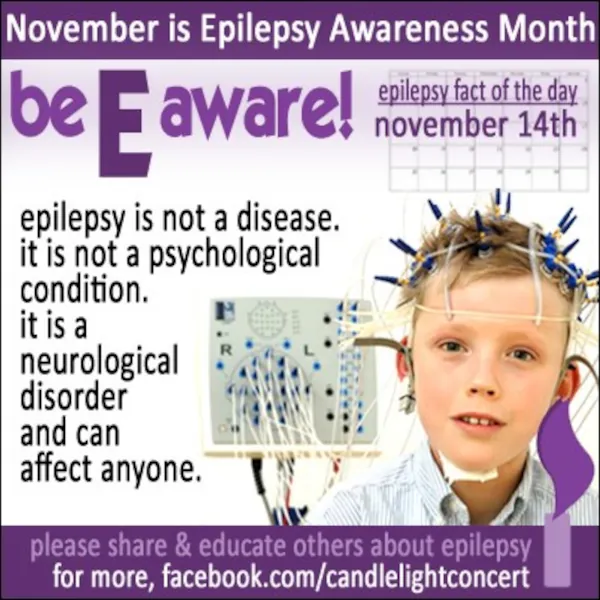
 

Epilepsy Awareness Month poster with a purple background featuring a child wearing an EEG cap with multiple electrodes attached, connected to medical monitoring equipment in the background. Text highlights the November 14th fact of the day, explaining that epilepsy is not a disease or a psychological condition but a neurological disorder that can affect anyone. Additional messaging encourages sharing and educating others.


Day 15

We have met so many wonderful people around the world because of James’ diagnosis.


Epilepsy Awareness Month poster with a purple background featuring a group of smiling children lying together on the grass, representing global diversity. Text highlights the November 15th fact of the day, stating that epilepsy knows no borders and that 65 million people worldwide live with the condition. Additional messaging encourages sharing and educating others.