• Post category:Educational / Epilepsy
  • Reading time:3 mins read

This is part 2 of 2 of the Epilepsy Awareness Month daily facts, which is a collection of days 16 through 30 epilepsy facts that Stacy has posted on James’ Facebook page. Click here if you missed—or want to review—the first fifteen daily epilepsy facts.

There is an important video at the very bottom of this post. Please take two minutes an watch it.


Day 16
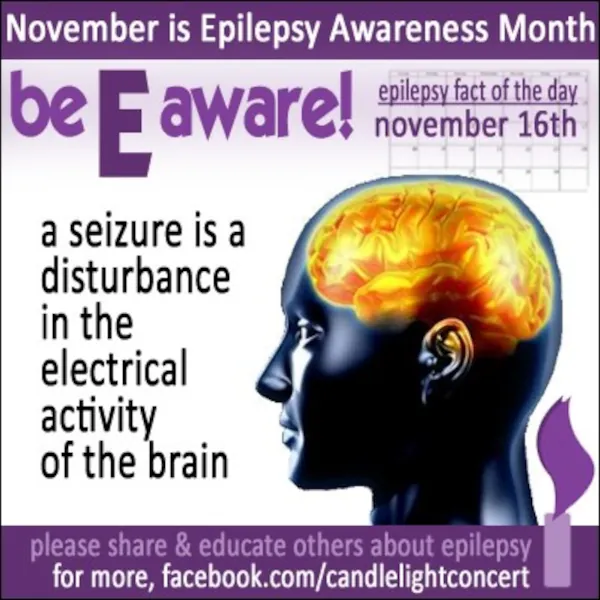
Epilepsy Awareness Month poster featuring a side‑profile illustration of a human head with the brain highlighted in bright yellow and orange to show electrical activity. Text on the poster explains that November is Epilepsy Awareness Month and includes a fact of the day noting that a seizure is a disturbance in the brain’s electrical activity. The design encourages sharing and educating others about epilepsy.


Day 17

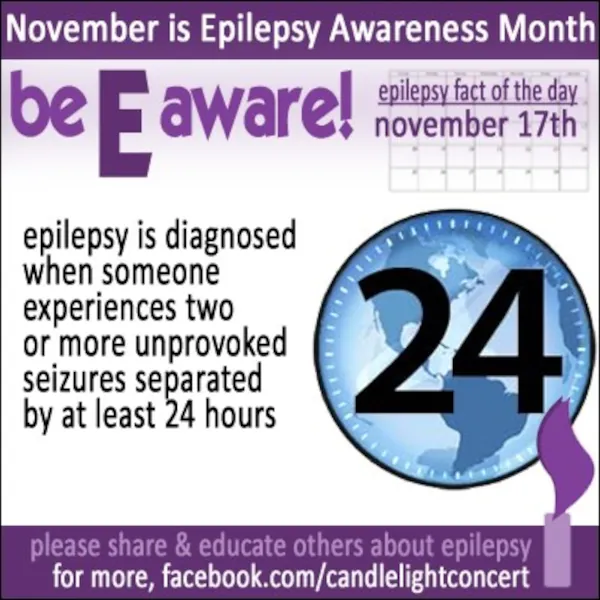
Epilepsy Awareness Month poster in purple and white. The top reads “November is Epilepsy Awareness Month,” with the phrase “be E aware!” in large stylized lettering. A small calendar graphic marks November 17 as the fact‑of‑the‑day. The main text explains that epilepsy is diagnosed when someone has two or more unprovoked seizures at least 24 hours apart, shown alongside a globe with a large “24.” The bottom encourages sharing and educating others about epilepsy.


Day 18

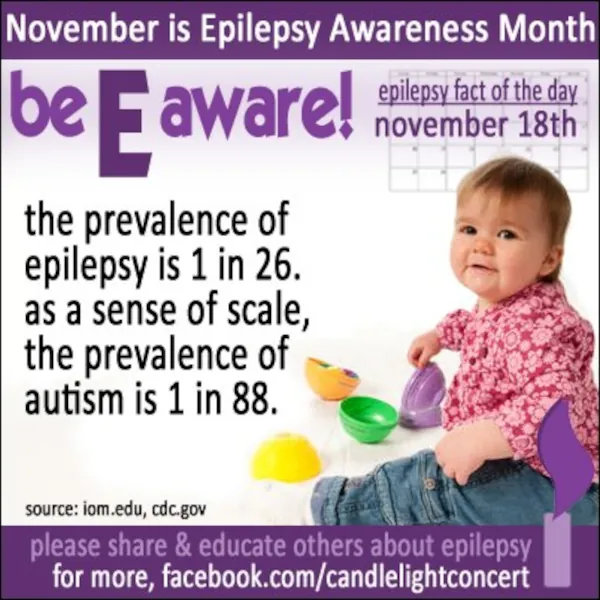
Epilepsy Awareness Month poster featuring a baby sitting on the floor playing with colorful plastic toys. The design uses purple and white text, highlighting the November 18 fact‑of‑the‑day: epilepsy affects 1 in 26 people, compared to 1 in 88 for autism. Sources are listed, and the poster encourages sharing and educating others about epilepsy.


Day 19

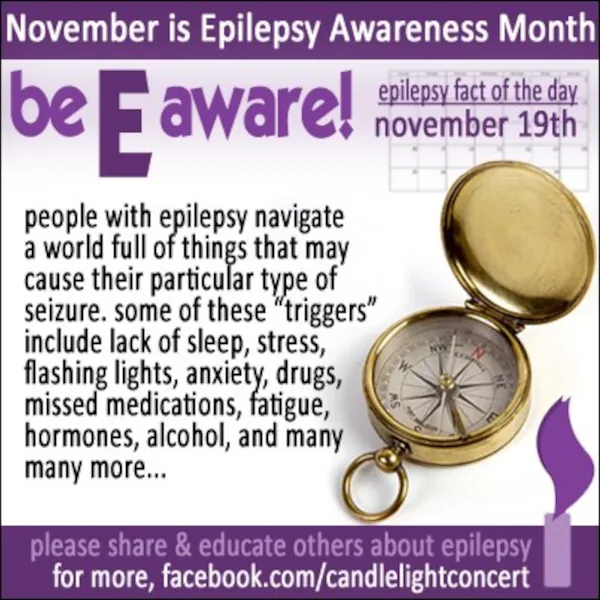
Epilepsy Awareness Month poster with a gold compass on the right side and purple text on the left. The November 19 fact‑of‑the‑day explains that people with epilepsy navigate many potential seizure triggers, including lack of sleep, stress, flashing lights, anxiety, missed medications, fatigue, hormones, alcohol, and more. The bottom encourages viewers to share and educate others about epilepsy.


Day 20

Human or animal, it’s hard to watch someone you love have a seizure.
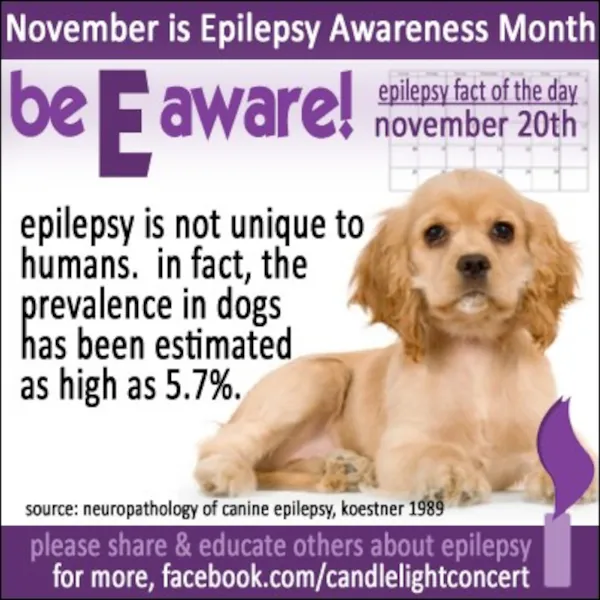
Epilepsy Awareness Month poster featuring a light brown dog lying down on a white background. Purple text highlights the November 20 fact‑of‑the‑day, explaining that epilepsy is not limited to humans and that its prevalence in dogs has been estimated as high as 5.7%. The design encourages viewers to share and educate others about epilepsy.


Day 21

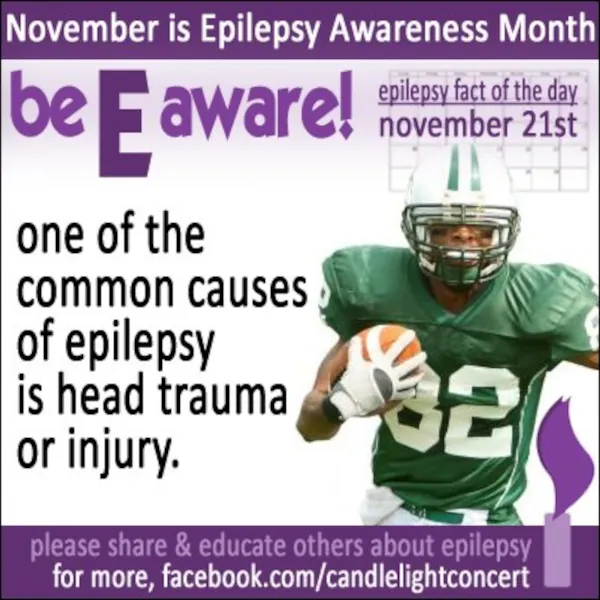
Epilepsy Awareness Month poster featuring a football player in a green uniform with the number 82, holding a football while running. Purple text highlights the November 21 fact‑of‑the‑day, explaining that head trauma or injury is one of the common causes of epilepsy. The bottom encourages viewers to share and educate others about epilepsy.


Day 22

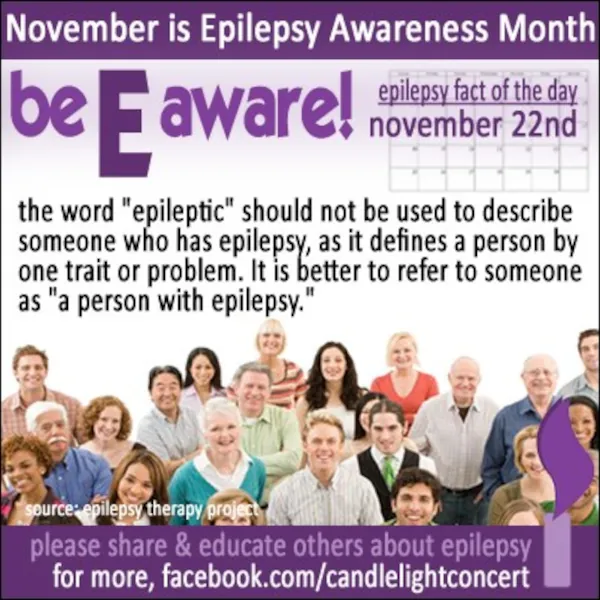
Epilepsy Awareness Month poster featuring a large, diverse group of people smiling and standing together to represent community and support. Purple text highlights the November 22 fact‑of‑the‑day, explaining that the word “epileptic” shouldn’t be used to define a person, and that “person with epilepsy” is the respectful phrasing. The bottom encourages sharing and educating others about epilepsy.


Day 23

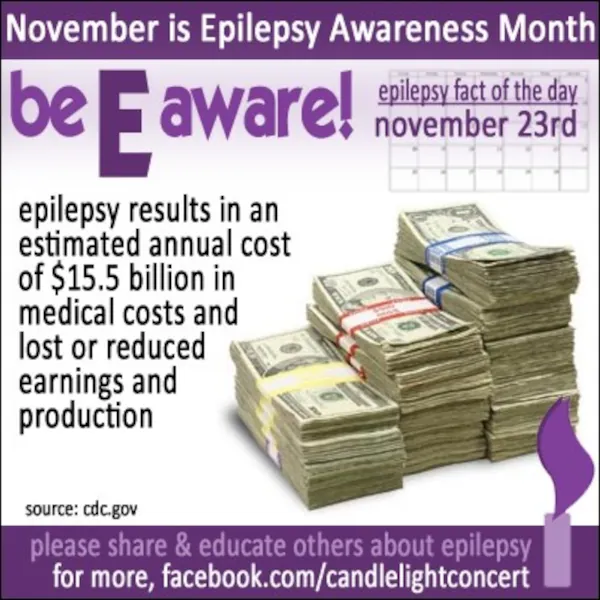
Epilepsy Awareness Month poster featuring stacks of U.S. dollar bills wrapped in colored bands. Purple text highlights the November 23 fact‑of‑the‑day, stating that epilepsy results in an estimated annual cost of $15.5 billion in medical expenses and lost or reduced earnings and productivity. The bottom encourages viewers to share and educate others about epilepsy.


Day 24

James’ seizures have changed from “reflux” style, to intense “ab crunches” & now he looks like he is fencing someone.
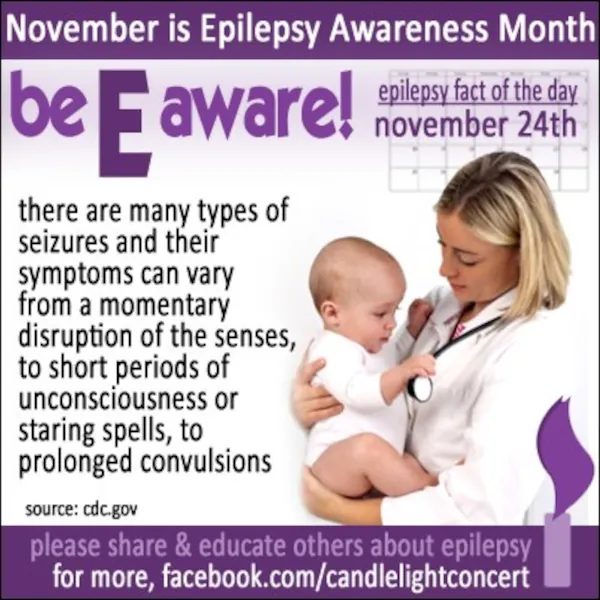
Epilepsy Awareness Month poster featuring a healthcare professional holding a baby, symbolizing medical care and support. Purple text highlights the November 24 fact‑of‑the‑day, explaining that seizures can take many forms, from brief sensory disruptions or staring spells to prolonged convulsions. The bottom encourages viewers to share and educate others about epilepsy.

There are 7 main seizure types. They can present differently in each person, causing the myth that there are more.

Generalized Seizures
All types of generalized seizures affect both sides of the brain. Generalized seizures can be divided into six groups:

Absence seizures
This type of seizure leaves a person briefly unaware of their surroundings and actions. Most people who experience an absence seizure stare blankly until the seizure is over. Some will produce a subtle, repetitive body movement. Absence seizures are also called “petit mal” seizures.

Atonic seizures
This type of seizure causes loss of muscle control. A person experiencing an atonic seizure may suddenly fall or collapse. That’s why this type of seizure is sometimes called a drop seizure.

Clonic seizures
People who have clonic seizures will routinely experience rhythmic, repeated jerking movements. The neck, face, and arms are commonly affected.

Myoclonic seizures
This type of seizure causes sudden jerking movements or twitches. These movements commonly happen in the arms and legs.

Tonic seizures
When this seizure begins, the muscles in the affected area of the body will tighten and stiffen. The arms, legs, and back are commonly affected. Most people who experience a tonic seizure will fall to the ground because of their muscle rigidity.

Tonic-clonic seizures
Commonly called “grand mal” seizures, this type of seizure causes loss of consciousness, as well as violent shaking and body stiffening. Some people will lose control of their bladder and may bite their tongue during the episode.


Day 25

Well, that’s a no brainer. Epilepsy may not be contagious, but James’ smile is.
Epilepsy Awareness Month poster showing two people embracing, one smiling warmly. Purple text highlights the November 25 fact‑of‑the‑day, stating that epilepsy is not contagious. The bottom encourages viewers to share and educate others about epilepsy.


Day 26

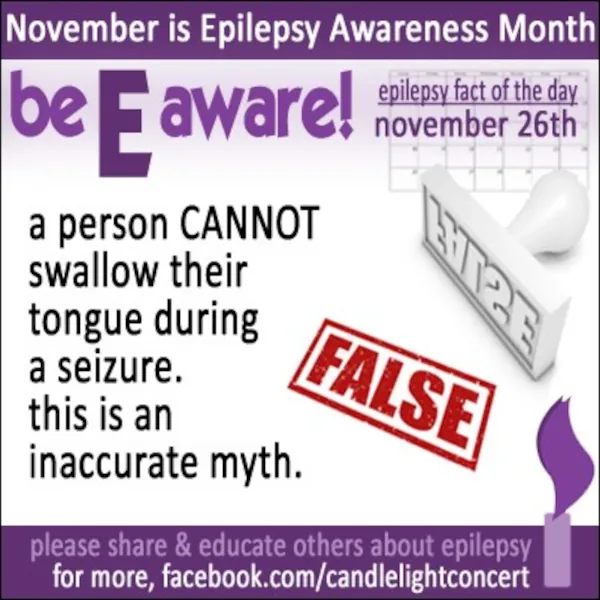
Epilepsy Awareness Month poster in purple and white with the November 26 fact‑of‑the‑day. The text explains that a person cannot swallow their tongue during a seizure, noting that this is a common myth. A bold red “FALSE” stamp reinforces the correction. The bottom encourages viewers to share and educate others about epilepsy.


Day 27

James has had myoclonic seizures.
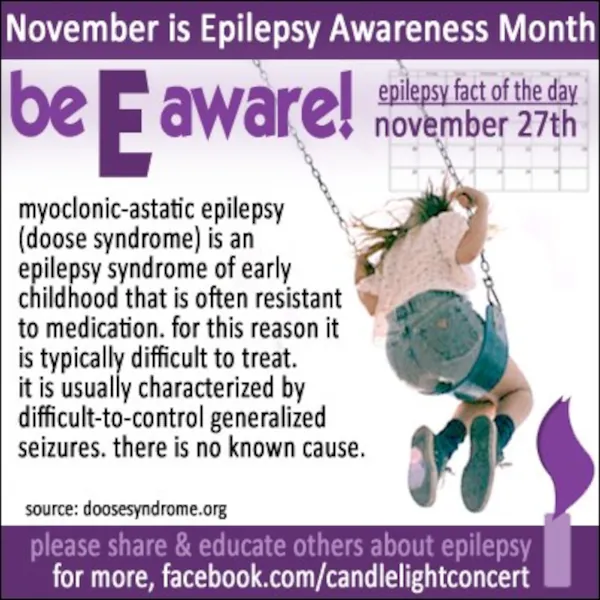
Epilepsy Awareness Month poster featuring a child on a swing, shown in motion against a purple‑themed background. The November 27 fact‑of‑the‑day explains that myoclonic‑astatic epilepsy (Doose syndrome) is an early‑childhood epilepsy syndrome that is often resistant to medication, difficult to treat, and typically involves hard‑to‑control generalized seizures with no known cause. The bottom encourages viewers to share and educate others about epilepsy.


Day 28

So many of our friends have died from Dravets.
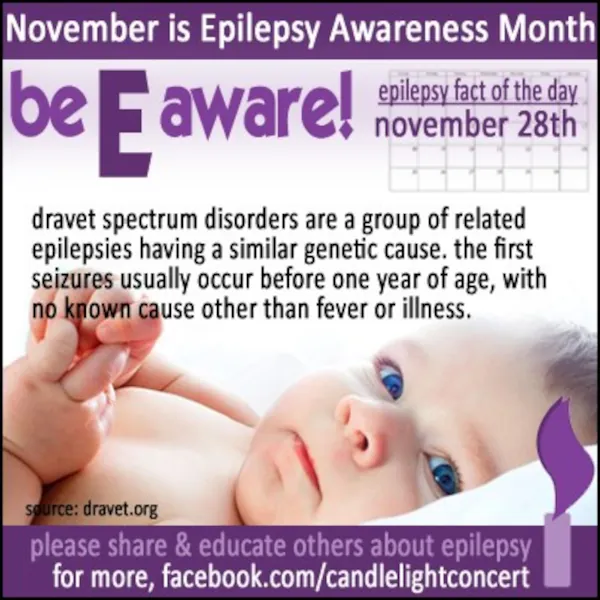
Epilepsy Awareness Month poster featuring a baby lying on their back and looking upward, set against a purple‑themed design. The November 28 fact‑of‑the‑day explains that Dravet spectrum disorders are a group of related epilepsies with a shared genetic cause, with first seizures typically appearing before age one and often triggered only by fever or illness. The bottom encourages viewers to share and educate others about epilepsy.


Day 29

This is always a fear:

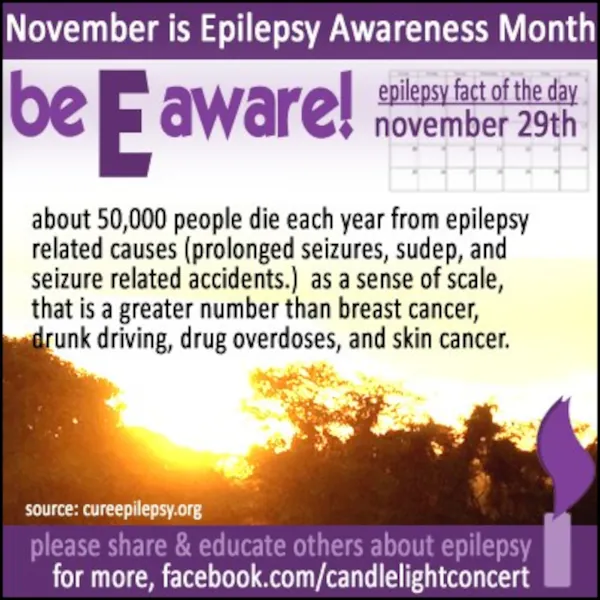
Epilepsy Awareness Month poster featuring a sunset or sunrise with silhouetted trees against a warm sky. Purple text highlights the November 29 fact‑of‑the‑day, stating that about 50,000 people die each year from epilepsy‑related causes, including prolonged seizures, SUDEP, and seizure‑related accidents, noting this number exceeds deaths from breast cancer, drunk driving, drug overdoses, and skin cancer. The bottom encourages viewers to share and educate others about epilepsy.


Day 30

Thank you everyone who has followed these facts.
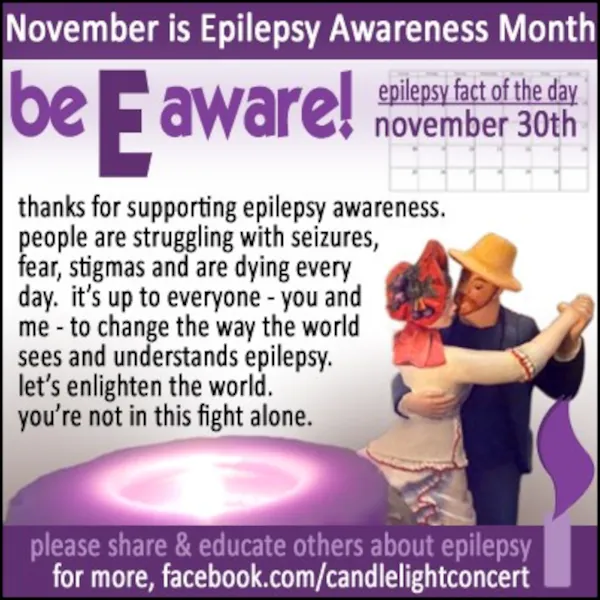
Epilepsy Awareness Month poster with a purple theme and an illustration of two people embracing, one wearing a hat and the other a headscarf. The November 30 message thanks supporters of epilepsy awareness and acknowledges that many people live with seizures, fear, stigma, and loss. It encourages changing how the world understands epilepsy and reminds viewers they’re not alone. The bottom urges people to share and educate others about epilepsy.


Thank you Candlelight Concert for Epilepsy Awareness for creating these images to raise awareness about epilepsy.


SUDEP

Now that we’ve reached the end of the daily Epilepsy Awareness Month facts, I want to share a short, informative video about SUDEP, or sudden unexplained death in epilepsy. This is one of our biggest fears with James. We’ve done everything we can to get his seizures under control, and think we’ve finally found a sort of miracle drug, but there’s still a chance that SUDEP will take him away from us.