
Happy New Year…a month late. Hope you are all doing well. We’re hanging in there, impatiently waiting for winter to be over. It’s been brutal this year. James doesn’t do well with the cold in the winter…or in the hot, humid summers. I often ask myself why we are still living here, but quickly remember that we’re kind of stuck here now. All of our family is here, and all of James’ doctors are here. We don’t want to take James away from his grandparents or cousins, and finding new doctors would be a challenge. He has so many…pediatrician, pulmonologist, neurologist, ENT, ophthalmologist (eye doctor), etc. Of course, we can’t forget about palliative care, or his nurses. He has such a good team of medical professionals here; it would be hard, if not impossible, to start over somewhere else. Even his dentist is awesome.
I’m sure you’re not here to listen to me complain about how cold it is. You’re here, to find out what’s going on with James, aren’t you. Okay, then here you go…
Eye Issues
Because James doesn’t close his eyes, they are constantly exposed to the elements and tend to get really dry. For most of us, the simple act of closing our eyes or blinking naturally keeps our eyes lubricated. James doesn’t have this capability, so we are constantly putting eye drops in his eyes to try to keep them moist. Well, when we remember to put drops in his eyes. We try to keep up with the drops, but sometimes just forget.
We took him to the ophthalmologist a few weeks ago for a routine checkup and asked if there was anything else we could do to save his eyes. About a year ago, we had tried using weights on his eyelids to help keep them closed, but they didn’t really work too well. The only other thing the eye doctor could recommend was to have the corner of his eyes sewn shut to limit the amount of air and contaminants that can get into his eyes while still allowing him to see. It’s a procedure called tarsorrhaphy. We think it will look something like this:
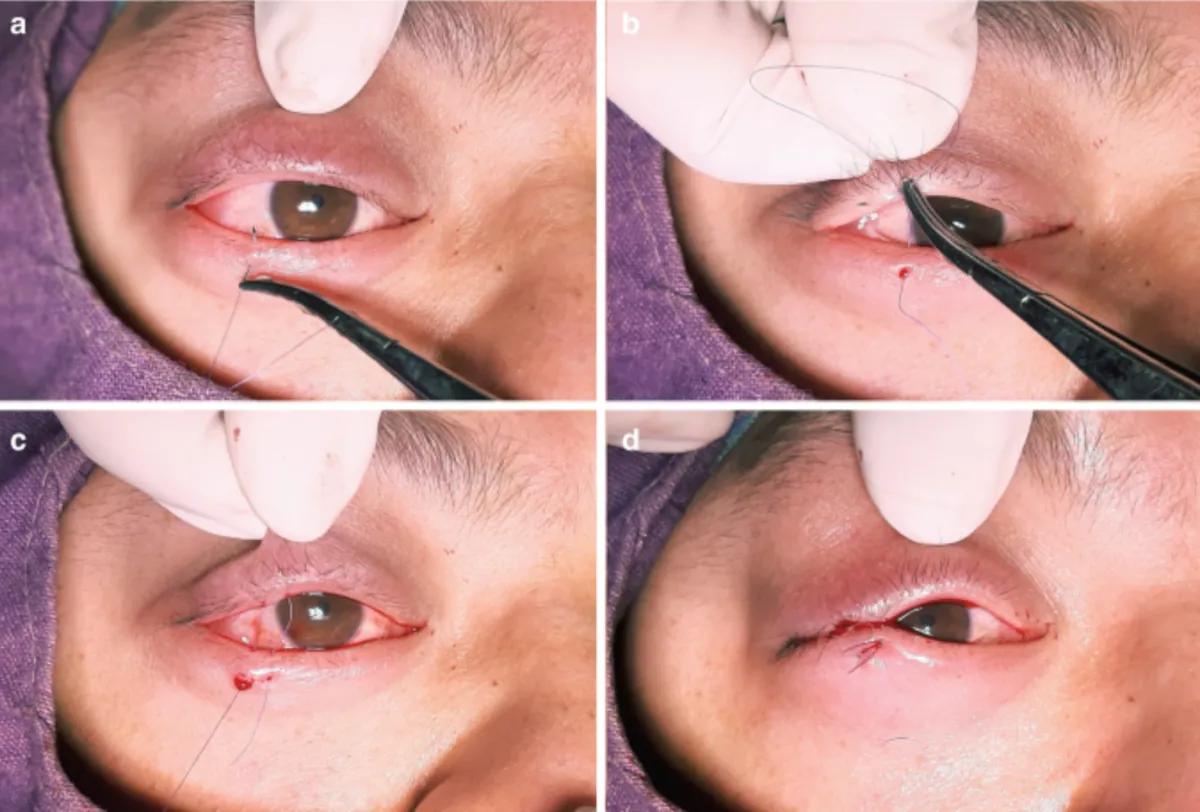
He was scheduled to get new ear tubes on January 31st so we thought maybe we could have the tarsorrhaphy surgery done at the same time as the ear tubes, but it just didn’t work out. James’ ophthalmologist reached out to another ophthalmologist in the area that does this type of surgery, but we didn’t hear back from her in time to get it scheduled to be done with the ear tubes.
In the meantime, our ophthalmologist recommended that we put drops in his eyes and then tape them closed a couple of times a day when he is either sleeping or napping, like this:
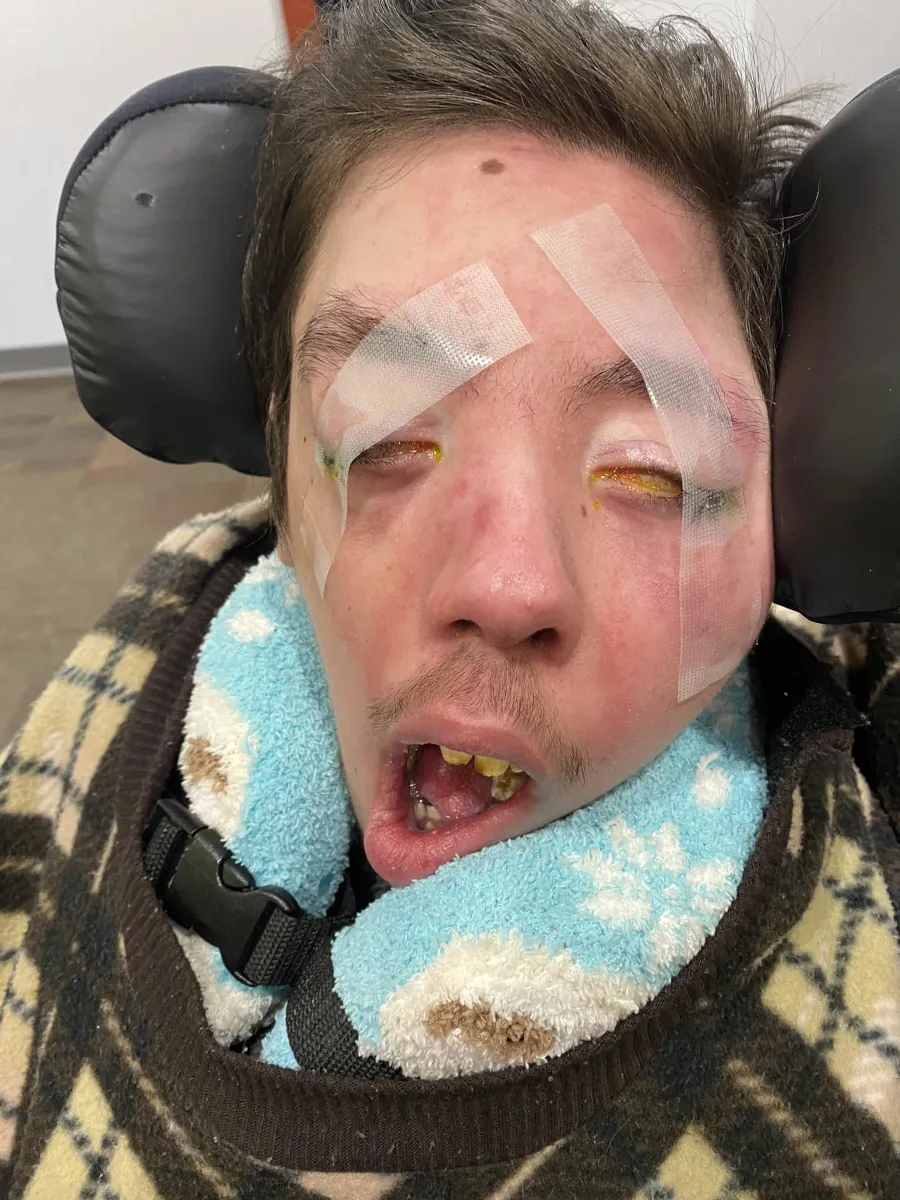
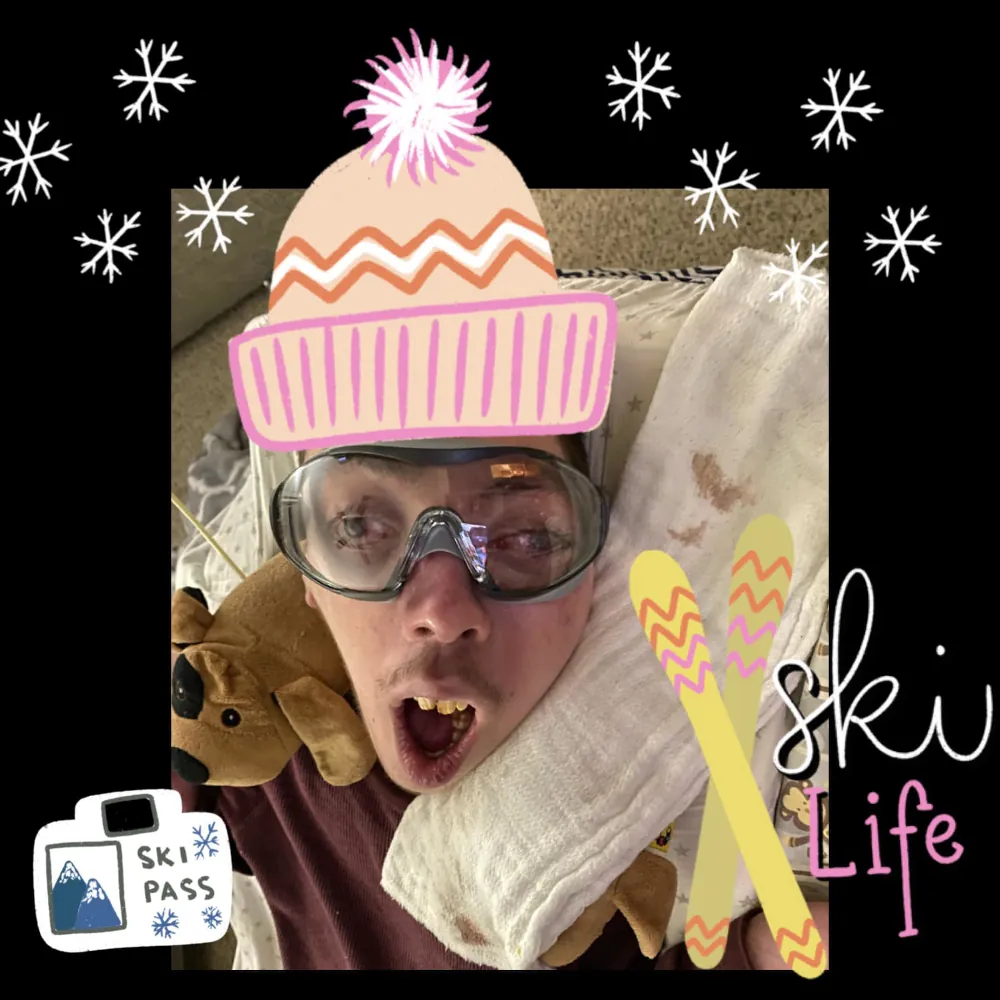
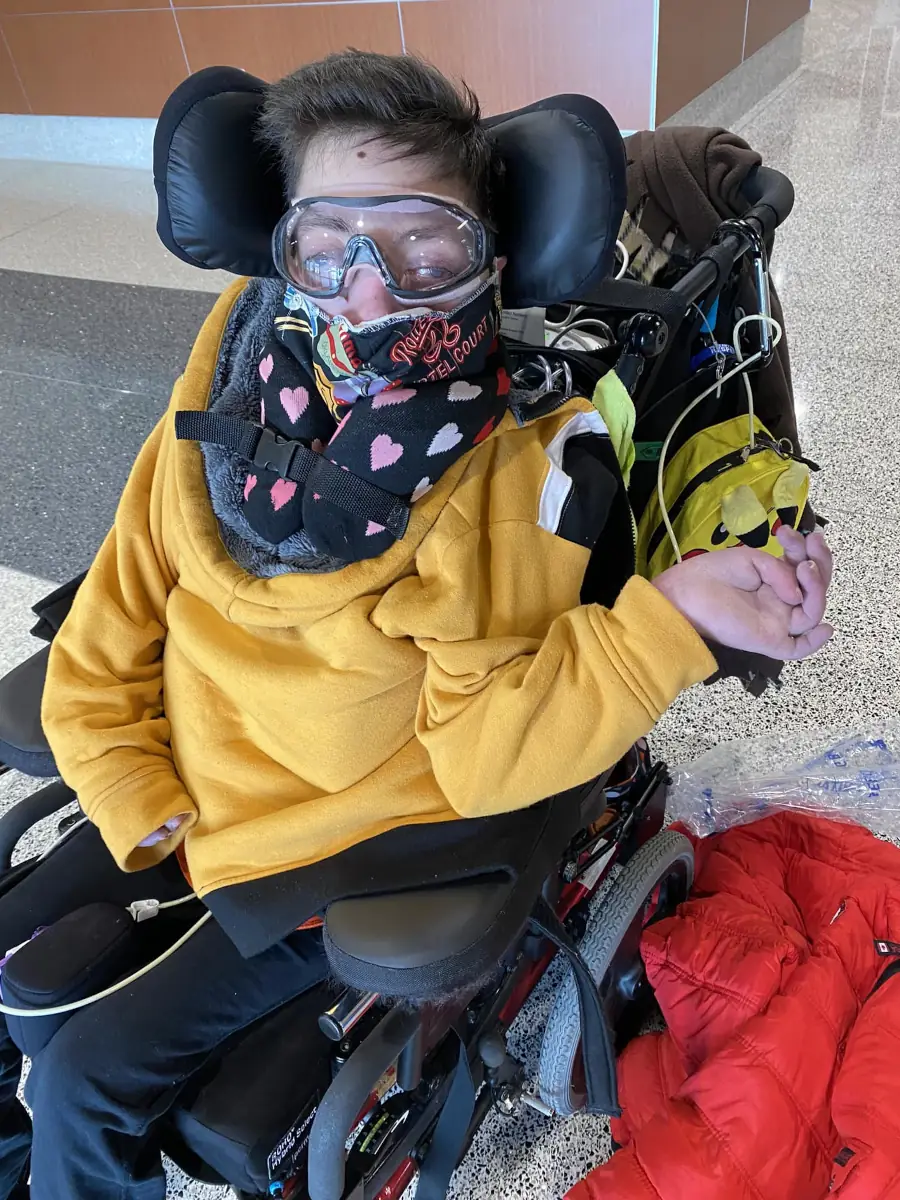
Stacy had been doing this at night when she puts him to bed, and when he gets home from school, which is usually when he takes a nap. Then she had an ingenious idea. Taping his eye lids closed to retain moisture around his eyeballs was fine when he was sleeping. But what about when he is awake? Was there something we could do to protect his eyes while he was awake and still allow him to see? He wears sunglasses when he’s outside and we sometimes put them on indoors when he is in a situation where he is staring at the lights on ceiling, so the lights don’t hurt his eyes. When he’s laying on a hospital bed for example. Sunglasses do a decent job of protecting his eyes from bright lights and keep some of the contaminants in the air from falling into his eyes, but they don’t do much in the way of keeping moisture in. Stacy’s solution? Ski goggles.
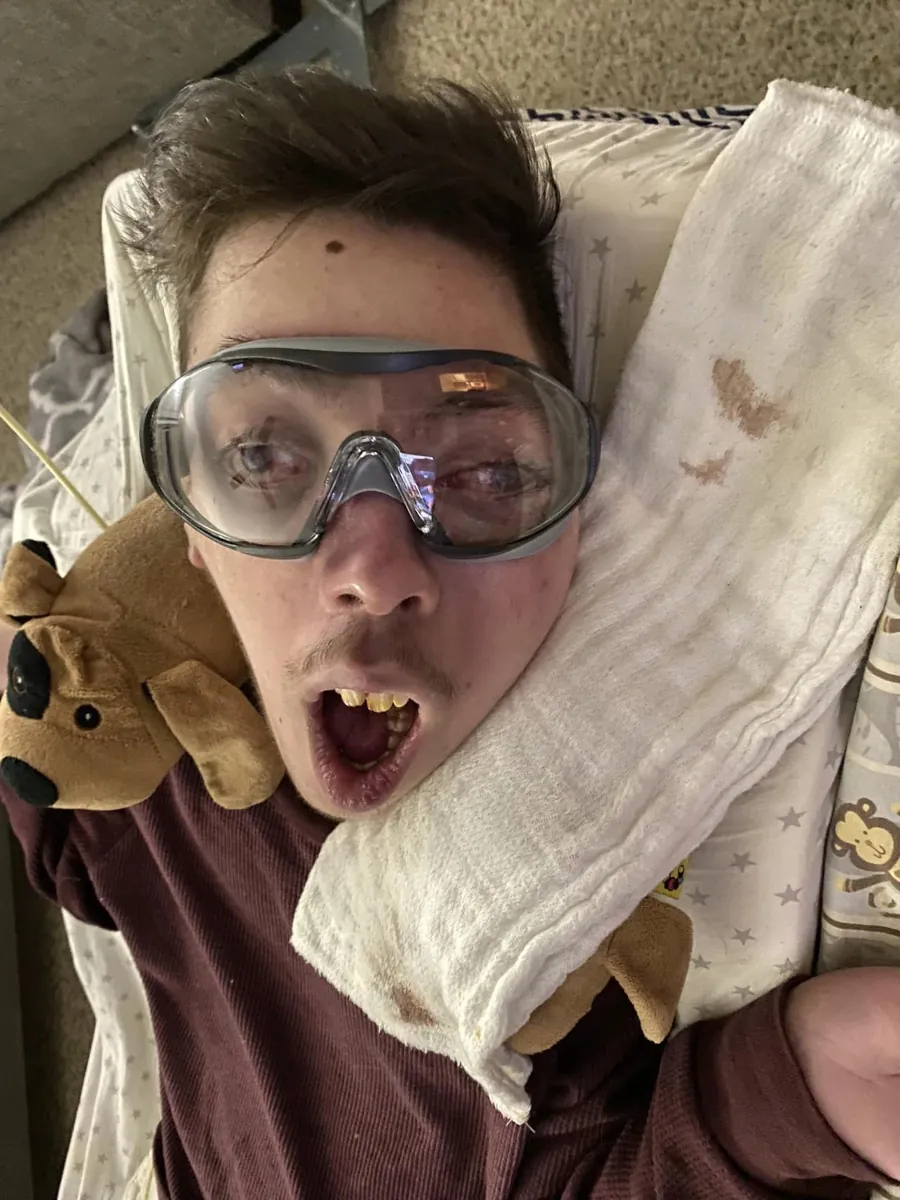
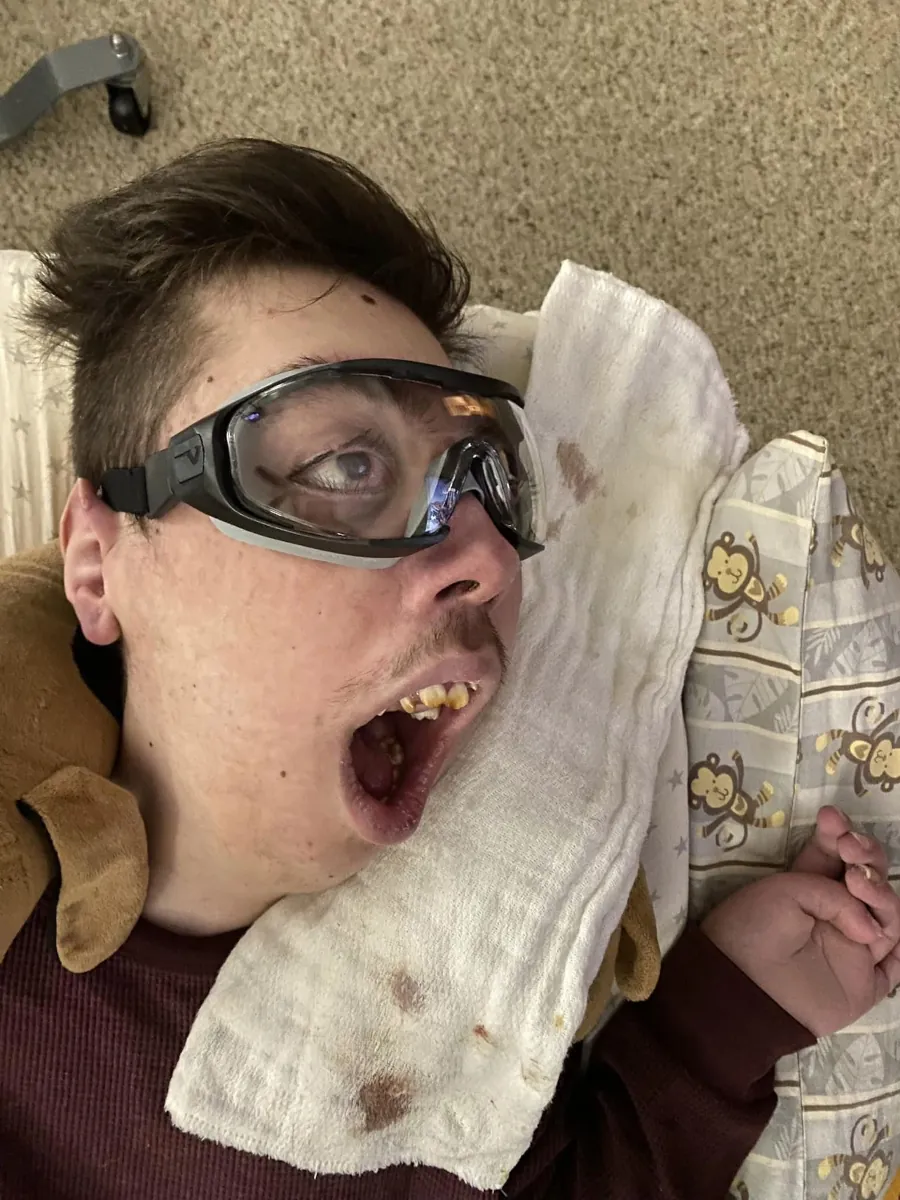
Stacy had a little fun with an app on her phone and modified that first picture:
In all seriousness, we think the goggles are actually working. Here is a picture of his left eye that was taken on January 23rd:
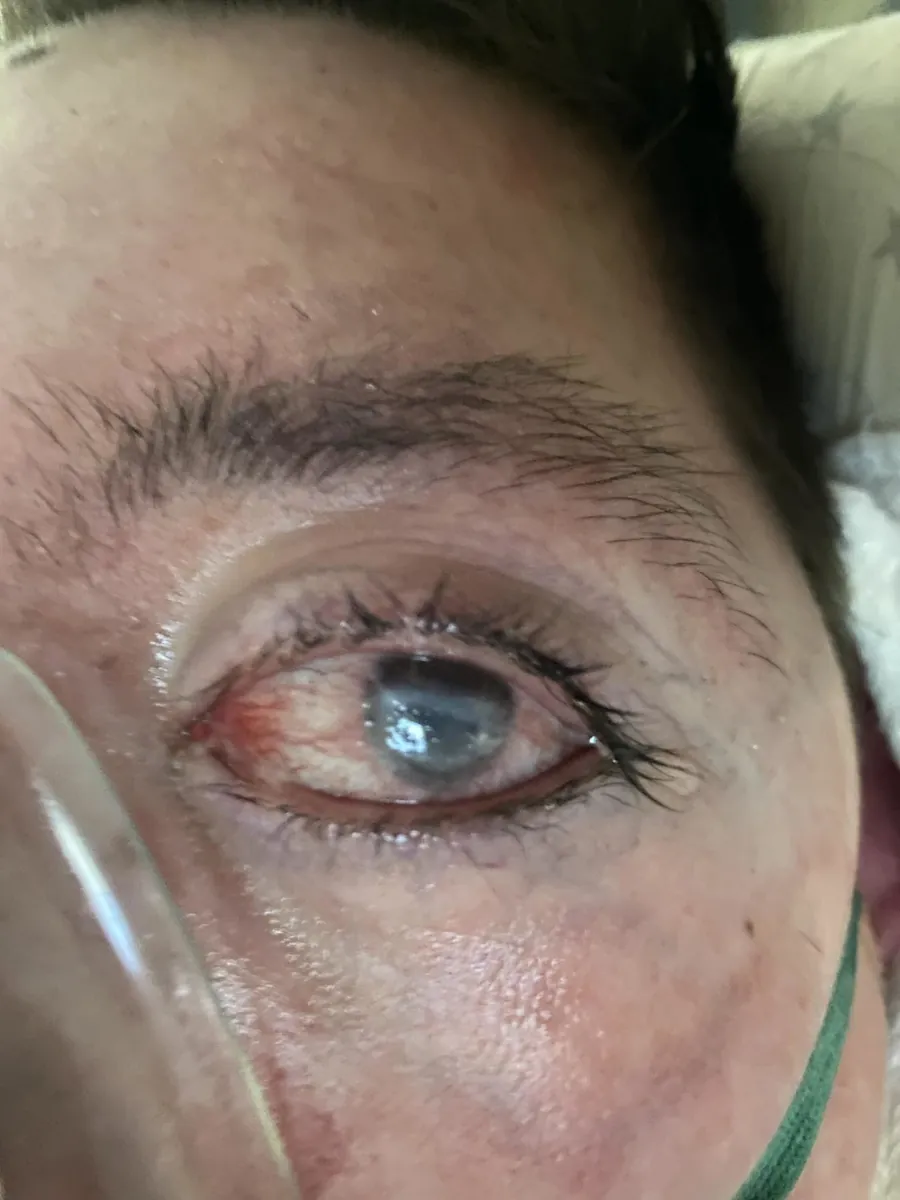
It’s kind of hard to see, but if you look closely at his pupil, you notice that it’s kind of hazy. His eyes get so dry that a thick layer of film develops over his eyeball that we have to peel off. Correction…a film that Stacy has to peel off. I’m too nervous that I’m going to poke him in the eye.
Here are side-by-side pics of the left eye. The original picture from the 23rd is on the left, then a picture from the 30th in the middle, and February 1st on the right.
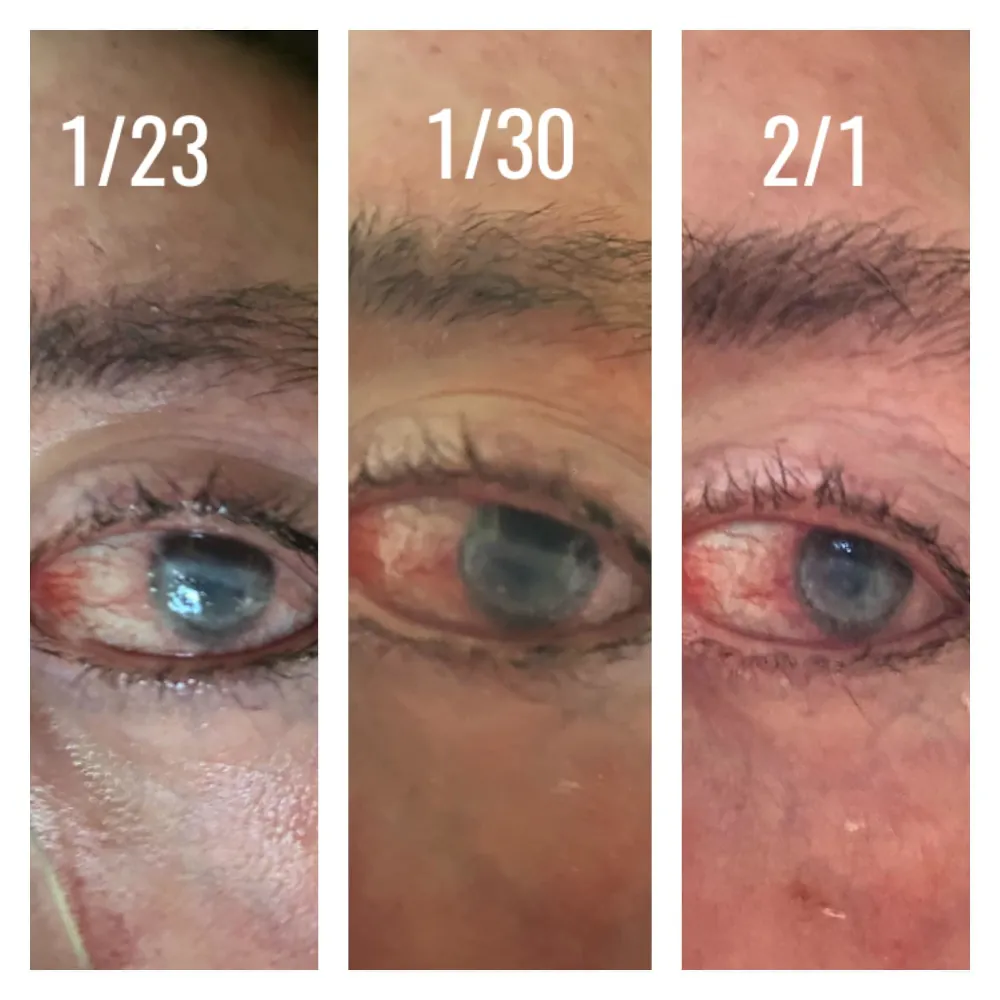
Such a huge difference in such a short amount of time. Maybe he won’t have to get that tarsorrhaphy surgery after all. We’ll just have to wait and see if his eyes continue to stay film free.
Ever since we were interviewed for one of their employee programs a couple of years ago, Nestle Health Science has been following James and has been sending us flowers during the holidays. A few days after Stacy mentioned the possibility of having tarsorrhaphy surgery, they sent us this cute flower arrangement:
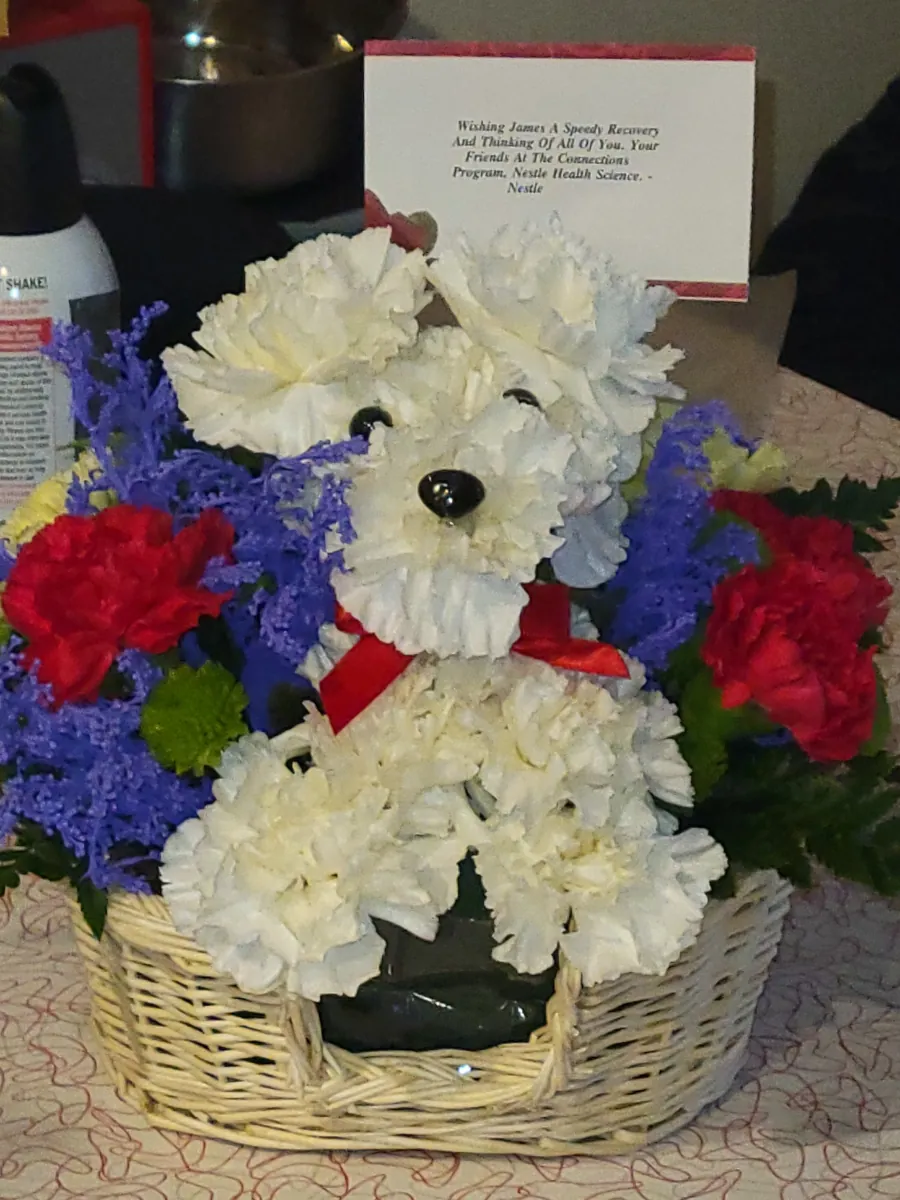
The card reads:
“Wishing James A Speedy Recovery And Thinking Of All Of You. Your Friends At the Connections Program, Nestle Health Science.”
Thank you Nestle for the well wishes, but we’re not going to do the surgery quite yet.
Ear Tubes
James got a new set of ear tubes put in last week. Like most of his surgeries, we had to be at the hospital bright and early. Actually, before it was bright. It was still dark outside when we got to the hospital at 6:30 am. The nice thing about being there so early though, is that he’s done early, and we can go about our day…or take a nap.
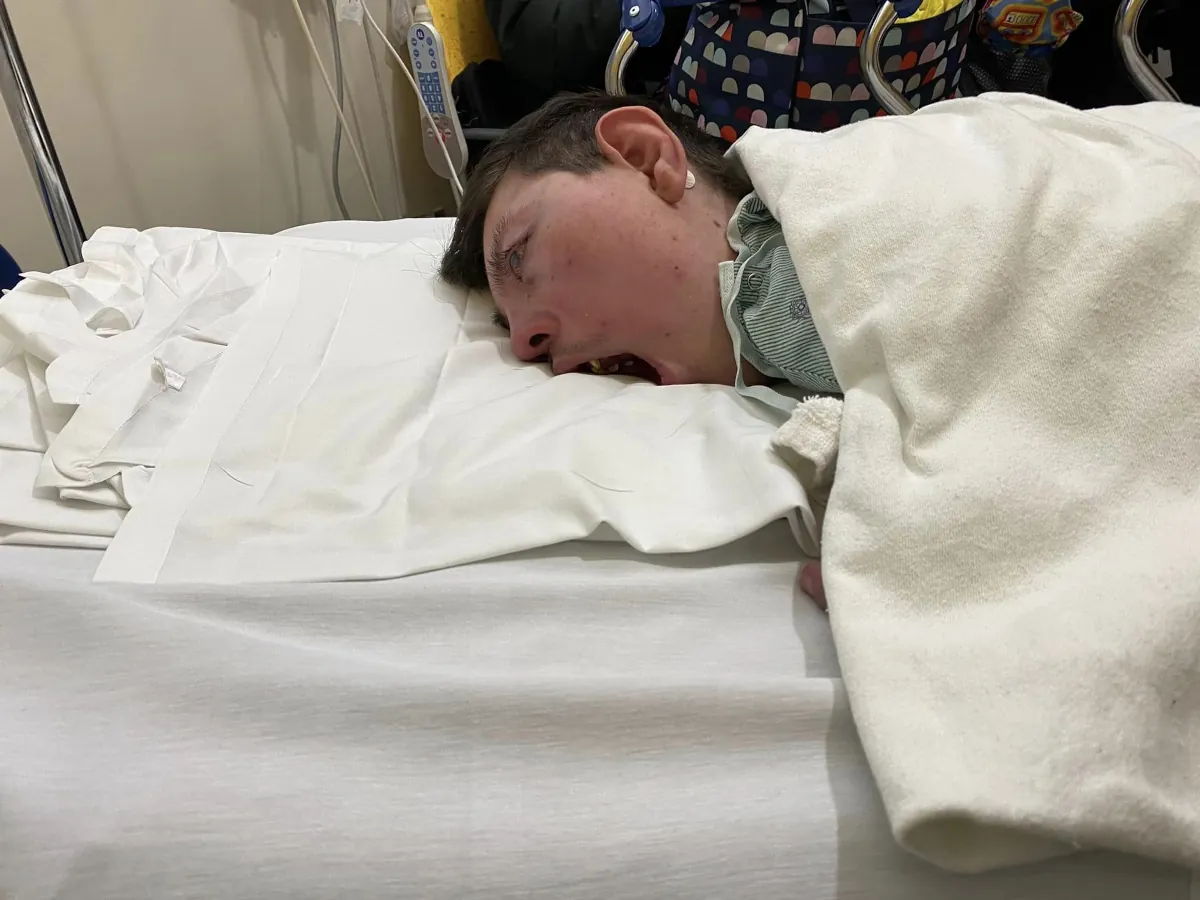
The ENT warned us ahead of time that he may not be able to replace the tube in his right ear because the canal is so narrow. When he was done, he told us that he struggled a bit to get the old tube out and the new one in, but he did it. This would most likely be the last time he would be able to replace the tube on the right side. The left ear is good. No issues replacing the tube on that side. These new tubes are supposed to be more permanent so hopefully we won’t need to replace them in two years like we’ve had to do with the previous tubes.
Mouth Issues
Continuing on with medical stuff, there is another problem area that we’re starting to explore options for. James has been struggling a bit to keep his sats up, so he’s been on oxygen a bit more often than usual. It may just be the weather, but it could also have something to do with his jaw and tongue. His lower jaw is narrow so his tongue doesn’t sit flat on the bottom like it should. Instead, it is at more of an angle. We’re not sure if this is causing a problem with his breathing or not, but at a recent dental checkup, his dentist said that she’d talk to some colleagues at University of Illinois at Chicago to see if oral surgery may be an option to fix his lower jaw and help his tongue lay flat.
Getting Ready for High School
We’ve been having so many mixed emotions lately with James graduating from junior high soon and heading off to high school in the fall. Stacy just ordered his graduation gown and keepsake last week. A couple of weeks ago we briefly sat in on the special ed class that James will be in at the high school and spoke with the teacher. It was not what I was expecting. I don’t think Stacy was either. We were both very pleased. It was a good mix of educational stuff, but they also do quite a bit of life skills things. Their classroom has a kitchen in it where they can learn how to cook. They teach the kids how to sell and count money by going around the school with a coffee and donut cart and selling them to teachers. One thing that really took us by surprise, and we had to have the teacher repeat it to make sure we heard her correctly, is that James can be in high school until he is 22. Really? Apparently, it’s state law. Who knew? We just assumed that he would graduate when he was 18 like all of the other kids. After learning more about the program he will be in at high school, we’re looking forward to it.