It finally happened. After more than a year, I have finally gone back to working normal hours. When Covid first became a health concern in February or March of last year, I almost immediately requested (and was approved) to work from home so that I didn’t contract Covid and/or bring it home to James. After a few months of working from home, I ran out of things to do remotely, and had to figure out a way to get back to campus in the safest way possible and limit the risk of bringing Covid home to James. The only thing I could think of that made sense was to work a night shift when very few people were around. For about three months last summer, I worked from midnight to 8:00 am. For fall semester, we went to a hybrid format, where classes were held both on campus and virtually. My boss asked me to work at least part of my shift during normal hours, so my schedule changed again…4:00 am to 12:30 pm. Now that I have both of my Covid shots, I am back to working my normal hours of 9:00 am to 5:30 pm.
While I did sometimes feel more productive working nights when I could focus on projects without being distracted or called away for something else, I don’t think I could ever get used to those hours. People say that you eventually get used to it. I don’t think I could. I hope I don’t have to work those crazy twilight hours again, but I would if James’ health depended on it.
James’ Health
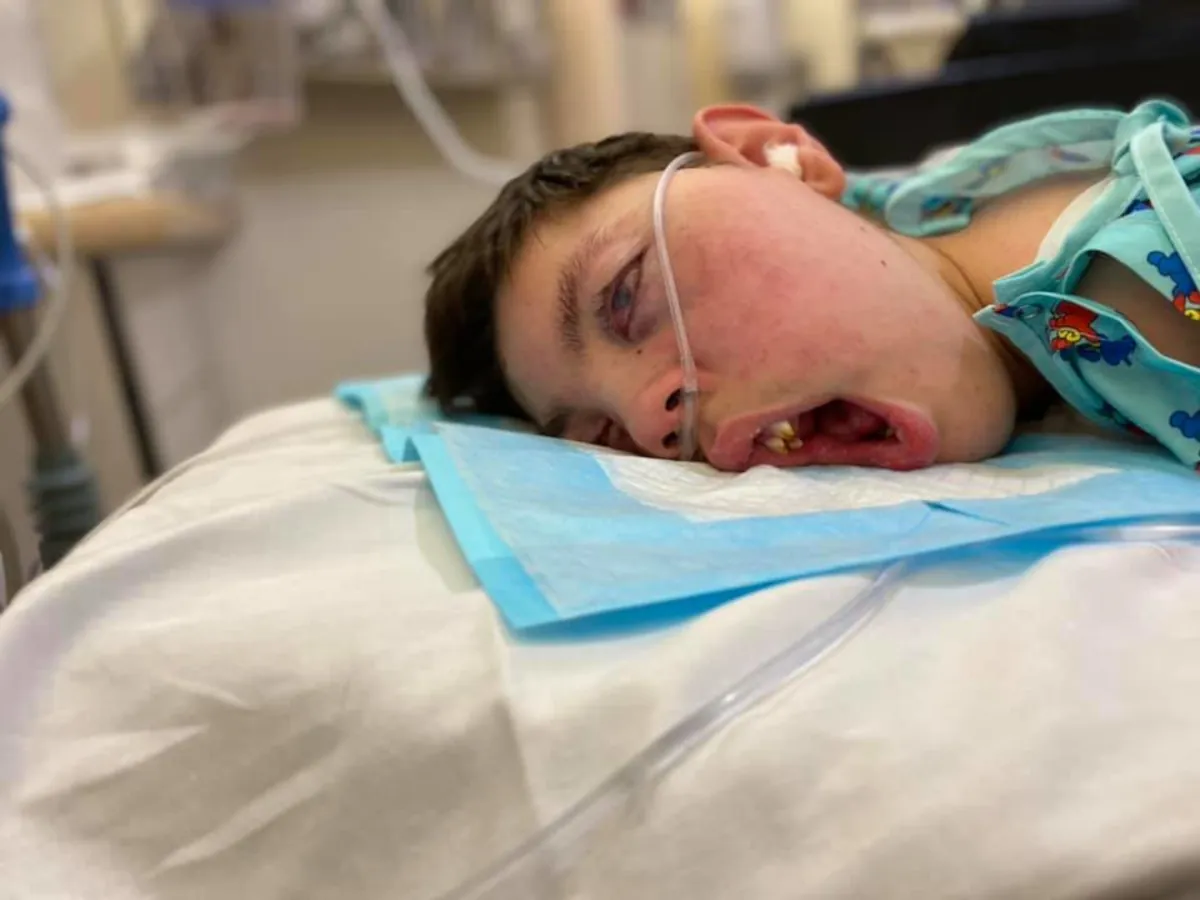
As you probably know, James has been struggling with respiratory issues since November. Just when we think we get him back to his baseline, he falls back and has breathing issues again. He gets back to normal, then falls back again. It’s been a continuous and frustrating cycle for five months now.
At the end of March, he finished one of these respiratory episodes, was able to breath on his own without needing oxygen, but about three weeks later he was having breathing issues again. Only at night, though. He seemed to be doing fine during the day. Stacy noticed that he was super dry at night and thought that might be at least part of the reason for him struggling to breathe. He was so dry that he wasn’t able to move enough air in and out of his lungs. He gets a saline nebulizer treatment before bed and sleeps with a humidifier next to his bed so their really shouldn’t be a reason for him being so dry.
Let the troubleshooting begin. One of Stacy’s first thoughts was to try a decongestant before bed to see if that would help loosen up his airways. It worked…for one night. The following night (and the night after that) he was back to being extremely dry and struggling to keep his oxygen saturations up. Okay, so what else can we try?
This is when we took a step back and asked the question: what changes occurred prior to him being really dry at night? Well, we did increase his feeds slightly about a week prior to this nighttime dryness. We highly doubted that was the cause. Why would an increase in his formula (a liquid) cause him to become dry? Cross that off the list.
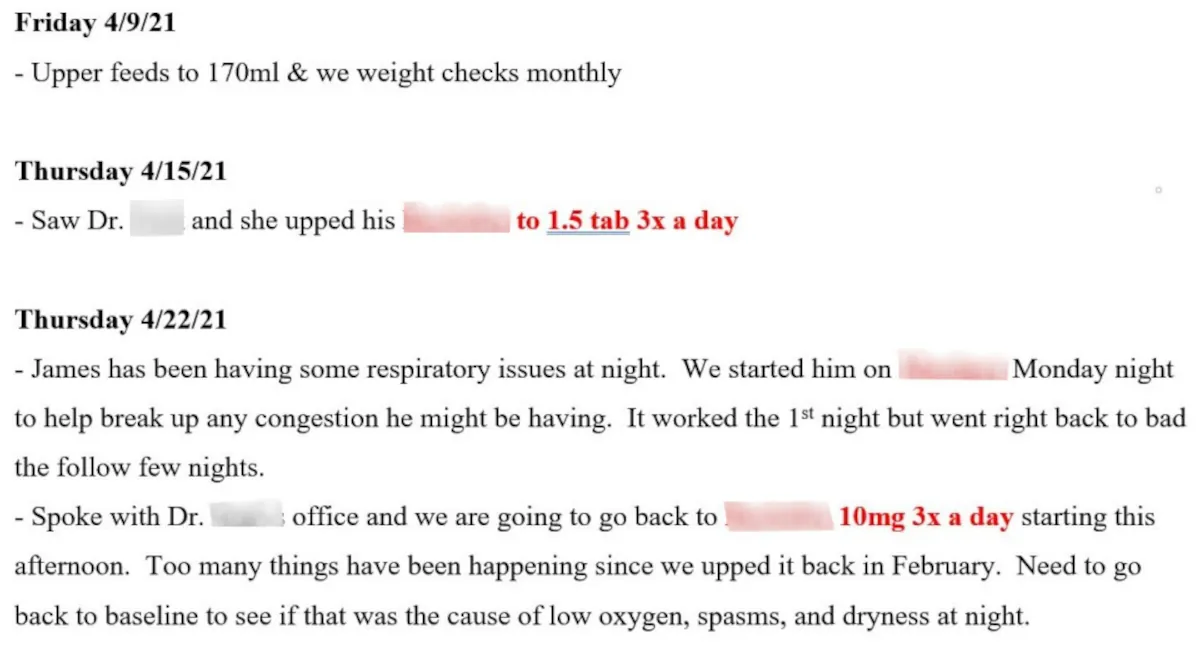
The other thing that changed was his neurologist increased the dose of one of his medications a couple of days before the issues started. That sounds like it could be the culprit. He has been on this medication for four years, so at first, we didn’t think anything of it when the doctor increased the dose. He has gotten a bit bigger, so it made sense to increase the dose to account for his larger size. It could have been coincidental, but because the dosage change happened so close to when he started to become really dry and have breathing issues at night, it seemed likely that this was the cause. The only way to know for sure was to decrease the dose to what it was before. Of course, Stacy talked to the neurologist’s office prior to decreasing the dose, and they agreed to let us try it. It took a few days, but he eventually became less dry, and came back to his baseline. No more struggling with breathing and keeping his sats up at night.
I want to point out a couple of things here. This is one of the reasons why it’s a good idea to keep a journal or some sort of notes about everything medical when you have a special needs or medically fragile child. Sometimes lots of things happen in a short amount of time and it’s hard to remember everything. Having notes makes it easy to go back and refresh your memory. Stacy was smart and has kept a “Medical Information” Word document since the day James was born. Having it in a Word document makes it easy to search for what you are looking for rather than flipping through pages and pages of handwritten notes. Our document is currently 75 pages long. These are Stacy’s notes about the med change, the respiratory issues that may have been caused by the med change, and returning to the previous dose of the med. I have redacted the doctor’s name and the medications mentioned in the notes.
Ear Tubes
Last Monday James had new ear tubes put in. It’s normally an outpatient procedure, but we were worried that with his recent respiratory issues there would be complications that would require an overnight (or longer) hospital stay. Fortunately, the surgery went according to plan and was able to go home after the surgery.
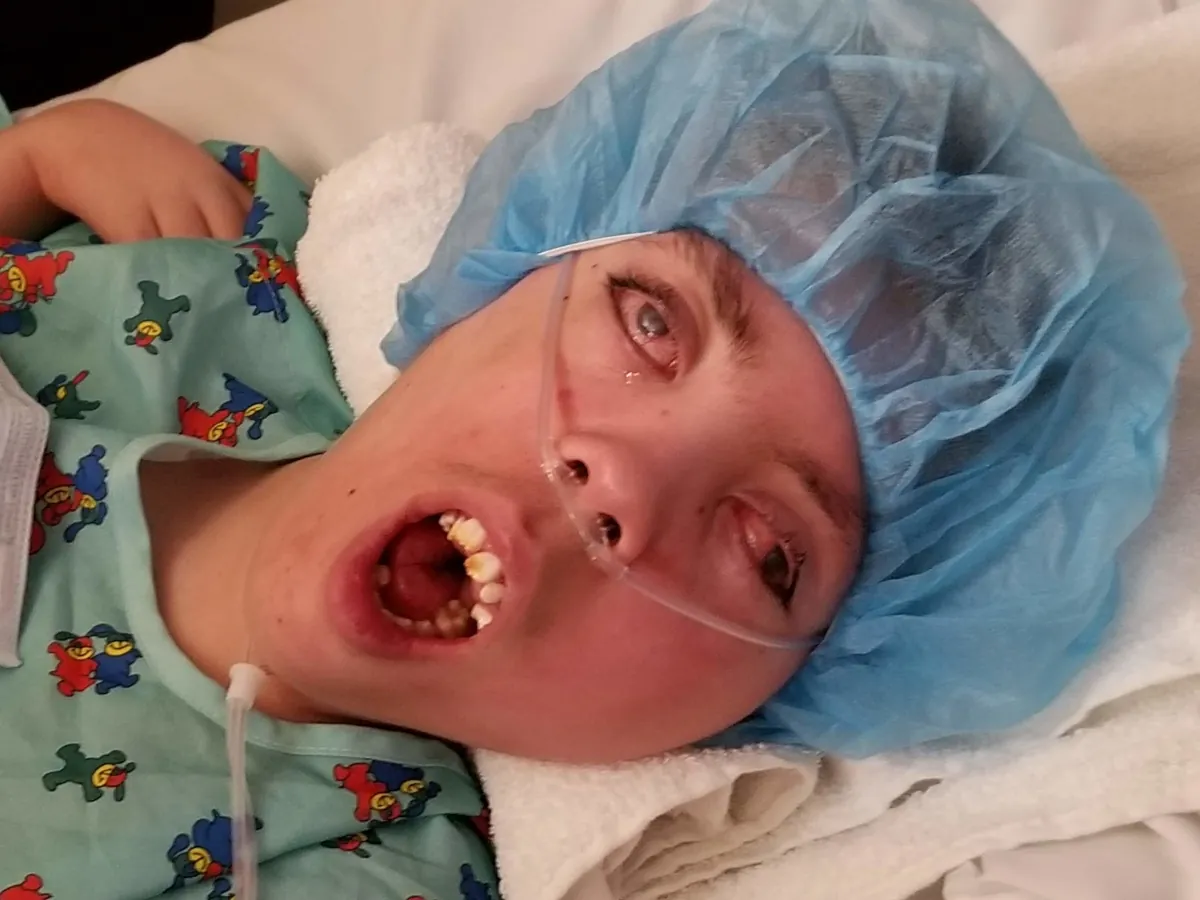
After the new tubes were in and while he was still under anesthesia, they did an auditory brainstem response (ABR) test. The ABR is a way to test the hearing of individuals like James who can’t communicate and, therefore, cannot take a normal hearing test. For the ABR, they put electrodes near the ears and elsewhere on his head and then place headphones over his ears. They play sounds through the headphones and the electrodes measure how the hearing nerves respond to those sounds. James’ ABR results looked good. He can hear higher frequencies better than the lower frequencies, but he does hear both.
Therapy Table
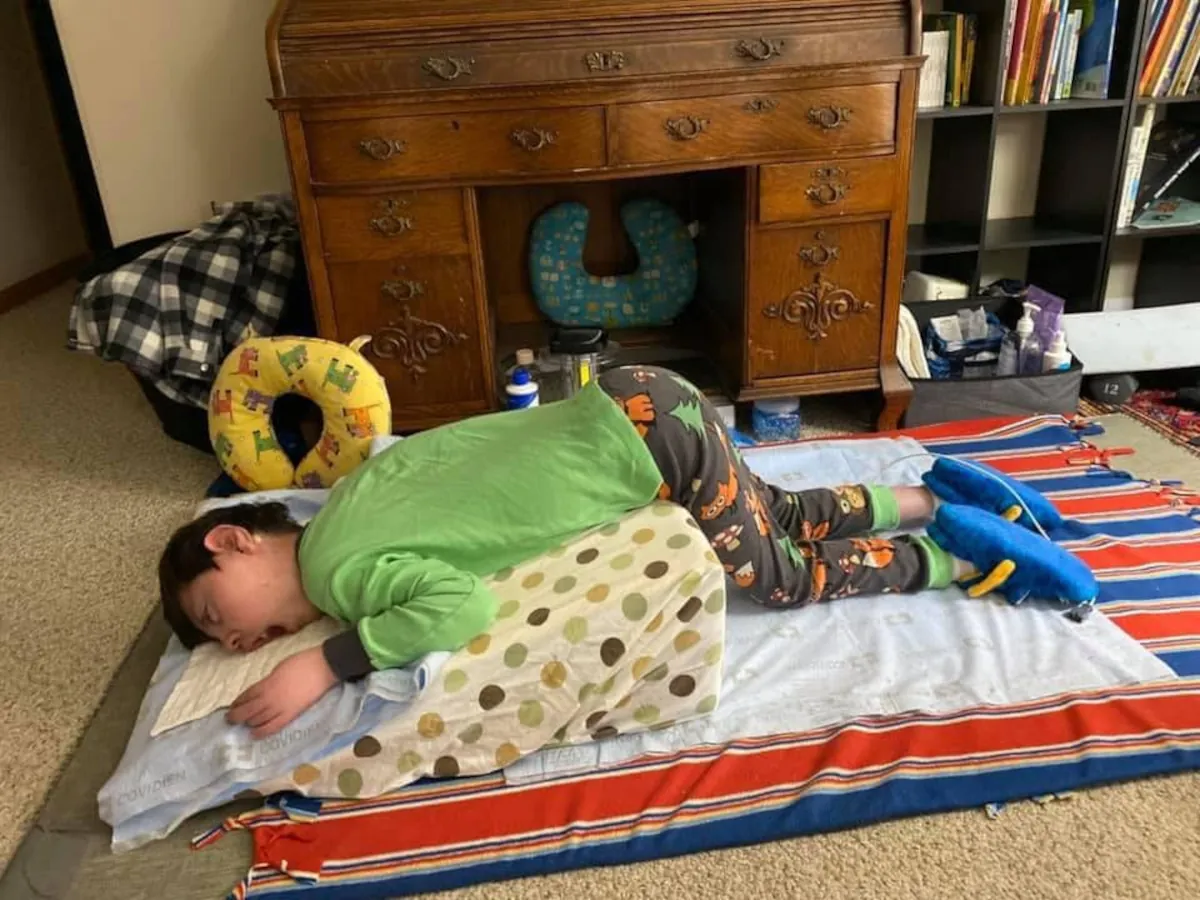
In other medical news, a special needs mom posted in one of the Facebook groups that Stacy is a member of that she had just bought her son a therapy table that she found locally through Facebook Marketplace. Stacy told me about it and we both thought it would be something that all three of us could benefit from. James has always done belly time to drain secretions on a blanket on the floor. He also gets his percussion vest treatments on an angled board on the floor.
As he’s gotten older and heavier, it’s become increasingly more difficult to pick him up off the floor. A therapy table would get him off the floor and make it easier on Stacy’s and my back to put him down and pick him up. Stacy did some searching through Facebook Marketplace to see if there were any for sale near us, but the only one she could find remotely close was at a Habitat for Humanity Restore over an hour away. She called around to Restores closer to us and found a therapy table at one that was 30 minutes from where I work. I went to look at it after work that night and bought it. Normally these tables sell for a few hundred dollars new; we got it for $75. For that price, we couldn’t pass it up. If it turned out that we couldn’t use it for some reason, we could always turn around and resell it.
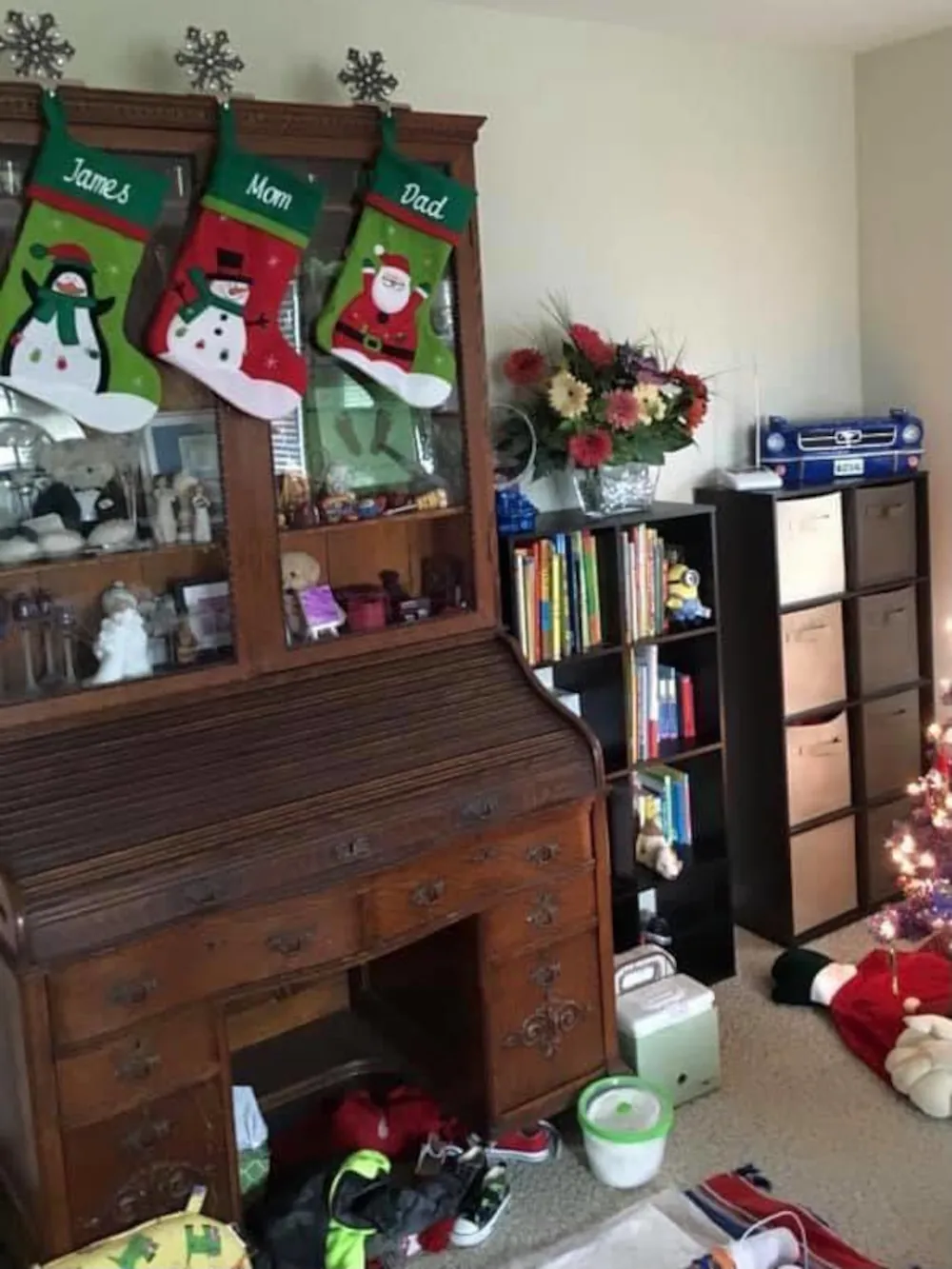
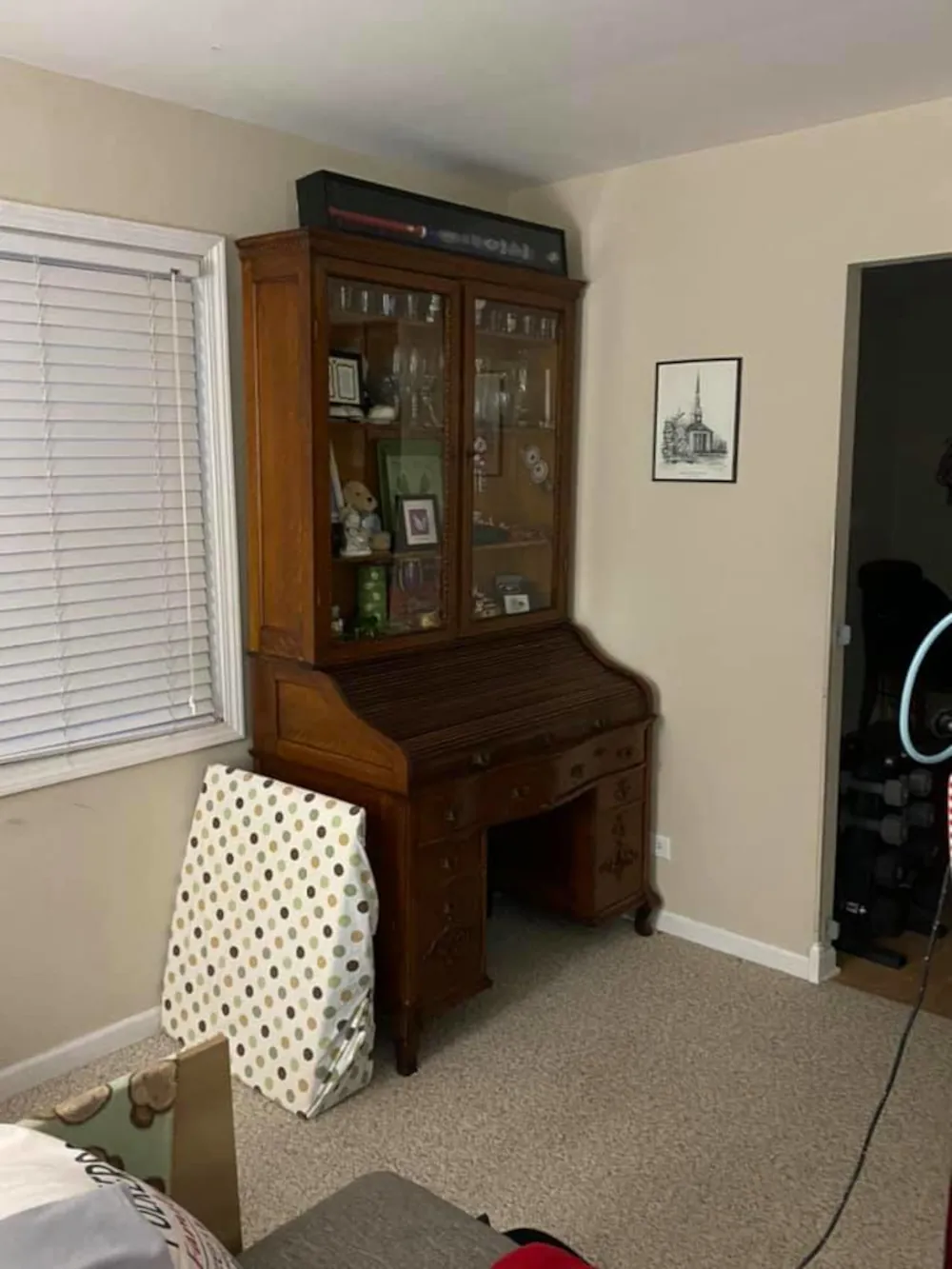
Once I got it home, we had to figure out where we were going to put it. The only logical place was the living room since that is where he does belly time and his percussion vest treatments. Good thing we’ve been working out, because we determined the best spot for the therapy table was on the wall where we had a rolltop desk, with a hutch on top. Here is a picture of the rolltop desk before we moved it. And before you ask, no, we do not still have our Christmas decorations up. We didn’t take before pictures, and this was one of the few pictures we could find with of the rolltop desk.
Here is a pic of James having some belly time in front of the rolltop desk before we moved it:
On the other side of the room is where he used to do his percussion vest treatments:
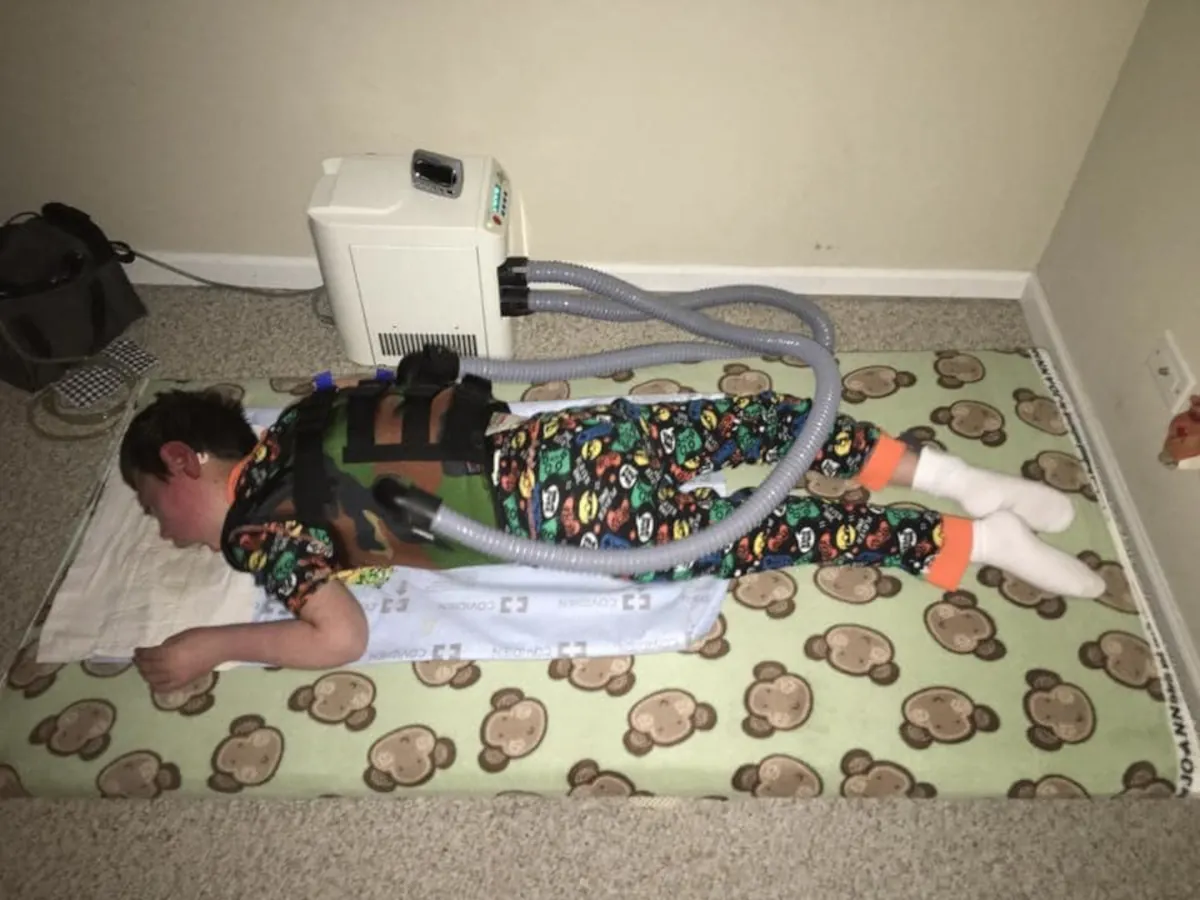
The rolltop desk fits almost perfectly where his percussion vest area used to be. Damn that sucker is heavy! Fortunately, we have furniture sliders which made it a little easier to move, but I still thought I was going to throw my back out lifting it up enough for Stacy to get the sliders under the legs.
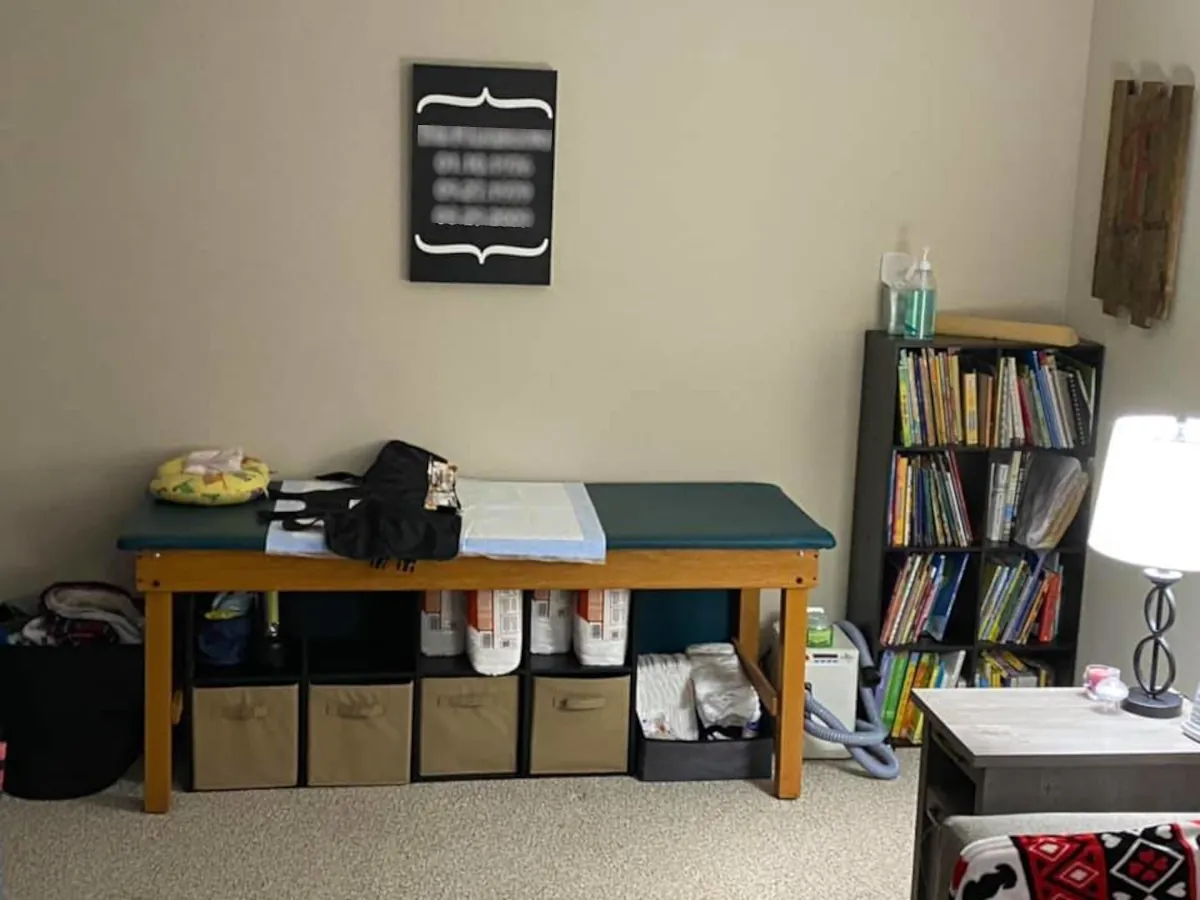
And here is James’ new therapy table where the rolltop desk used to be. If you notice in the first picture above—the one with the Christmas decorations—we used to have two bookshelves to the right of the desk. One of the bookshelves is full of books, and the other is used for storing supplies like drool cloths for belly time, diapers, wipes, and gloves. The table wouldn’t fit on the wall with both of those shelving units there, so we laid the one with the supplies on its side and slid it underneath the table. It may look odd to have a therapy table in the living room, but this is the house of a medically fragile child, and this is what works for us. This is where James will be able to do both belly time and his percussion vest treatments.
School
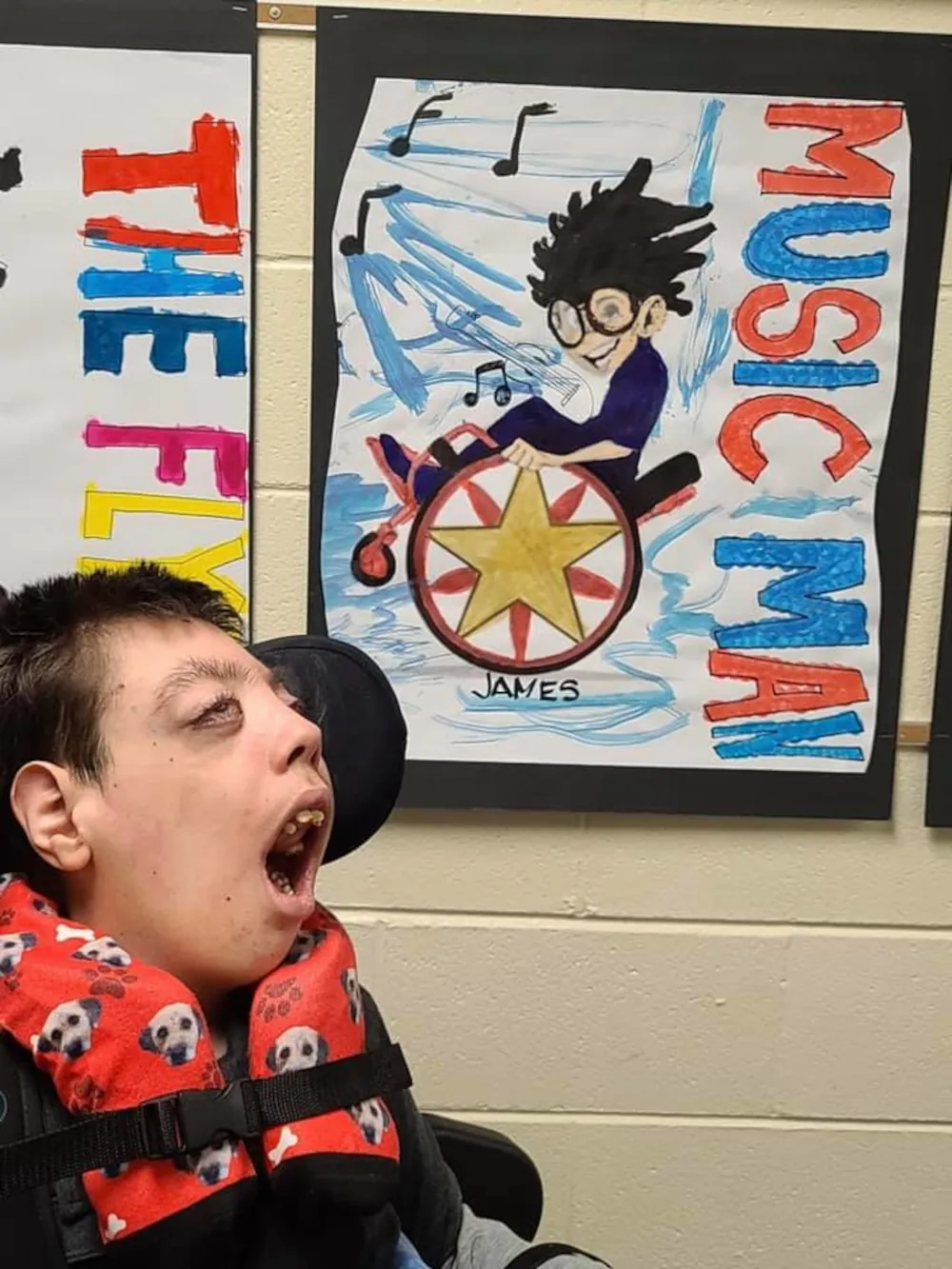
Not too much to share regarding school this month. He did some cool artwork. I think he may have had a little bit of help, but he won’t admit it.
And we got his final elementary school picture:

We still can’t believe that he will be going to junior high in the fall. They say that kids grow up so fast, and they’re not kidding!
Happy Heavenly Birthday
If you’re new here, Stacy and I lost our first son, Jackson, before he was born. If you wanted to read more about this loss, read The First Pregnancy section on the About Us page. Had Jackson been born, April 21st would have been his 12th birthday. Happy Birthday dude. Your mom and I think about you often. Someday we’ll finally get a chance to hold you. We love you.