• Post category:Vacation
  • Reading time:8 mins read

With James having his spinal fusion surgery next month—fingers crossed insurance doesn’t deny us again—we’re not sure if he will be up for travelling this summer, so we decided to take a Spring Break trip to Indianapolis. For longer trips, we normally drive at night because James seems to travel better when he’s sleeping. With Indy only about 4 hours away, we decided to try driving during the day. He did good, except for one minor problem. More on that shortly.

Driving during daytime hours, as opposed to in the middle of the night, allowed us to make some stops along the way. One of those stops on the way to Indianapolis was at the Albanese Candy Factory Store In Merrillville, Indiana where we stocked up on lots of gummy bears and worms…probably too much.

Okay, so back to that problem I mentioned earlier. Shortly before we had gotten to the hotel, Stacy, who was sitting next to James in the back seat, started smelling something. She eventually determined it was poop. That’s not abnormal. We got to the hotel, checked in, and as I was bringing our luggage from the car to the room, Stacy gave James a diaper change. Without getting all gross, let’s just say that he had a loose stool and it had seeped out of his diaper. Fortunately, the hotel had a laundry room so we were able to do a load of laundry there and not have to venture out to find a laundromat.

That was day 1 of our vacation and I wish I could say that was the worst part of the trip, but it wasn’t. That was just the beginning. Something happened every day for the first half of our vacation. It got to the point where we were wondering what was going to happen next.


Day 2: The Old Spaghetti Factory, Circle Center Mall, and I Get Sick

Many years ago—before James was born—Stacy and I discovered The Old Spaghetti Factory on one of our trips to Fan Fair (now called CMA Fest) in Nashville. It quickly became one of our go to restaurants whenever we went to Nashville. When we found that there was one in downtown Indianapolis, we had to go. They have really good pasta and good-sized portions. Something that I ate must not have agreed with me. After we finished our lunch, we went across the street to walk around the Circle Center Mall. Shortly after we got into the mall, I started to feel a bit sick to my stomach and had to quickly find a bathroom. I felt much better after I did my business. No idea what that was about.
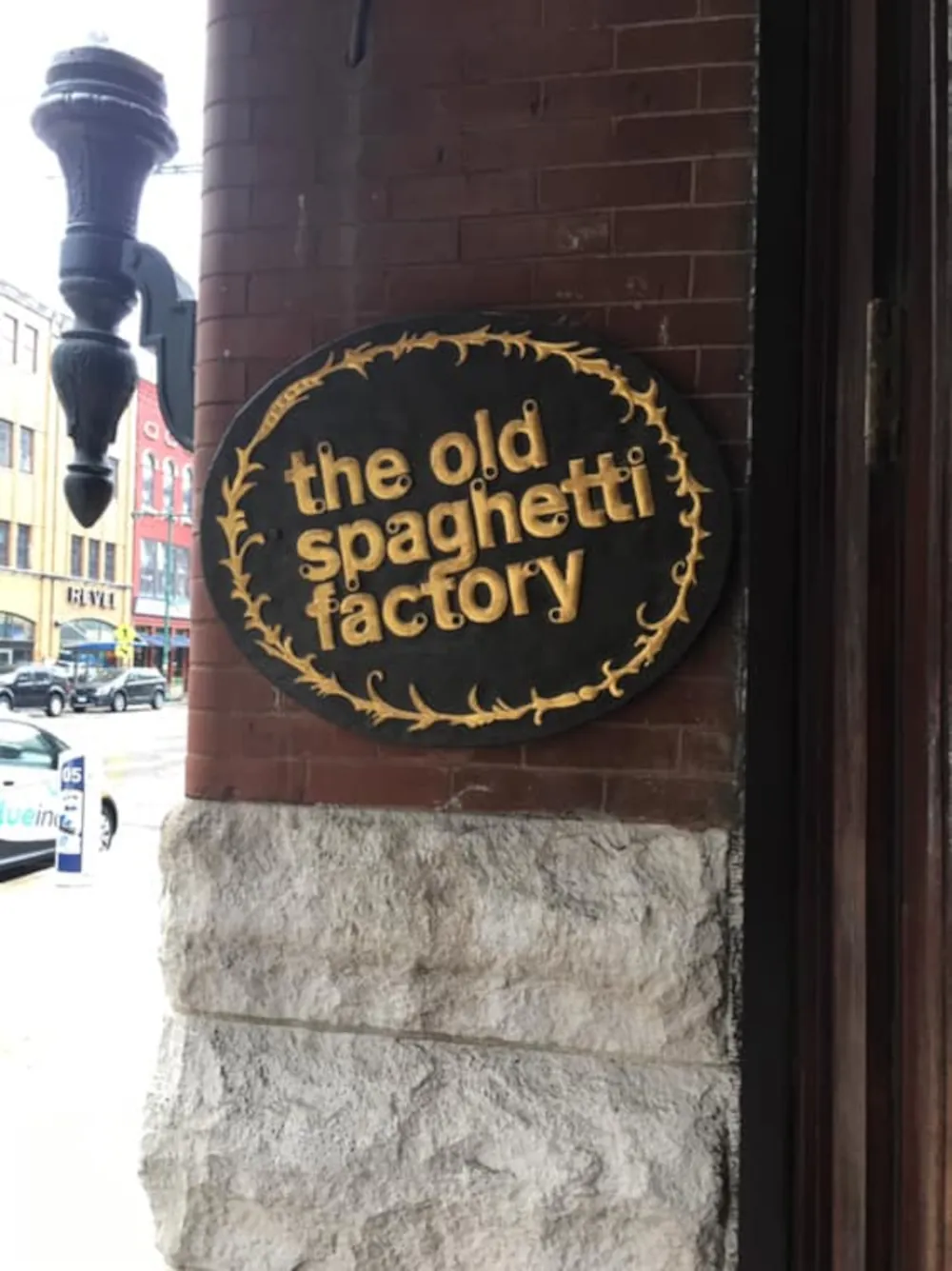
 

An oval restaurant sign hangs on a brick wall, featuring gold lettering on a dark background that reads “the old spaghetti factory.” A decorative gold vine‑style border surrounds the text. In the background, parts of nearby buildings and a few vehicles are visible, giving the scene an urban street feel.
The Old Spaghetti Factory


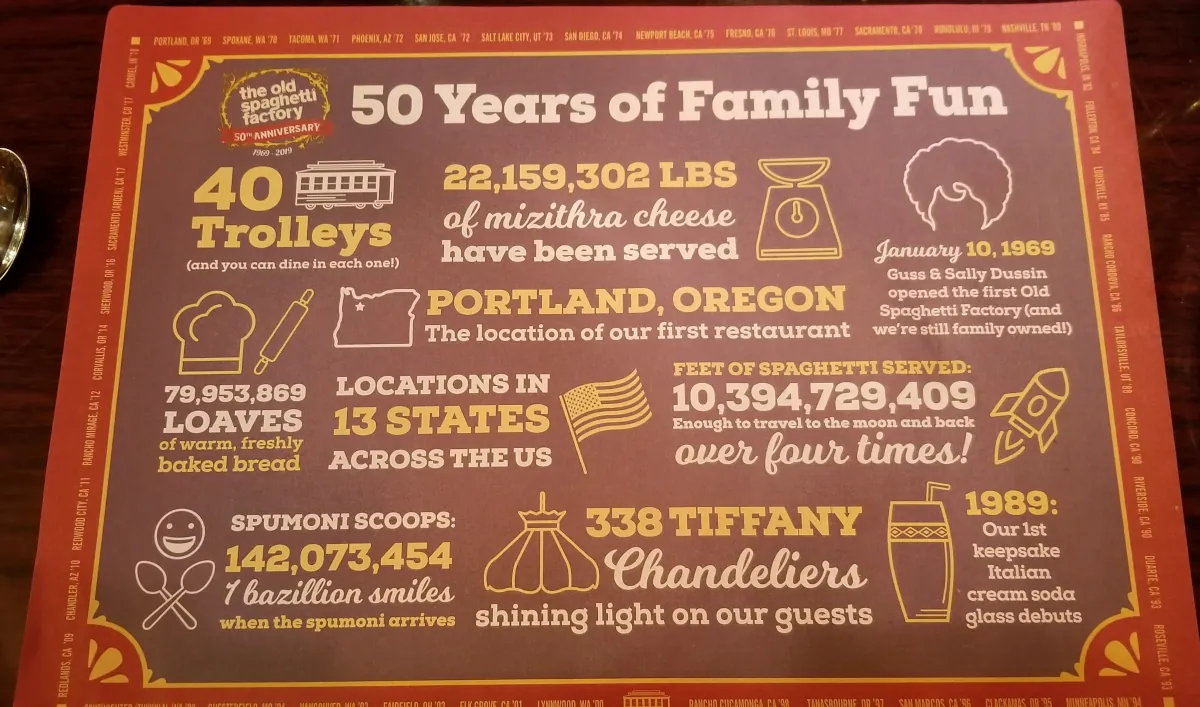
A maroon placemat‑style infographic celebrates “50 Years of Family Fun” for The Old Spaghetti Factory, featuring bold yellow and white text with small icons. It highlights milestones such as the chain’s founding in 1969, the number of trolleys used as dining spaces, millions of loaves of bread and scoops of spumoni served, and the total feet of spaghetti produced. Additional facts include the first location in Portland, Oregon, and the number of chandeliers and restaurant locations. A border lists various cities where the restaurant operates.
The Old Spaghetti Factory placemat


Day 3: Children’s Museum and James’ G-Tube Extension Leaked

On day 3 of our vacation we went to check out the Children’s Museum of Indianapolis. Holy cow that was impressive. It’s a bit pricey, but totally worth it in my opinion. After we got into the museum, we decided to find an area to give James a little bit of tummy time before we started our adventure. As Stacy was about to get James out of his wheelchair, she noticed that one of the ports in his g-tube extension had opened and leaked formula and stomach juices all over his lap. Poor kid! Stacy always keeps a change of clothes in the van for situations like this so I ran back to get them. I held up a blanket to block the view of Stacy changing James’ clothes. After that incident, we all had a good time at the museum. We took well over 100 pictures, so I obviously can’t post them all here. It was tough to narrow it down, but here is just a fraction of the pictures we took.
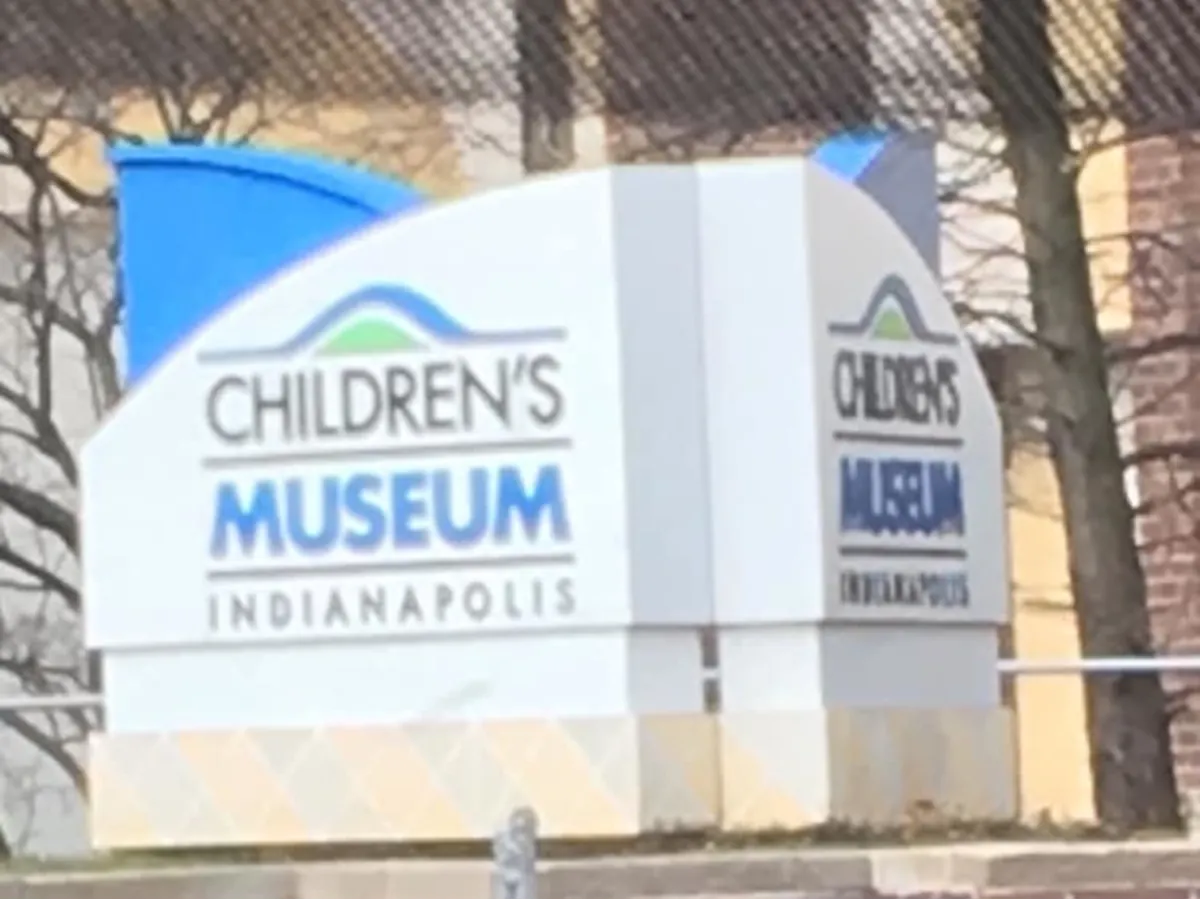
A large outdoor sign for the Children’s Museum of Indianapolis stands in front of trees and a brick building. The sign is white with blue lettering and features a stylized green‑and‑blue wave logo above the text. A fence and surrounding greenery frame the scene, giving it the look of a landmark entrance.


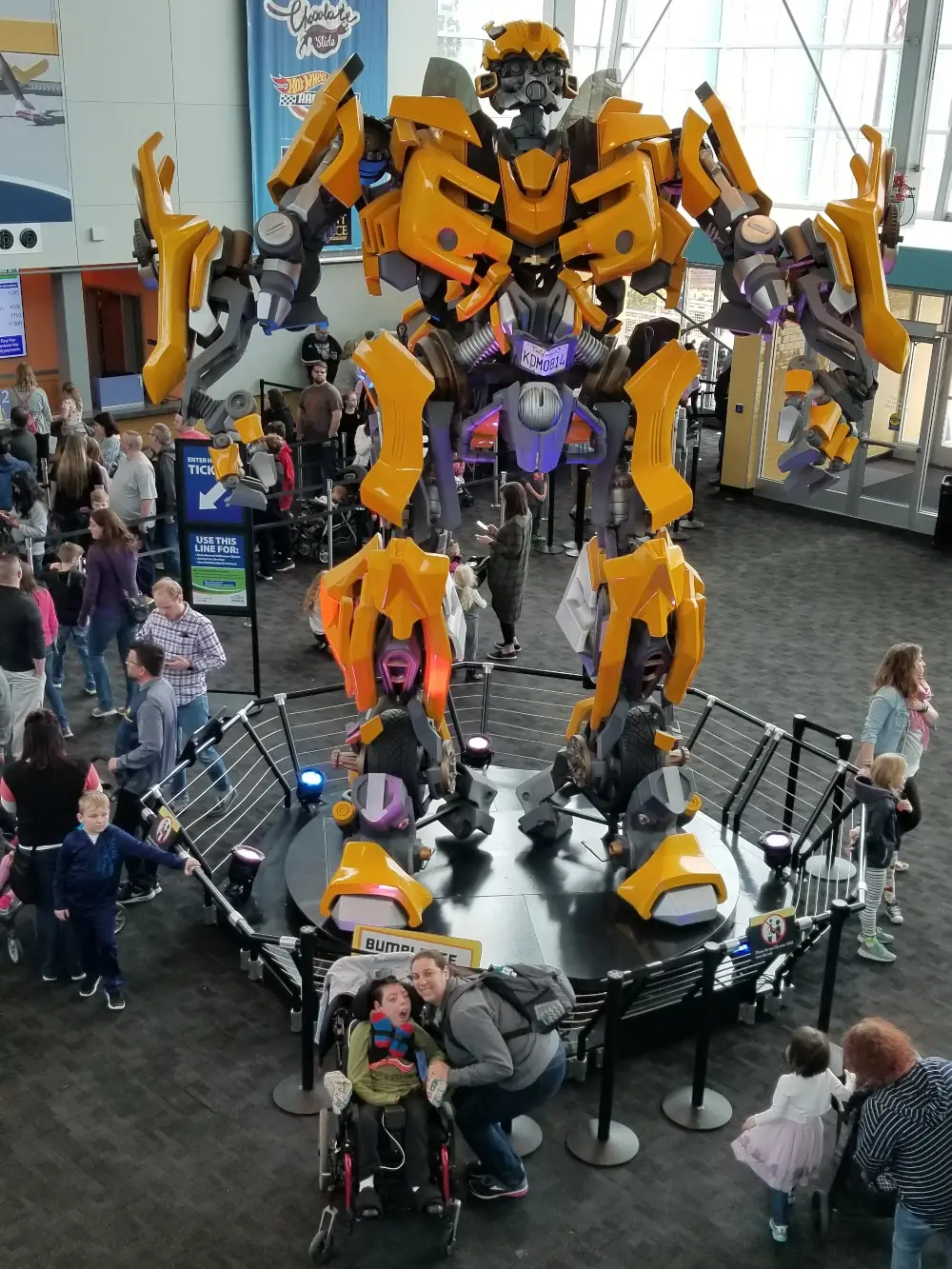
A large yellow Bumblebee statue from Transformers stands on a circular platform surrounded by a railing in a busy indoor exhibit space. The figure is highly detailed with mechanical armor panels and bright yellow accents. A small sign at the base identifies the character as “BUMBLEBEE. ”Visitors, including James and Stacy gather around to look and take photos. Signs and banners in the background reference other displays, including “Chocolate of the World” and “Hot Wheels.”
Bumble Bee from Transformers


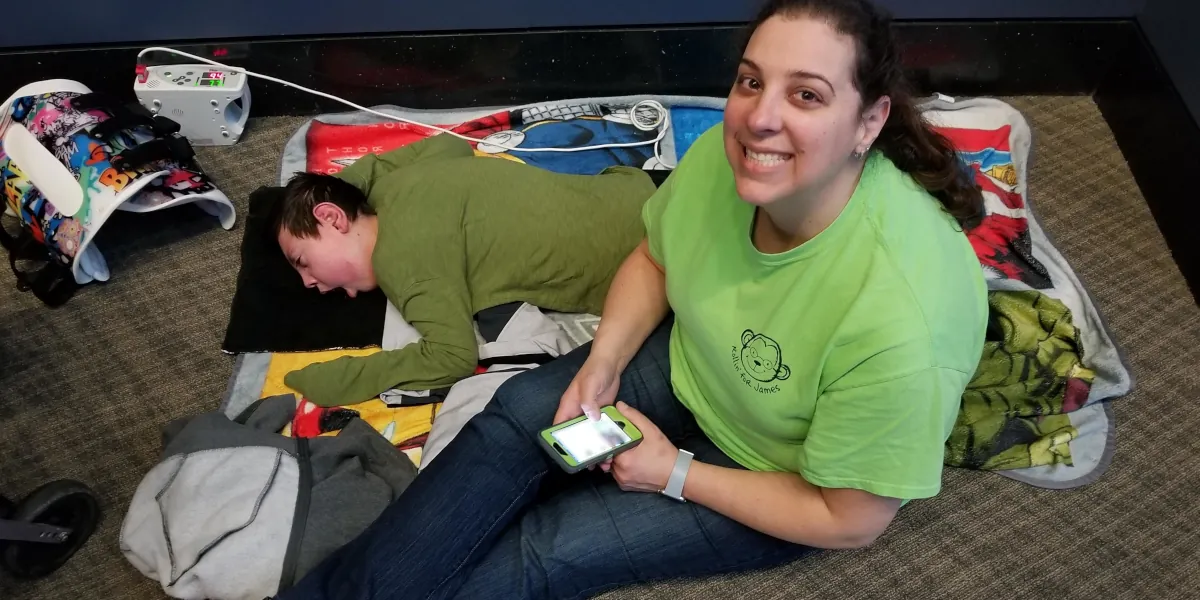
James and Stacy are on a carpeted floor indoors. James lies on a colorful patterned blanket, appearing to rest, while Stacy sits beside him wearing a bright green shirt and holding a smartphone. Around them are a folded blanket, a backpack, and James pulse ox with cables. The scene feels casual and relaxed, as if they’re waiting or taking a break in a shared space.
Tummy time and clothes change before we started our adventure


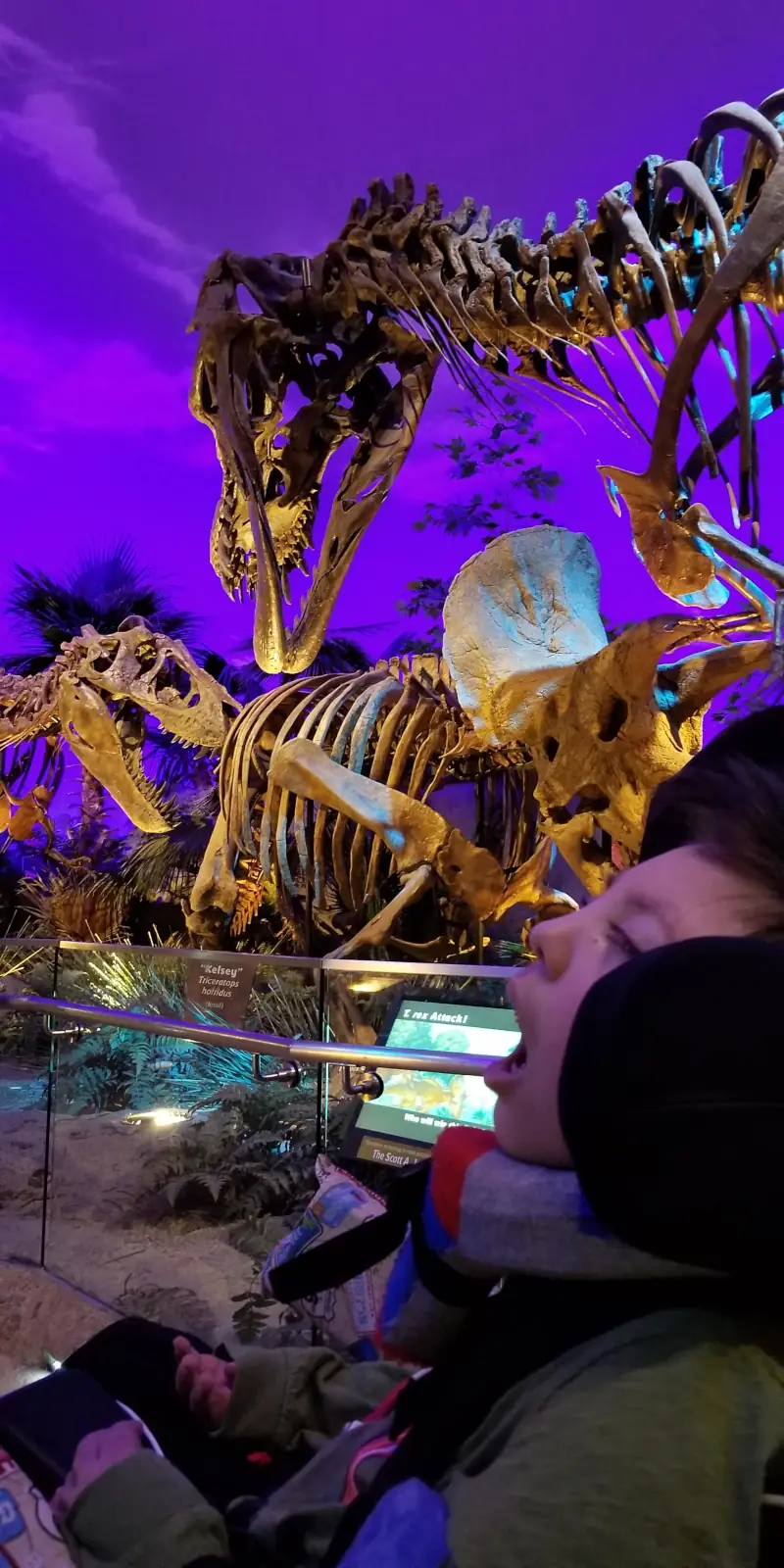
James sits in his wheelchair in the foreground of a dramatic dinosaur exhibit featuring large skeletons of a Tyrannosaurus rex and a Triceratops. Purple and blue lighting highlights the bones, and the angle makes it appear as though the open jaws of the T. rex line up with James' position, creating a playful visual effect. Glass barriers and informational plaques are visible, including one labeled “T. rex Attack!” The scene has an energetic, immersive museum atmosphere.
Dinosaurs


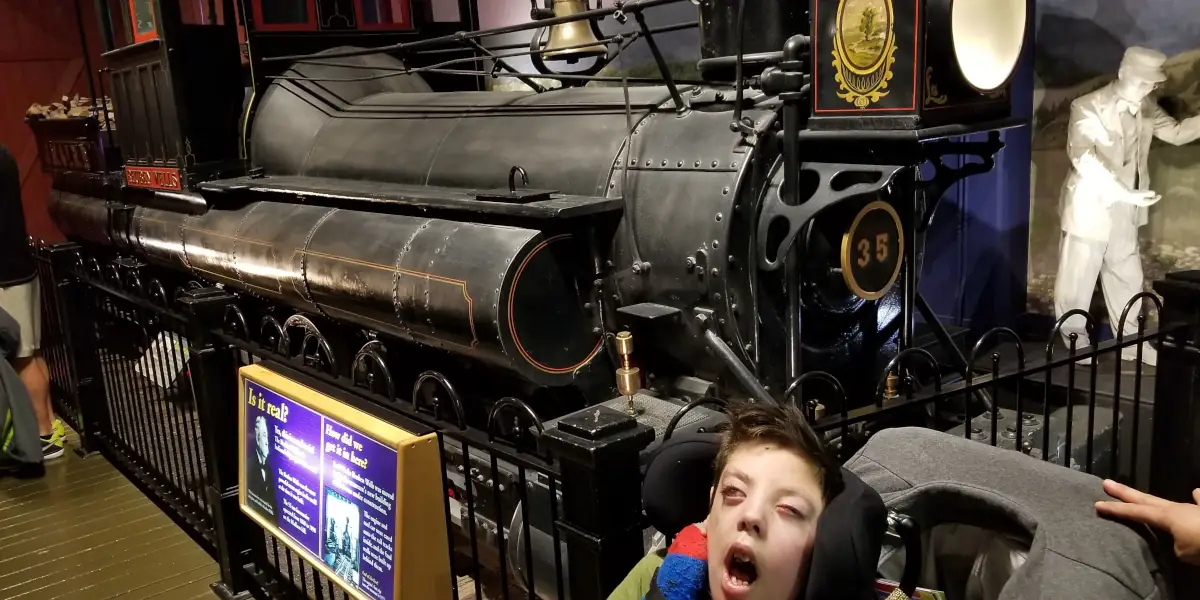
A historic steam locomotive labeled “35” and “Jupiter” is displayed behind a black metal fence in a museum setting. The engine is black with red and gold detailing, and an informational sign in front includes sections about the train’s authenticity and how its parts were transported. A mannequin dressed in white work clothes stands behind the fence near the engine. In the foreground, James sits in his wheelchair facing the camera.
Old locomotive


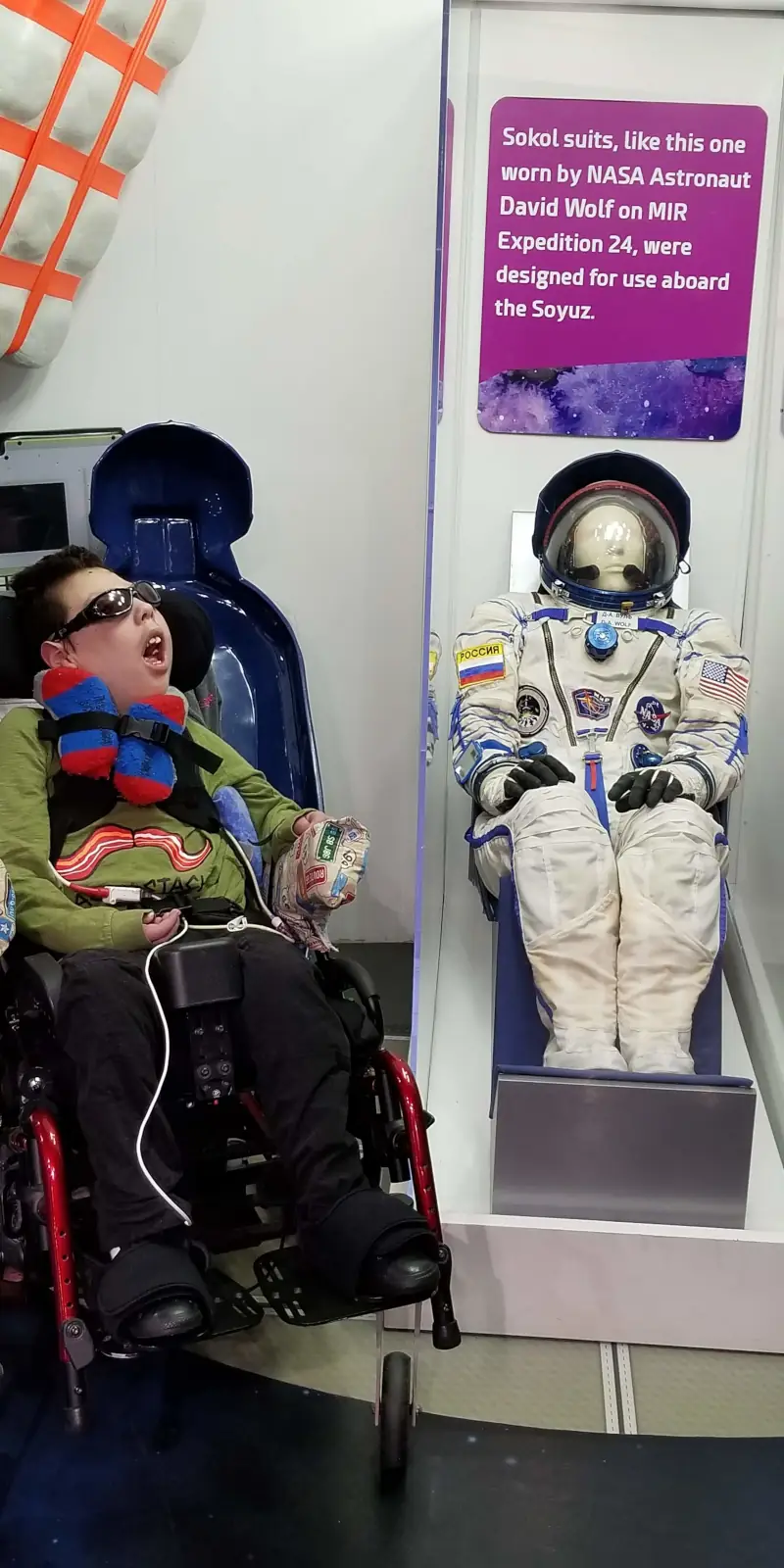
James sits in his wheelchair beside a display case containing a Sokol space suit worn by astronaut David Wolf. The suit is mounted on a mannequin with NASA and Russian mission patches, along with a reflective helmet. James wears sunglasses, a green shirt, and a red‑and‑blue neck pillow. Behind him is a blue seat and part of a white wall with orange padding.
Space suit


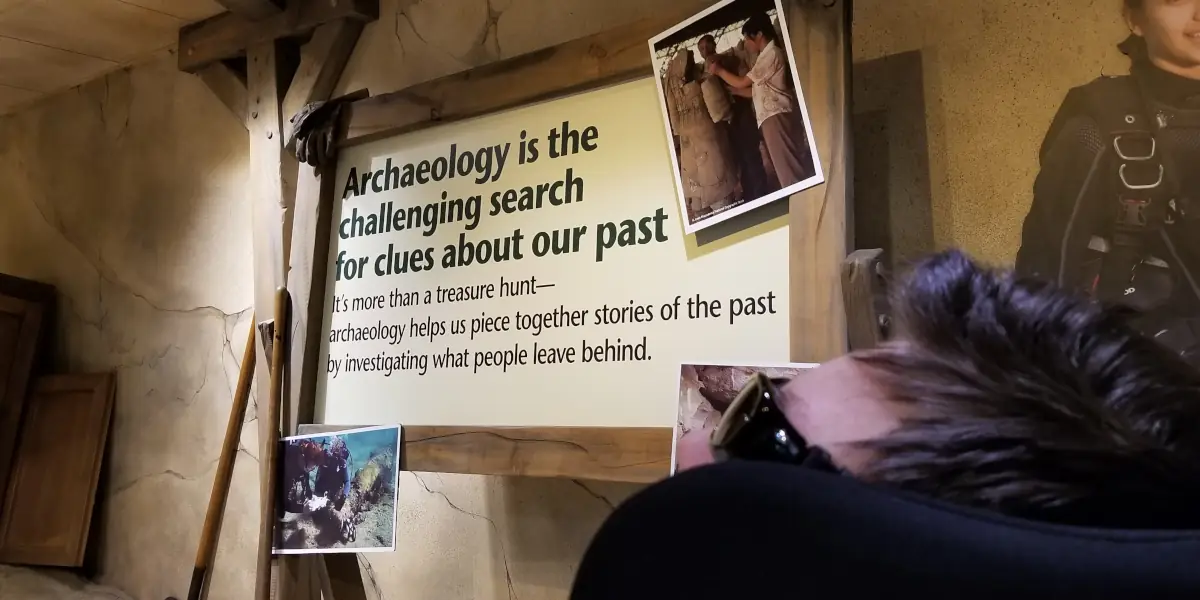
A museum display about archaeology features a large sign with text explaining that archaeology is the search for clues about the past. The sign is surrounded by photographs of people working at dig sites, including one underwater image. The backdrop has a rustic, excavation‑site look with wooden framing and textured walls. In the foreground, James is visible wearing sunglasses, looking toward the display.
Archaeology exhibit


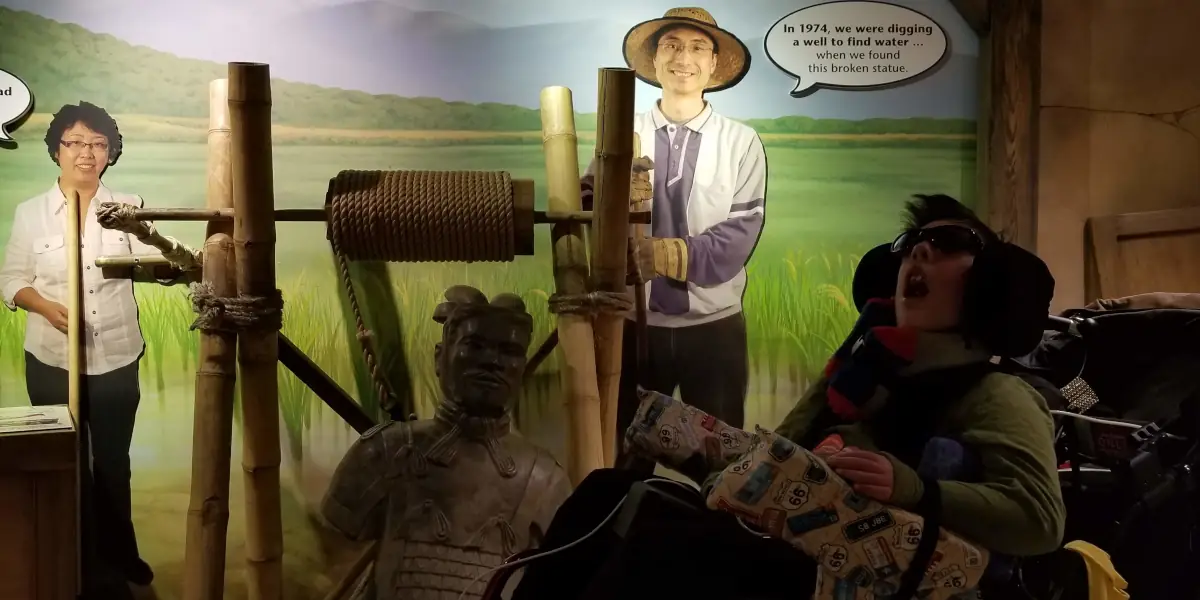
A museum exhibit recreates the discovery of a Terracotta Warrior. A backdrop shows two life‑sized photo cutouts of people standing in a green field with distant mountains. The central figure wears a straw hat and gloves, with a speech bubble describing finding a broken statue while digging a well in 1974. In front of the backdrop sits a replica of a broken Terracotta Warrior beside a bamboo well‑digging structure with a large rope coil. On the right, Jamess in sunglasses and a green shirt looks upward with interest.
They found a statue while digging a well


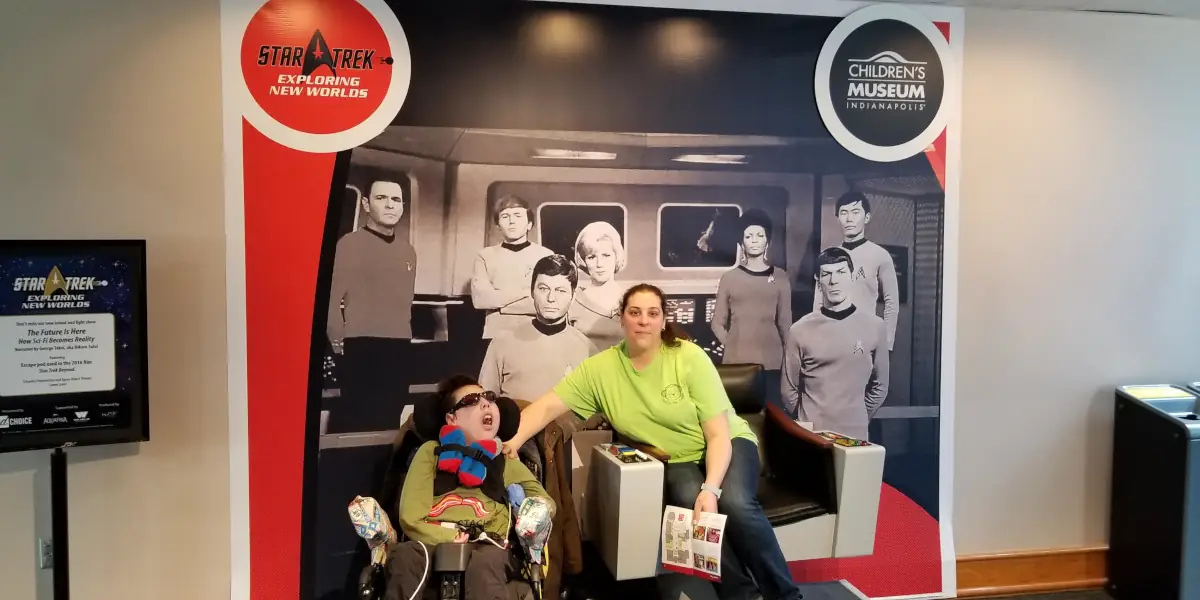
James and Stacy sit in replica captain’s chairs in front of a large Star Trek display at the Children’s Museum of Indianapolis. The backdrop shows a black‑and‑white image of the original Star Trek crew on the bridge of the USS Enterprise. The Star Trek logo and the exhibit title appear on the left, while the museum’s logo is on the right. Stacy holds a brochure as both pose in front of the themed setup.
Star Trek


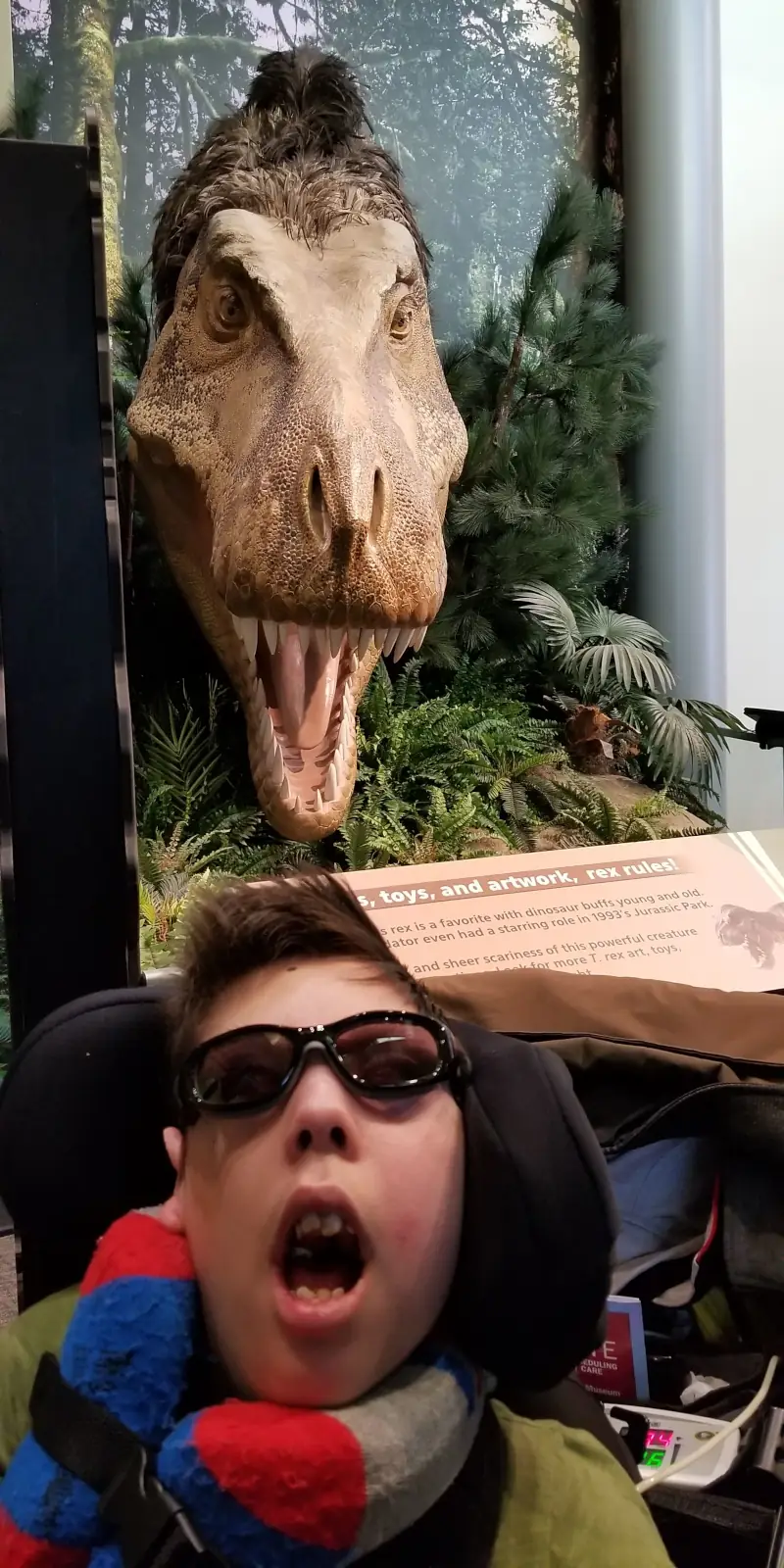
A large, realistic Tyrannosaurus rex head with its mouth open is displayed in a museum setting, surrounded by artificial greenery that creates a prehistoric forest look. In front of the exhibit, James sits in his wheelchair wearing sunglasses, a green shirt, and a colorful neck pillow. A nearby display sign contains partially visible text about the T. rex and its cultural popularity.
We found James’ twin. Lol!


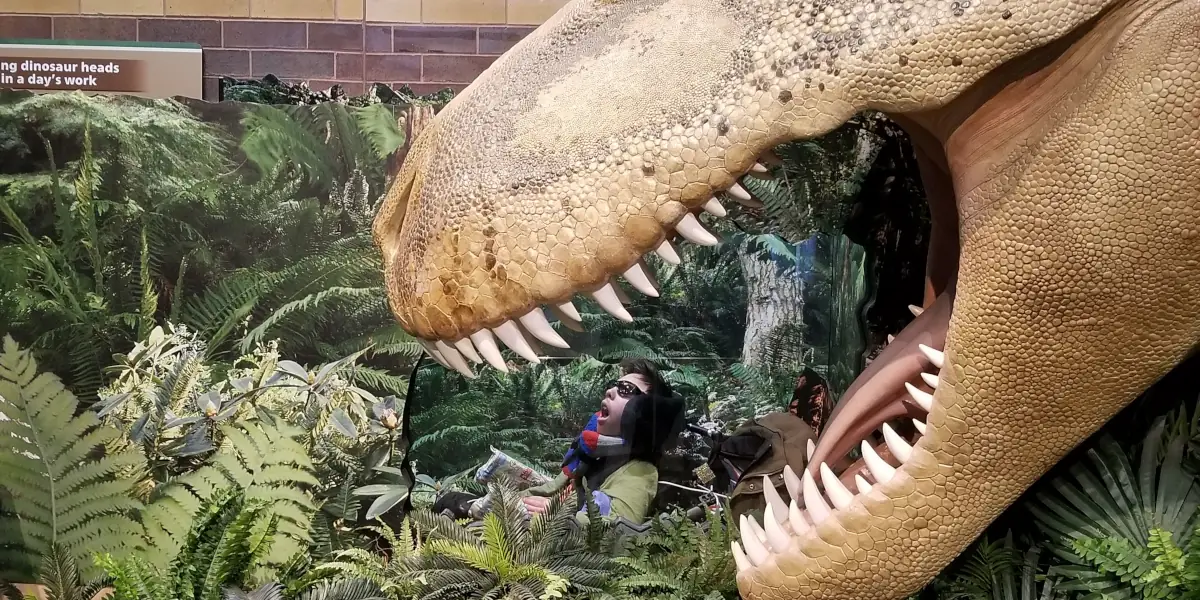
A large, realistic Tyrannosaurus rex head model with its mouth open wide is displayed in a museum setting. Dense artificial foliage surrounds the head, creating a jungle‑like environment. James poses inside the open mouth as if being eaten, adding a playful, dramatic effect. Behind the scene is a printed forest backdrop and part of a brick wall. A small sign in the upper left corner reads “Making dinosaur heads in a day’s work.”
James almost got eaten by a dinosaur


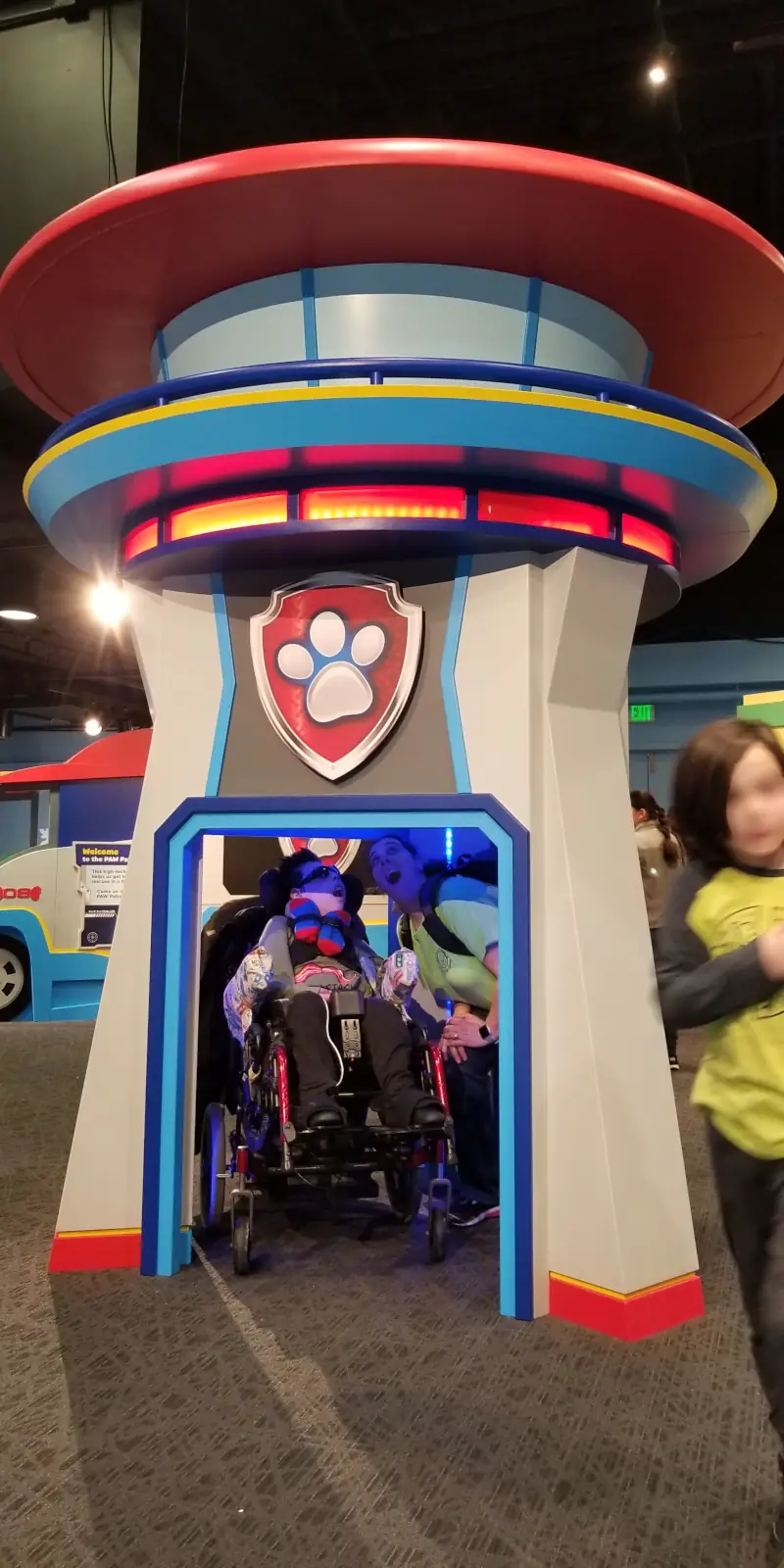
A colorful indoor exhibit modeled after the PAW Patrol Lookout Tower features a tall structure with a red top, blue and gray body, and a large paw‑print emblem on a red shield. Beneath the archway, James sits in his wheelchair while Stacy stands beside him. Other visitors and PAW Patrol‑themed elements, including a vehicle‑style structure, are visible in the background, creating a bright, family‑friendly atmosphere.
James in the Paw Patrol tower


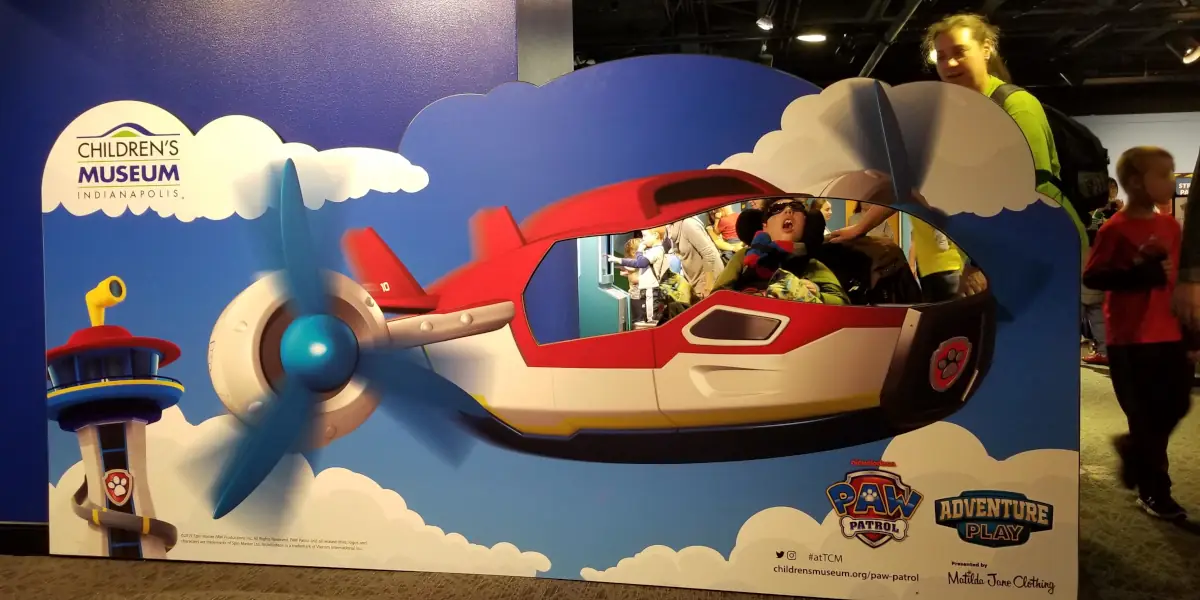
A colorful PAW Patrol–themed display at the Children’s Museum of Indianapolis features a large cartoon airplane cutout with a spinning propeller, designed for visitors to pose inside as if flying. The backdrop includes clouds and a cartoon lookout tower. James sits inside the airplane cutout while Stacy stands nearby. Text on the display includes the museum name, “PAW Patrol Adventure Play,” and sponsor information.
Paw Patrol plane


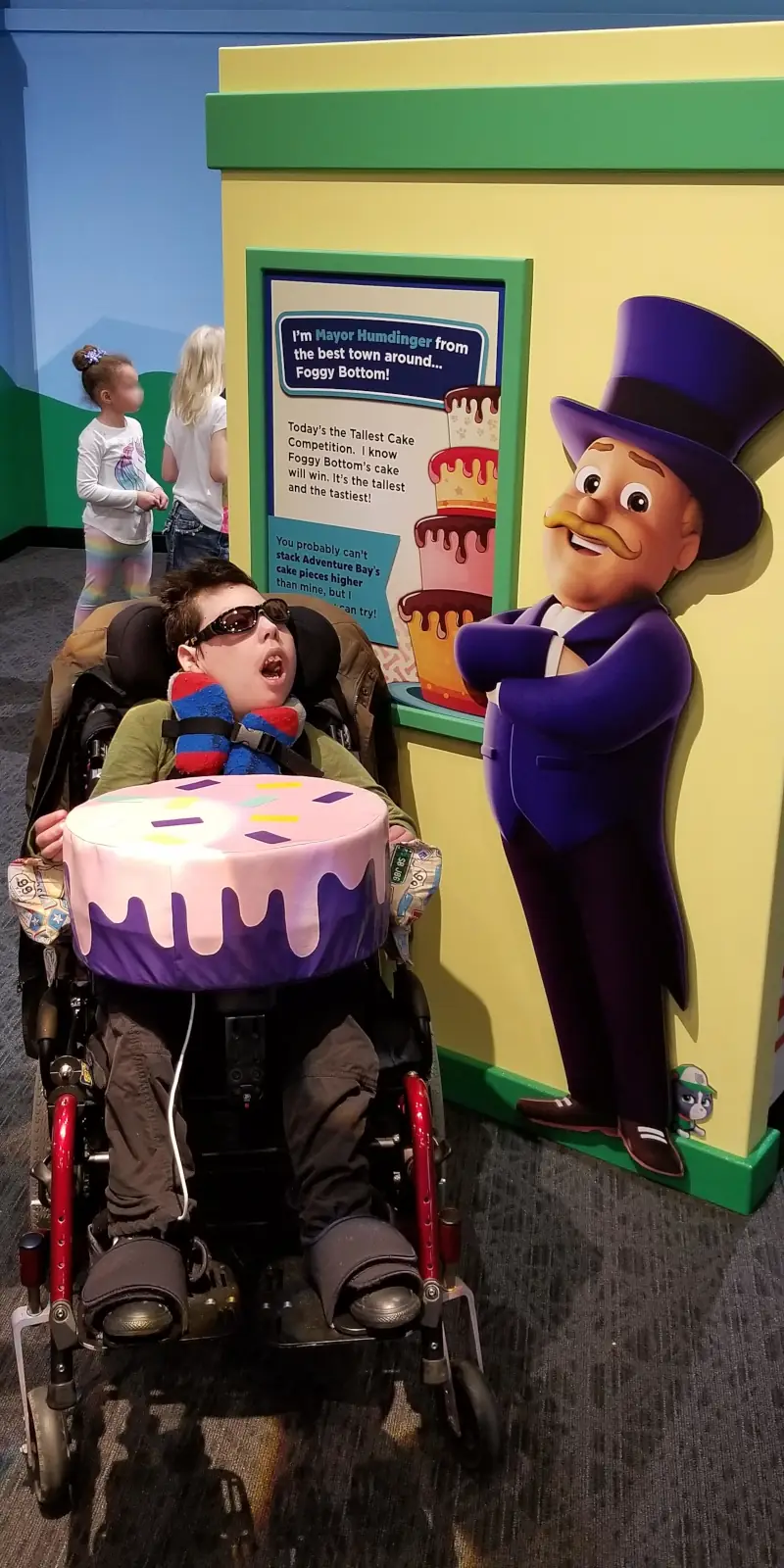
James sits in his wheelchair in front of a colorful PAW Patrol display featuring the character Mayor Humdinger. James wears sunglasses and has a large decorative cake prop resting on his lap. Behind him is a wall with an illustration of Mayor Humdinger in a purple top hat and suit, along with a sign containing playful text about a tallest‑cake competition. Two other children stand in the background near the display.
James with the Mayor


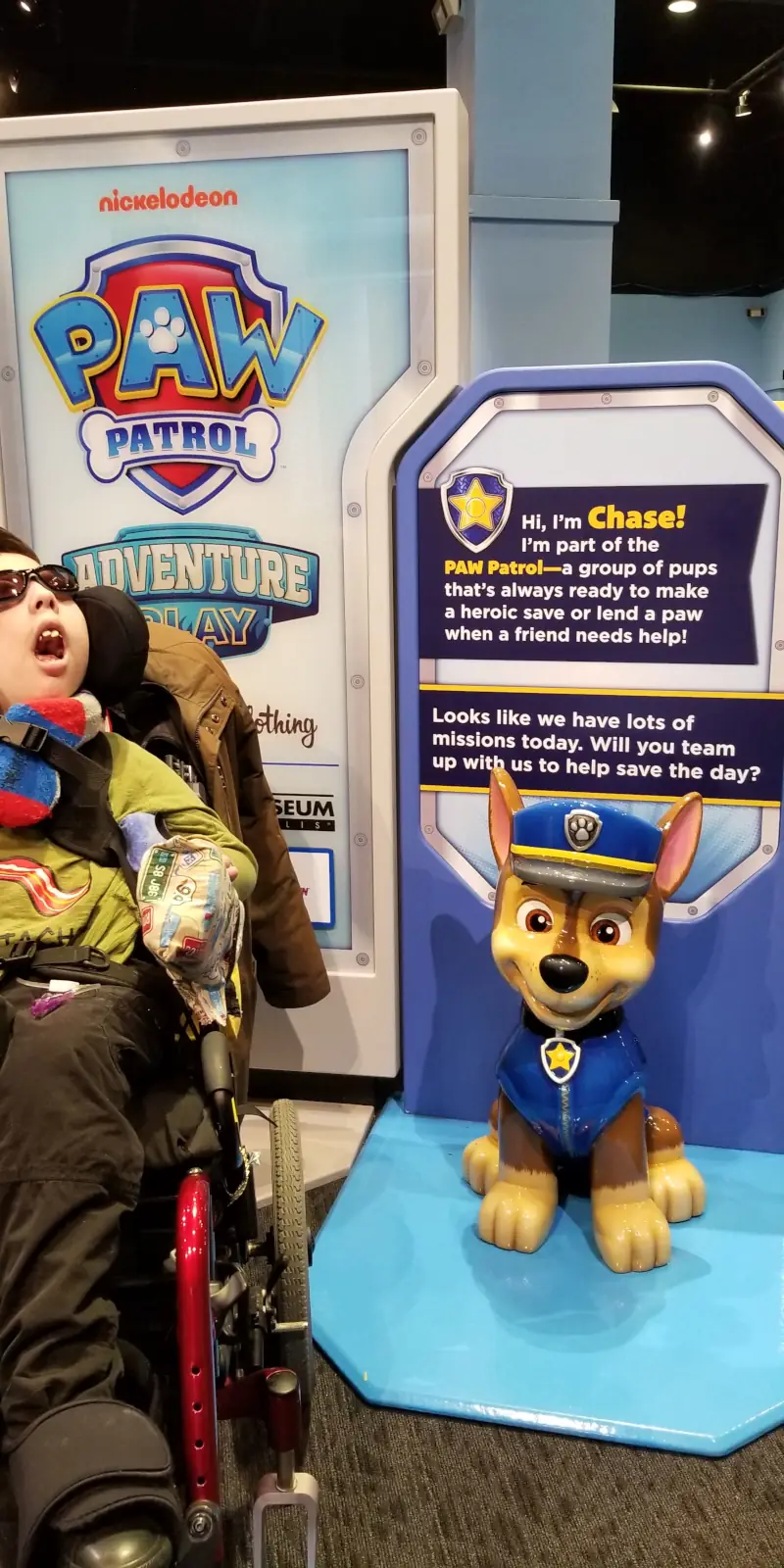
James sits in his wheelchair beside a PAW Patrol display featuring a large sign with the show’s logo and the words “Adventure Play.” A figure of Chase, the police pup character, stands next to a second sign introducing him and inviting visitors to join the PAW Patrol on missions. The background shows blue exhibit walls and themed lighting, creating a bright, playful atmosphere.
James with Chase from Paw Patrol


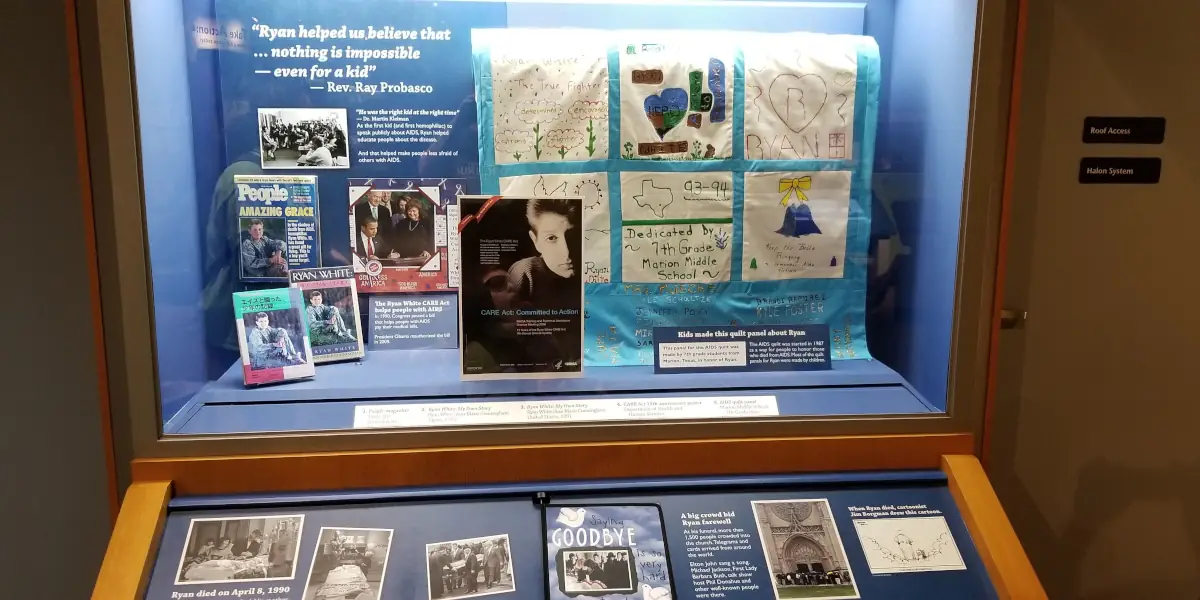
A museum display case honors Ryan White, featuring photographs, magazine covers, and artifacts related to his life and legacy. A quote at the top reads, “Ryan helped us believe that … nothing is impossible — even for a kid.” Items include a People magazine cover, images of Ryan with public figures, a “CARE Act” poster, and a colorful quilt panel created by students with drawings and messages. The lower section shows photos and text panels describing his death in 1990 and the large public response, including crowds at his funeral and tributes made in his memory.
Part of the Ryan White exhibit


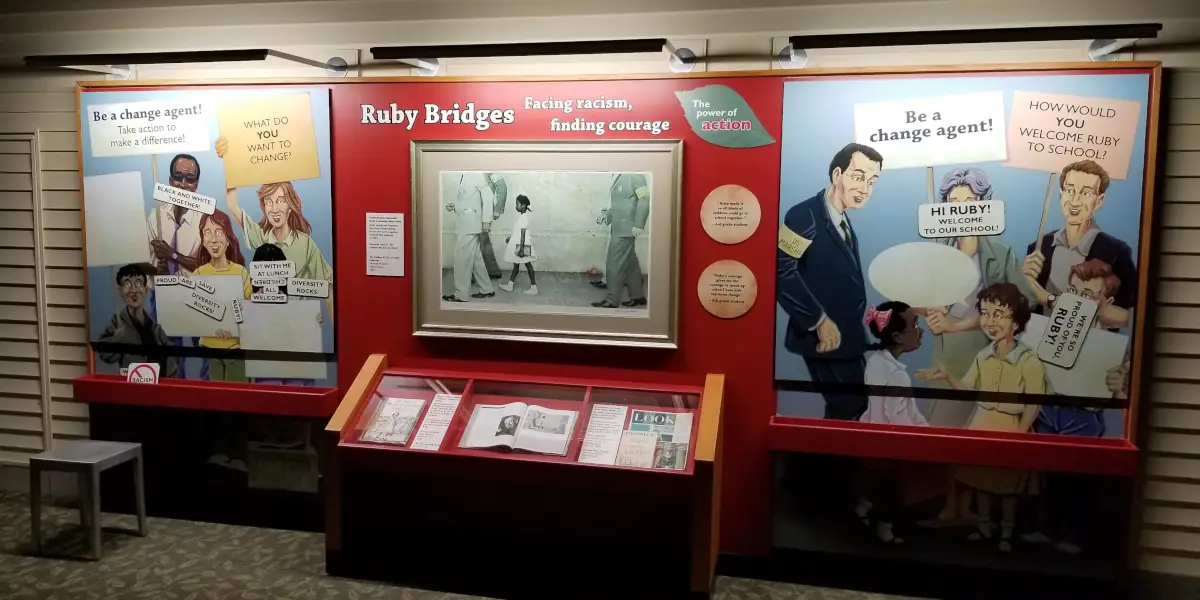
A museum exhibit titled “Ruby Bridges: Facing racism, finding courage” features a framed reproduction of Norman Rockwell’s painting of Ruby Bridges being escorted to school. Surrounding the artwork are colorful panels encouraging visitors to take action against racism, with cartoon figures holding signs about integration and equality. A speech bubble asks, “What do you want to change?” On the right, illustrated characters welcome Ruby with supportive signs. Below the main display, documents and text panels provide historical context about Ruby Bridges and the Civil Rights Movement.
Part of the Ruby Bridges exhibit


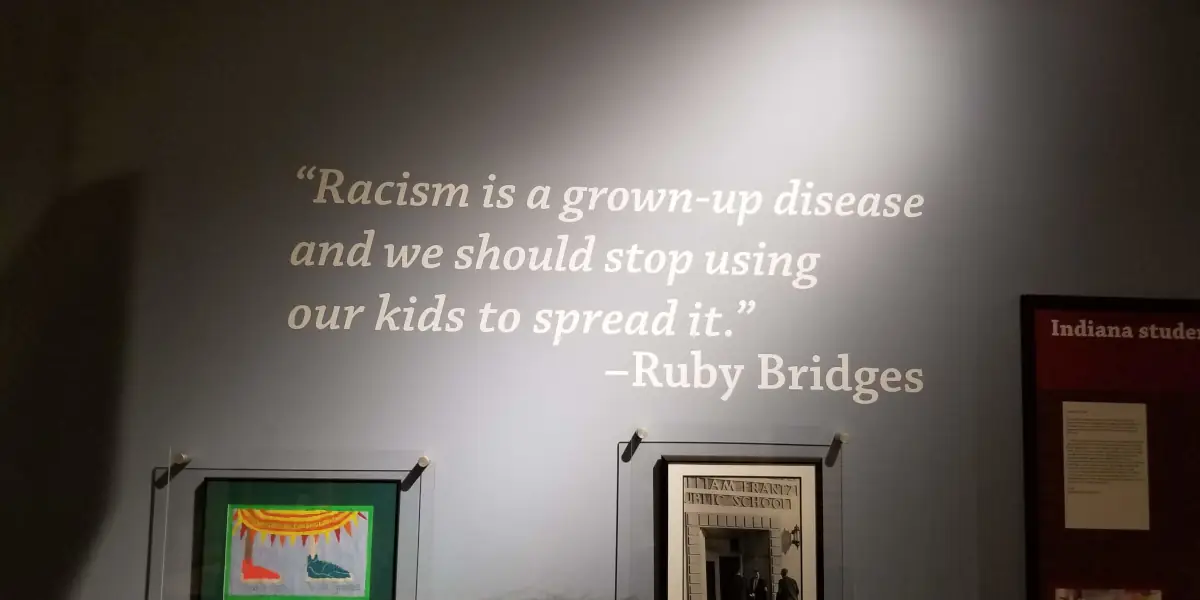
A museum wall displays a large quote in white text on a gray background: “Racism is a grown‑up disease and we should stop using our kids to spread it.” — Ruby Bridges. Below the quote are several framed artworks or documents arranged in a row, forming a simple, reflective exhibit space.
“Racism is a grown-up disease and we should stop using our kids to spread it.” ~ Ruby Bridges


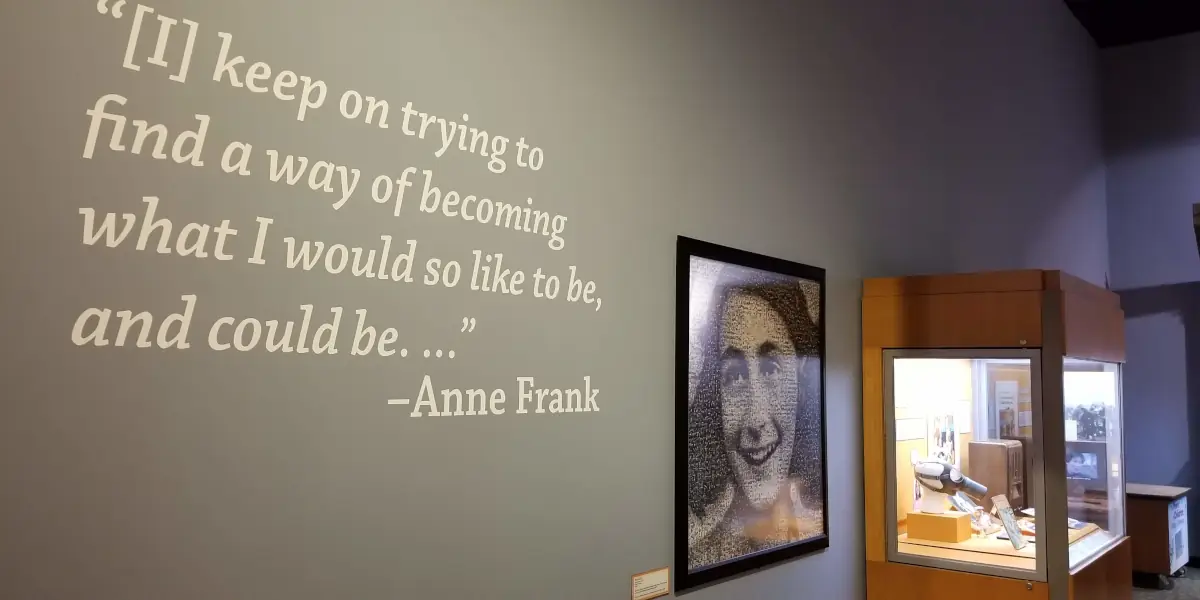
A museum exhibit about Anne Frank features a large wall quote in white text that reads, “I keep on trying to find a way of becoming what I would so like to be, and could be.” Beside the quote hangs a framed portrait of Anne Frank created from small text or image fragments that form her face. To the right, a glass display case holds historical artifacts related to her life and writings. The space is well‑lit and arranged to highlight her legacy and personal reflections.
“[I] keep on trying to find a way of becoming what I would like to be, and could be…” ~ Anne Frank


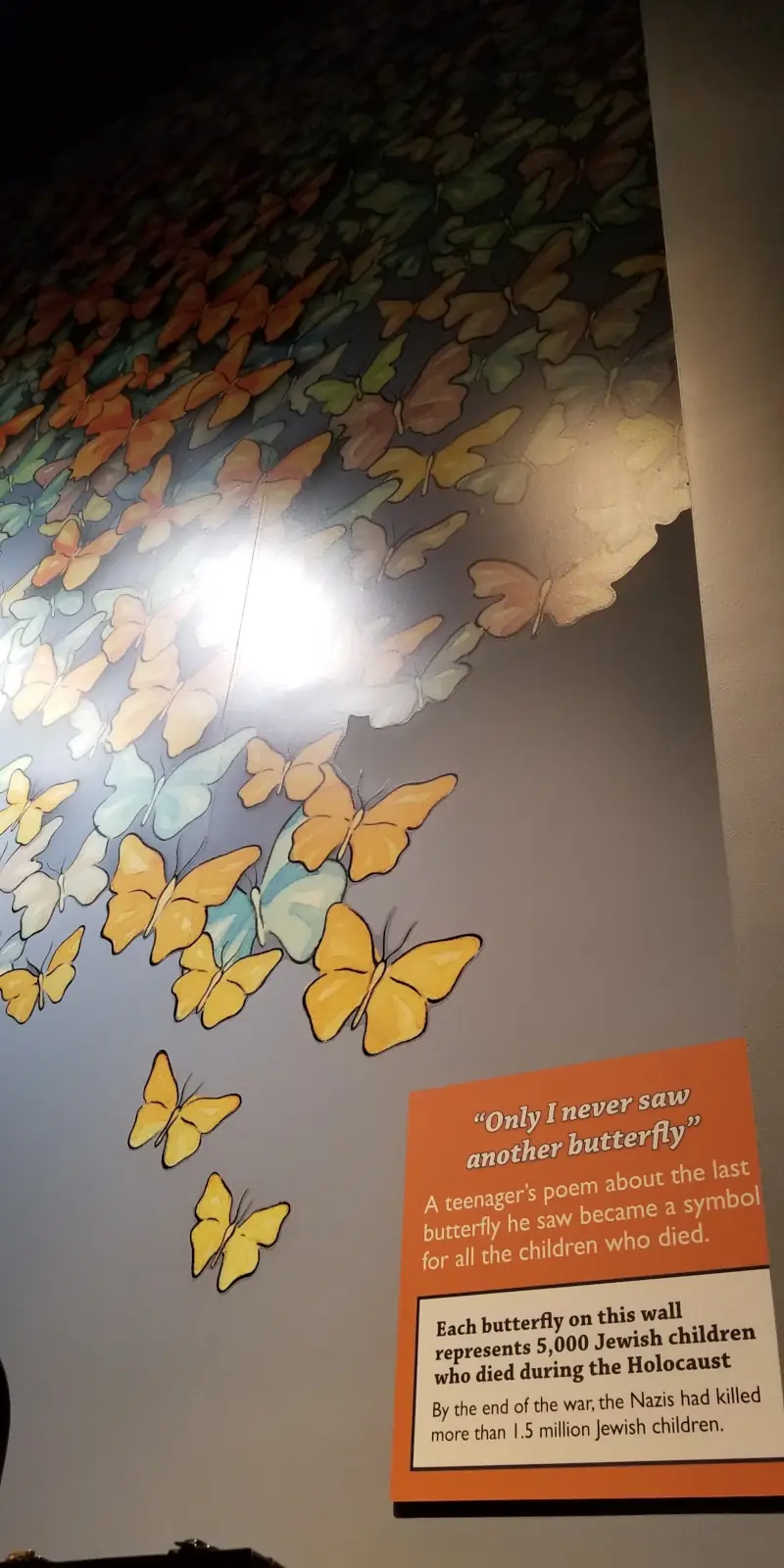
A museum wall is covered with colorful butterfly illustrations in shades of yellow, orange, green, and blue. A sign explains that the artwork is inspired by the line “Only I never saw another butterfly” from a poem written by a teenager during the Holocaust. The text states that each butterfly represents 5,000 Jewish children who were killed, noting that more than 1.5 million Jewish children died by the end of the war. The display serves as a visual memorial and symbolic tribute.
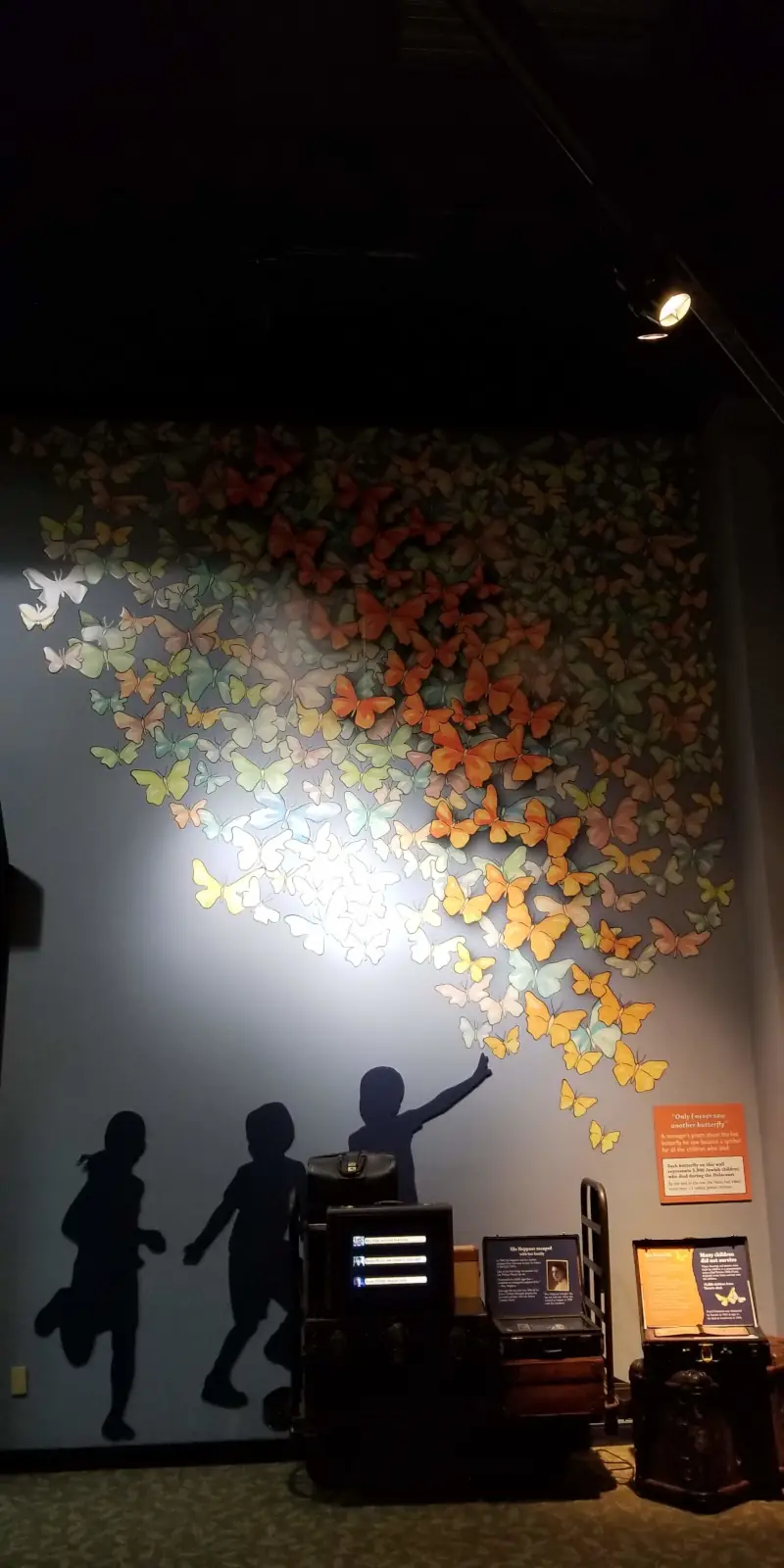
“Each butterfly on this wall represents 5,000 Jewish children who died during the Holocaust…


A museum wall features a large mural of colorful butterflies arranged in a swirling pattern that shifts from lighter shades to deeper orange tones. Silhouettes of three children — one running, one jumping, and one reaching upward — appear along the bottom of the display. In front of the mural are interactive exhibit stations with screens, text panels, and equipment. One panel includes a quote beginning with “Only I never saw another butterfly,” accompanied by explanatory text about the exhibit’s theme. Focused lighting highlights the butterflies and creates an engaging, reflective atmosphere.
…By the end of the war, Nazis had killed more than 1.5 million Jewish children”


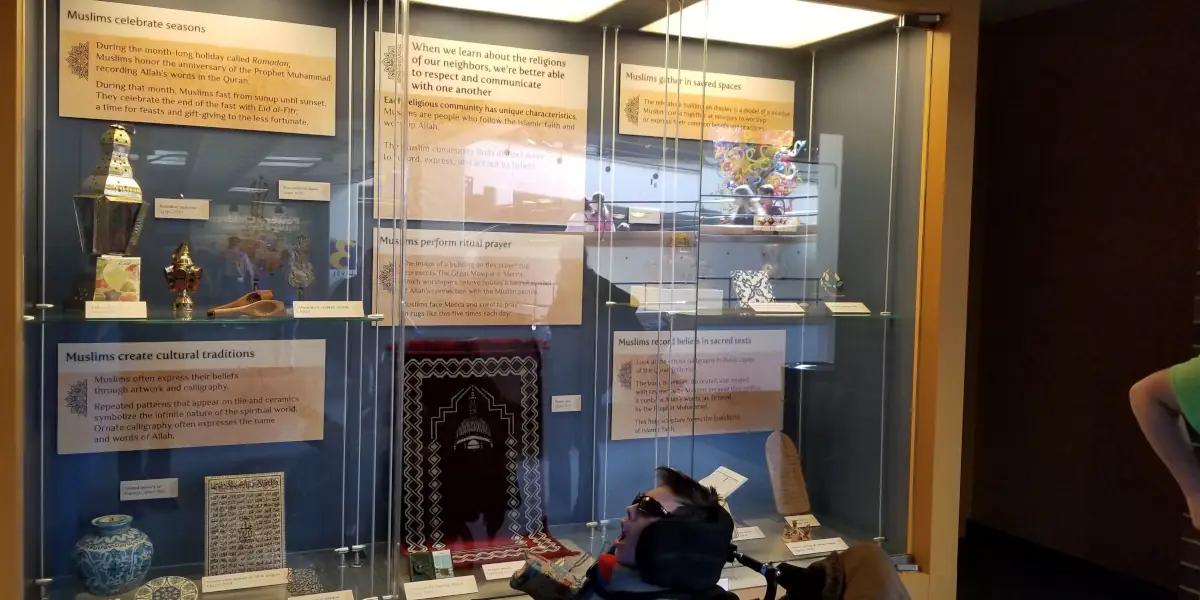
A museum display case presents artifacts and informational panels about Islamic culture and religious practice. Items include decorative pottery, a prayer rug, calligraphy art, and other cultural objects. Text panels explain topics such as Ramadan and Eid al‑Fitr, artistic traditions in Islamic calligraphy and geometric patterns, daily prayer practices, the role of the mosque and the mihrab, and the significance of the Qur’an as Islam’s holy text. A final panel emphasizes the importance of learning about different faiths to build understanding and respect.
Muslim exhibit


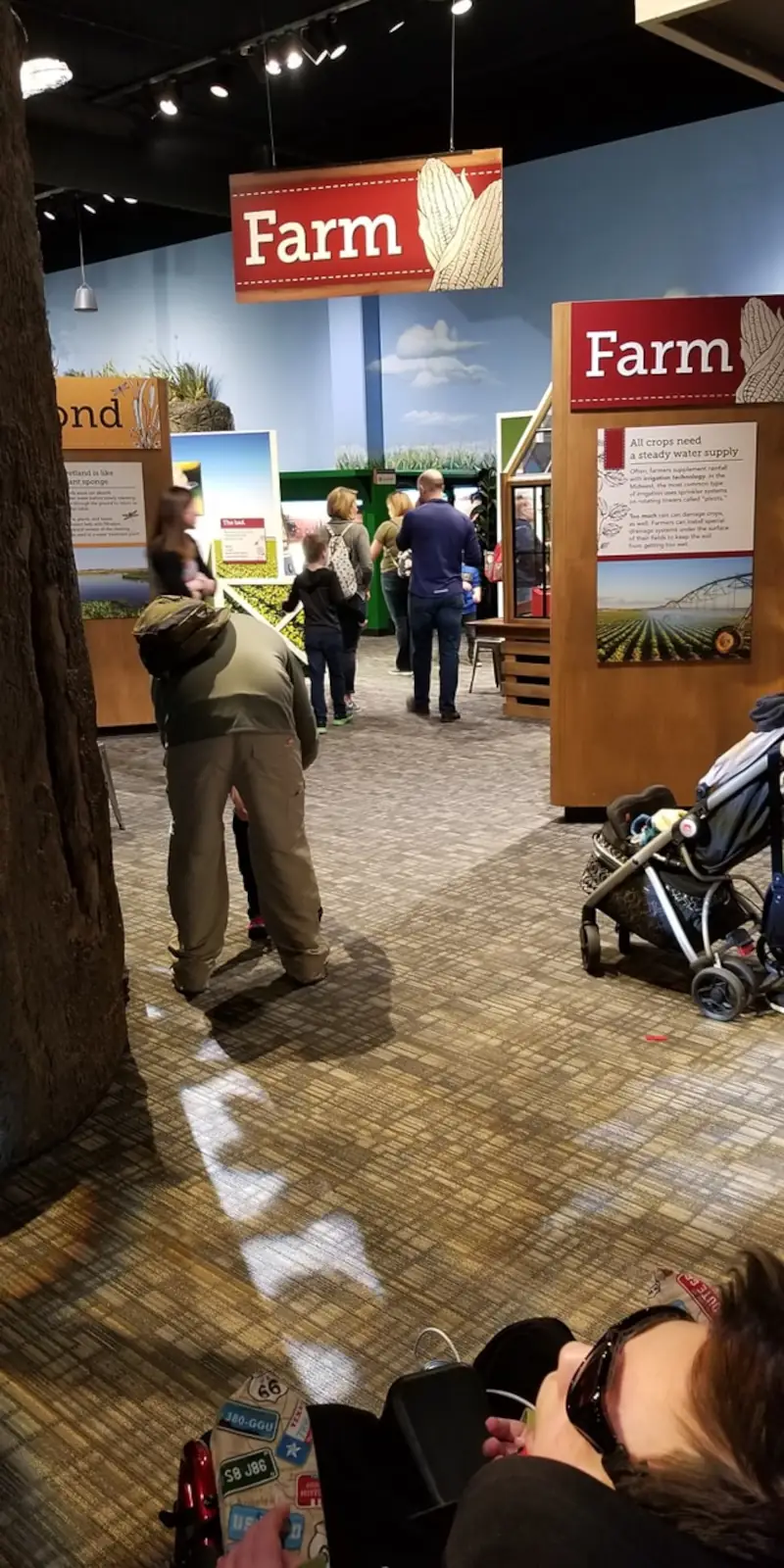
An indoor farming‑themed exhibit features large red signs with the word “Farm” in white letters, each decorated with illustrations of corn. Several display panels explain agricultural concepts, including one about the importance of a steady water supply for crops. Adults and children interact with the hands‑on stations throughout the space. A stroller and James in his wheelchair are visible in the foreground. The area has carpeted flooring and overhead lighting, creating a bright, educational environment.
Farm exhibit


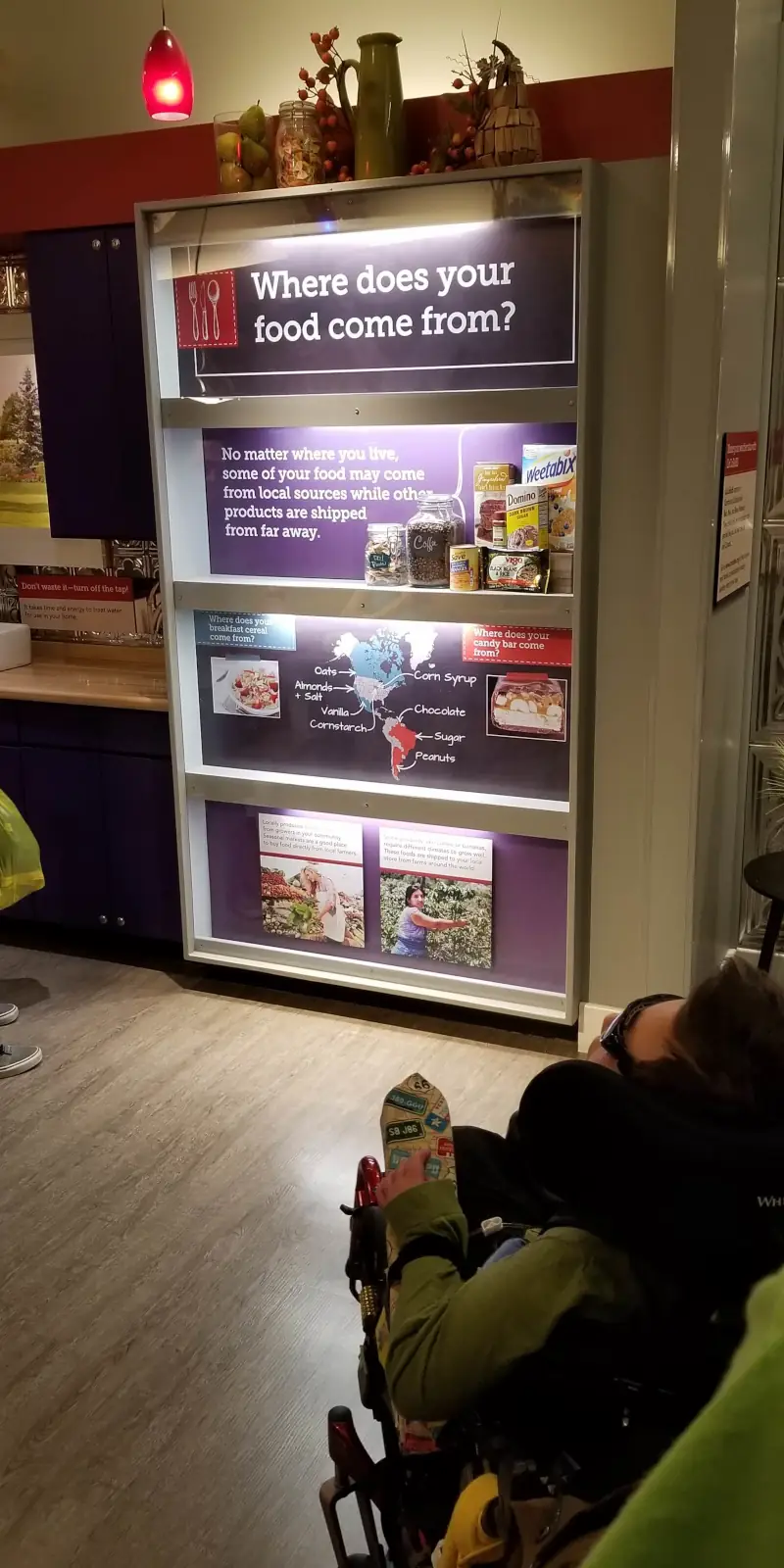
An educational display titled “Where does your food come from?” features shelves stocked with packaged foods such as cereal and sugar. A large panel explains that some foods are grown locally while others come from distant regions. A world map highlights the origins of ingredients like oats, almonds, salt, vanilla, cornstarch, corn syrup, chocolate, sugar, and peanuts. Photos and text below describe how everyday eating connects people to farmers around the world. James is positioned in front of the exhibit, viewing the information.
Farm exhibit


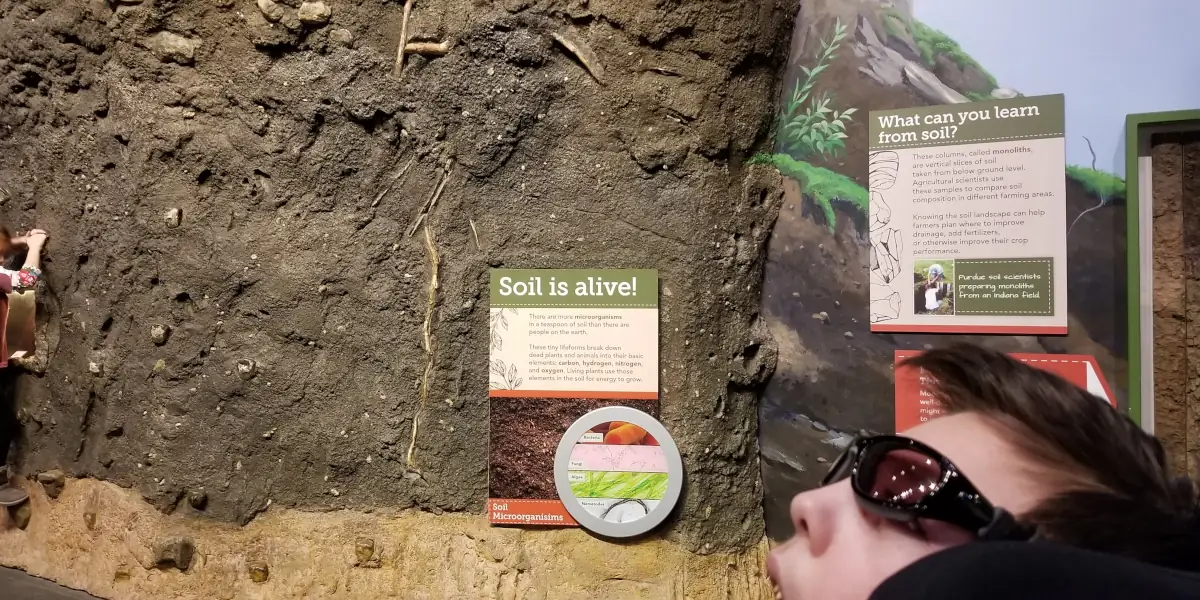
A museum exhibit features a large vertical soil cross‑section showing layers of earth with visible roots and textures. Two informational panels are mounted on the display: one titled “Soil is alive!” describing microorganisms and organic matter, and another titled “What can you learn from soil?” explaining how soil monoliths help scientists study soil composition and crop performance. James looks closely at the exhibit while another visitor interacts with the soil wall on the left.
Soil exhibit


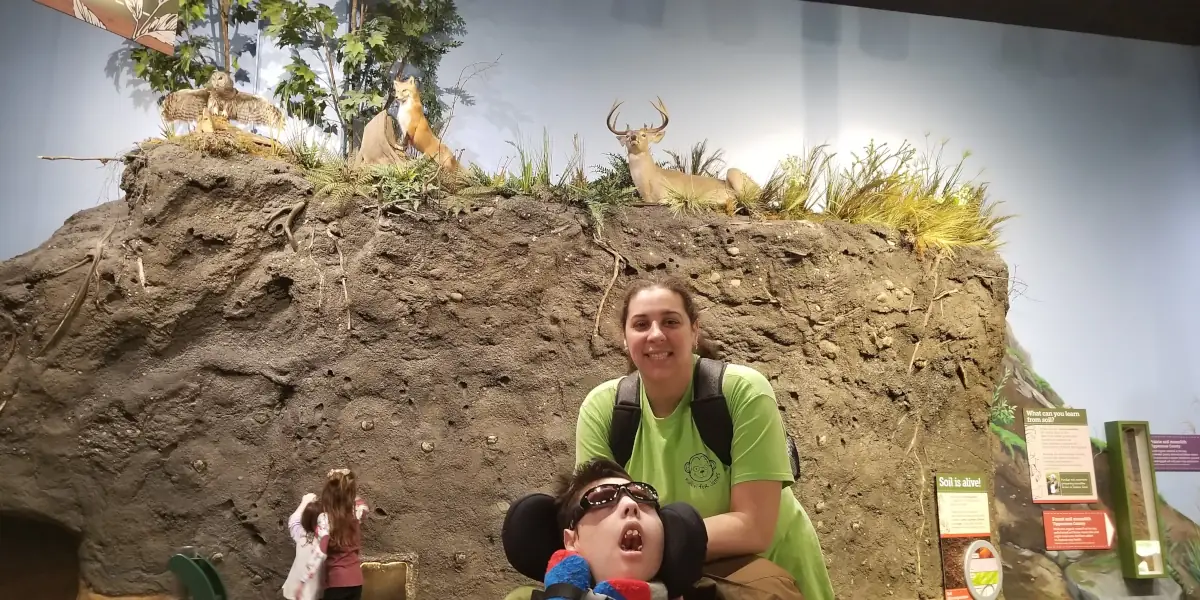
James and Stacy pose in front of a large museum diorama featuring a forested hillside with model wildlife. A deer stands on the slope, with a fox and a bobcat positioned nearby among artificial trees and painted scenery. Informational panels and displays sit to the right, including one titled “Soil is alive!” The scene blends realistic animal models with educational content about ecosystems.
Soil exhibit


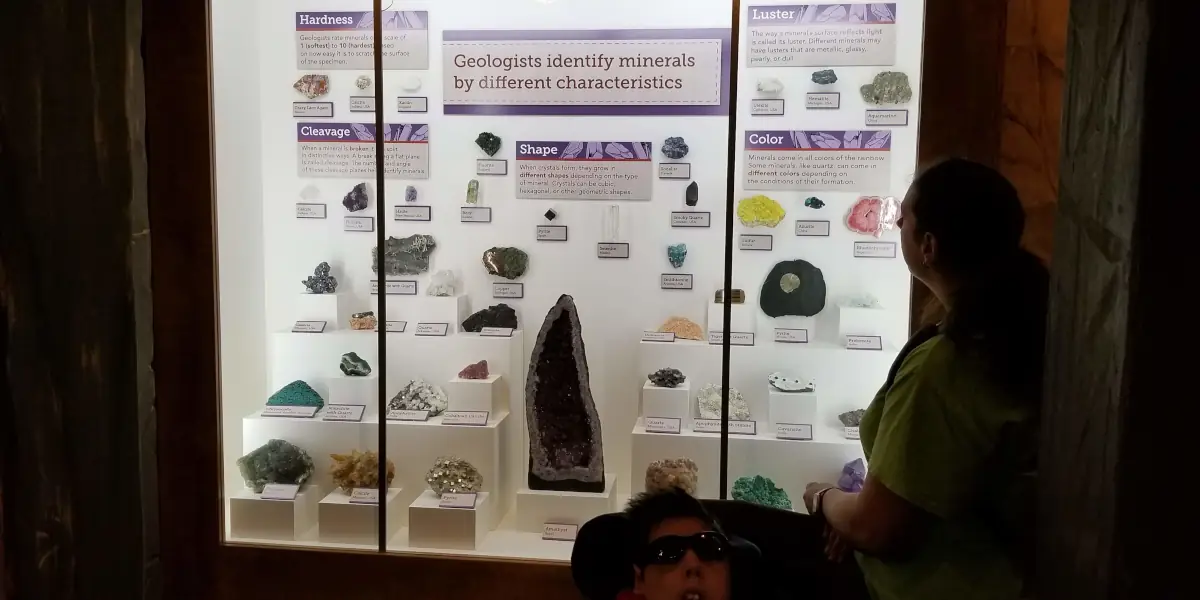
A museum display case explains how geologists identify minerals using different characteristics. Shelves hold labeled mineral specimens arranged under headings such as “Hardness,” “Cleavage,” “Shape,” “Luster,” and “Color.” Each section includes examples that illustrate the property being described, along with brief explanatory text. Stacy and James are in front of the case, looking at the minerals and reading the information.
Learning about minerals


An indoor exit area features a large “Thank You for Visiting” sign above automatic sliding glass doors, with a green illuminated EXIT sign mounted above it. The doors display caution labels for automatic operation and emergency use. In the foreground, Stacy beside a wheelchair decorated with colorful fabric and attachments. Through the glass doors, a carpeted walkway is visible, with another visitor walking away in the background.


Day 4: Indianapolis Motor Speedway Museum and Bedbugs

I woke up to find a bedbug crawling on my pillow right next to my head! Not going to lie, I may have screamed. After we frantically search our bodies—James, too—I started ripping apart the beds searching for more bugs while Stacy called the front desk. They were very apologetic and found us another room to move to. I went down to the front desk to grab the key to the new room and did a full search of the room for any sign of bedbugs. I know that they’re very good at hiding, but I didn’t see any traces of dried blood or anything that would indicate that there were or had been bedbugs in the room.

By the time we had moved all of our stuff to our new room, Stacy and I were beyond hungry! James had already had one meal and was getting close to getting his second meal of the day. I guess that’s one of the perks of being tube fed…you don’t have to go searching for food. We found a restaurant close to the Speedway Museum that sounded good…and it was…Charlie Brown’s Pancake and Steak House.
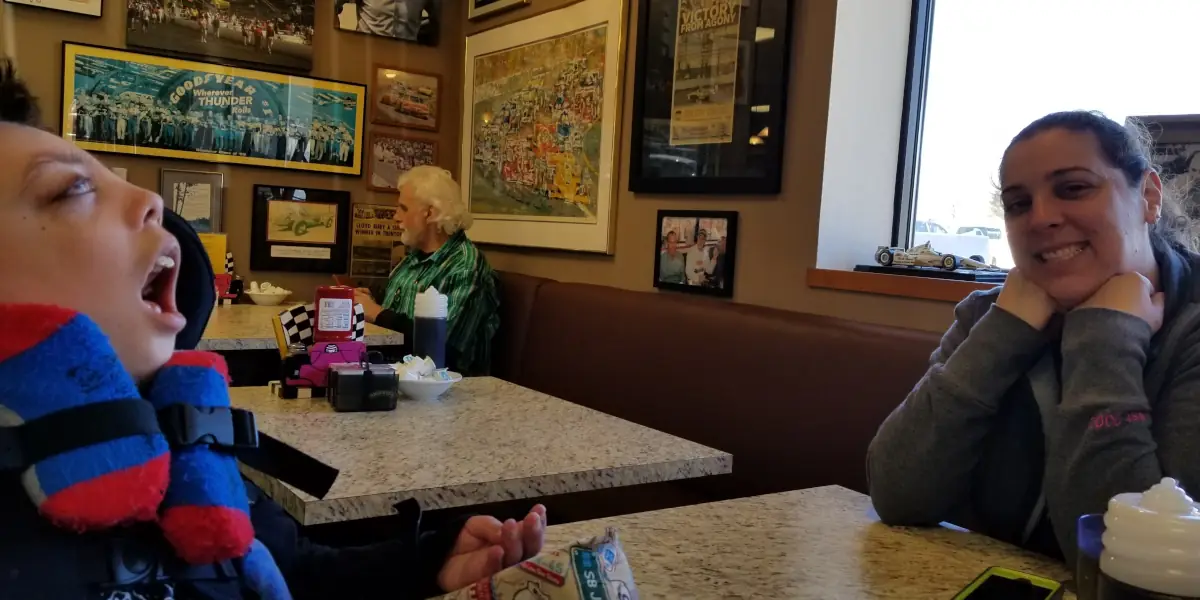
 

James and Stacy sit together in a restaurant booth. James, on the left, wears a dark jacket and a blue‑and‑red neck support, with his head tilted back and mouth open. Stacy, on the right, rests her head on her hands and smiles, wearing a gray sweatshirt. In the background, another diner with white hair sits at a separate booth. The walls are covered with framed racing‑themed photos and memorabilia, and the table holds condiments and a napkin holder, creating a casual, friendly atmosphere.
Lunch at Charlie Brown’s Pancake and Steak House


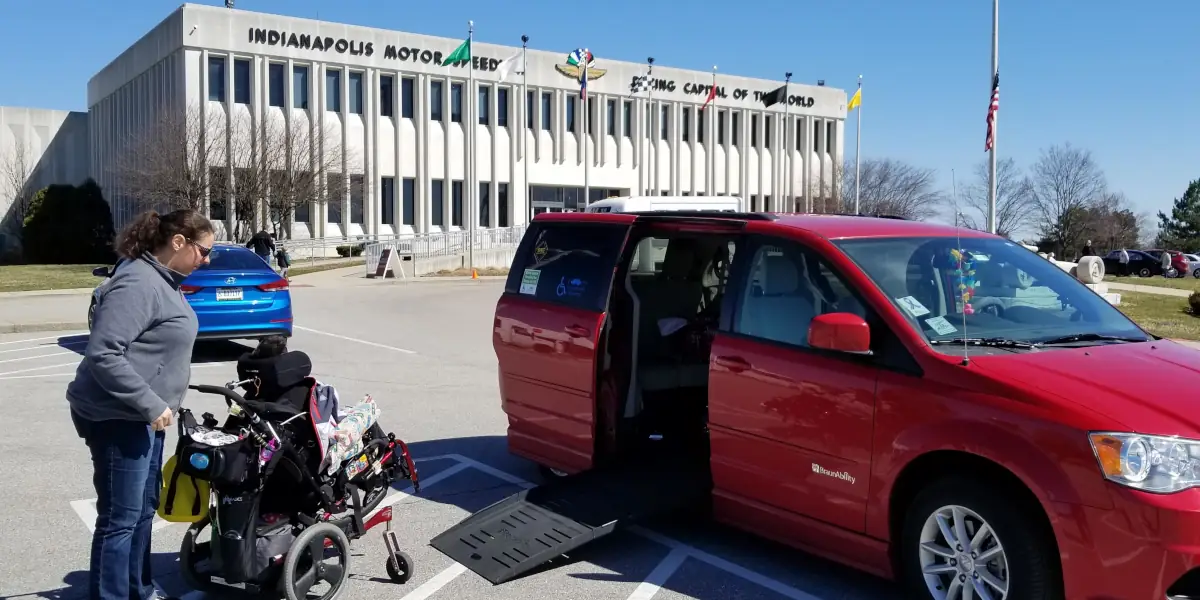
An accessible red minivan is parked in front of the Indianapolis Motor Speedway building, with its side ramp extended. Stacy stands beside a wheelchair equipped with various attachments. The building behind them displays large signage reading “INDIANAPOLIS MOTOR SPEEDWAY” and “RACING CAPITAL OF THE WORLD.” Several cars are parked nearby, and flags fly along the front of the structure on a bright, clear day.
Indianapolis Motor Speedway, The Racing Capital of the World


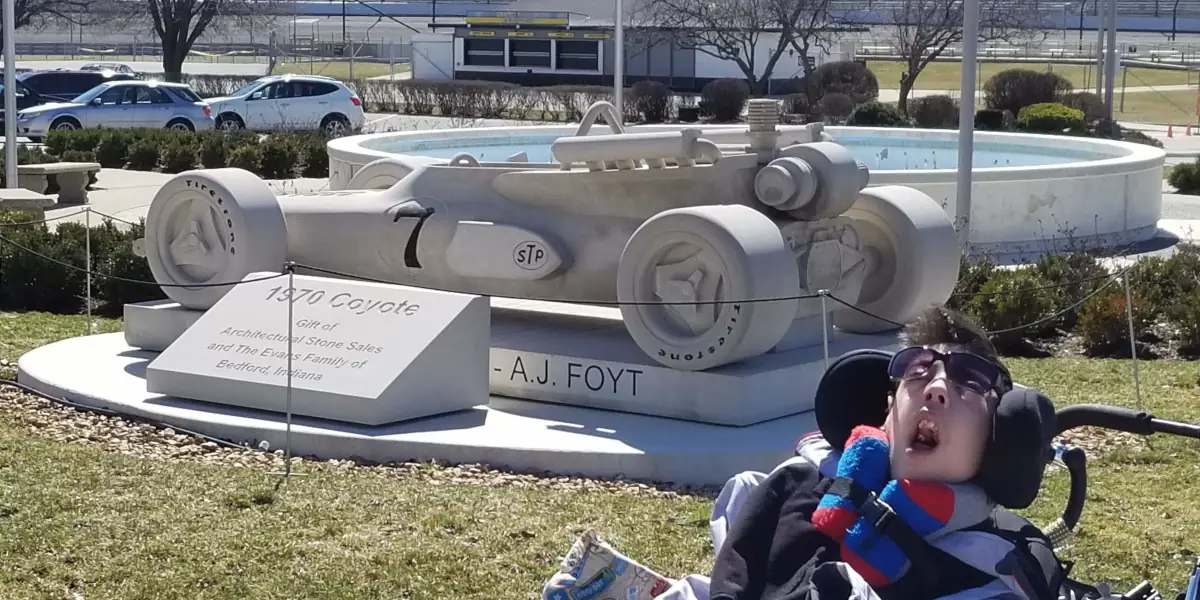
A large stone sculpture of a race car sits on a pedestal outdoors, detailed with carved tires, exhaust pipes, and sponsor markings such as “STP” and “Firestone.” The pedestal is engraved with “1970 Coyote,” along with donor information and A.J. Foyt’s name. In front of the sculpture, James sits in his wheelchair wearing sunglasses, a neck pillow, and a jacket. Behind him are a fountain, parked cars, trees, and part of a racetrack or stadium structure.
Statue of AJ Foyt’s 1970 Coyote


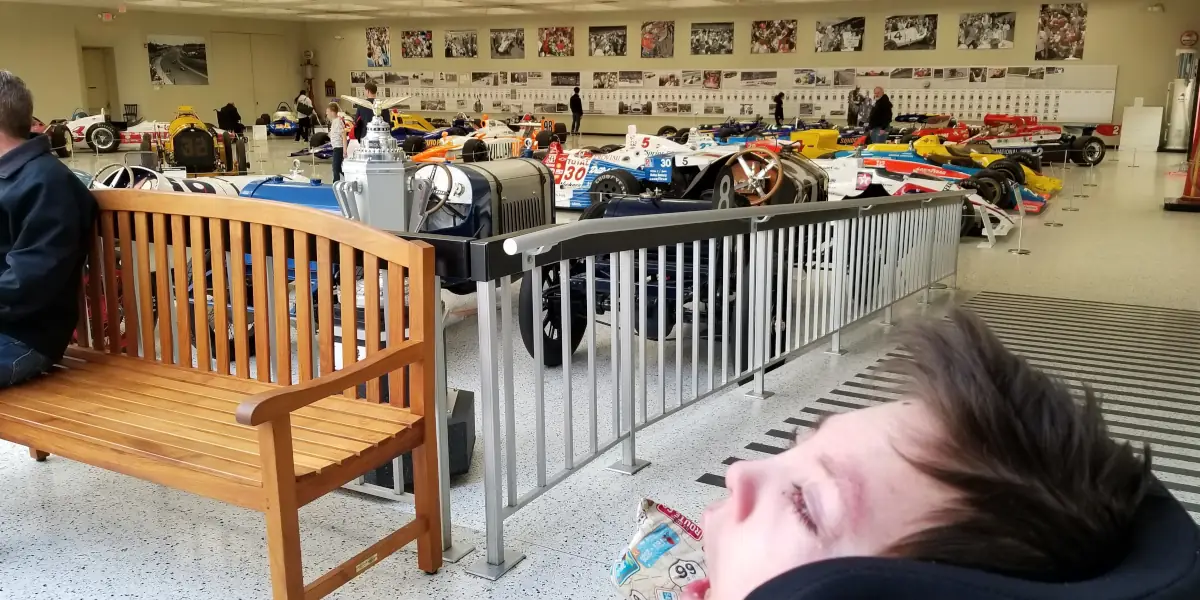
An indoor exhibition hall displays rows of Indy‑style race cars in different colors and sponsor designs, with visible numbers including 5, 30, and 99. A wooden bench sits in the foreground with one person seated on it, while James sits in his wheelchair closer to the camera. A metal railing separates visitors from the cars. The back wall is covered with photographs and what appears to be a timeline or list of racing achievements, creating a museum‑style showcase of motorsport history.
Indianapolis Motor Speedway Museum


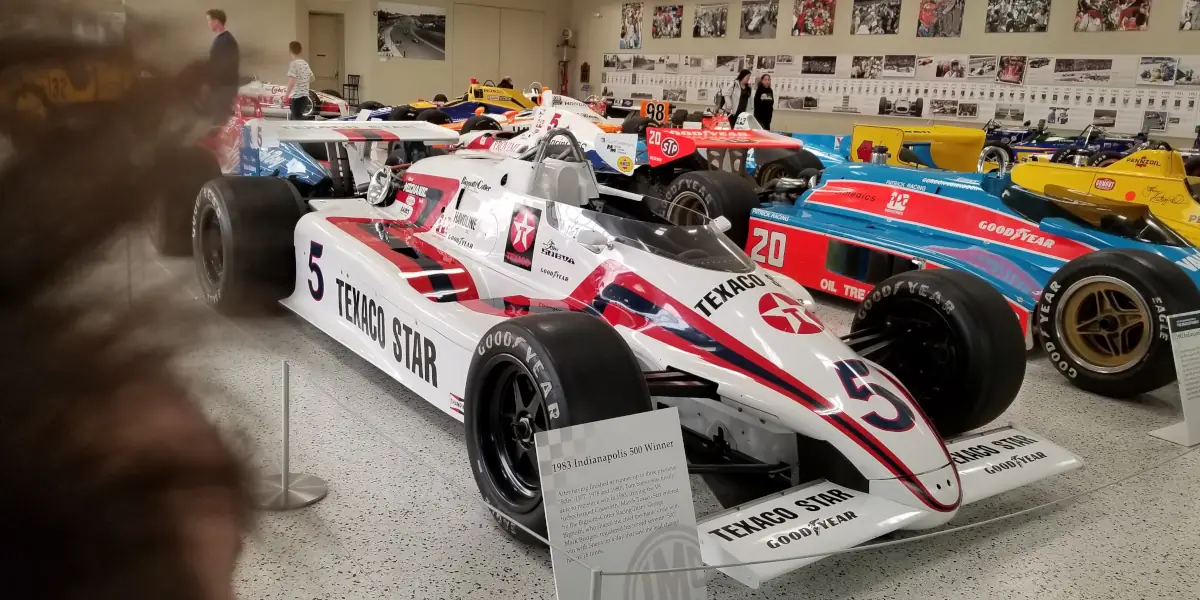
A museum exhibit features several vintage IndyCar race cars, with a white, red, and black Texaco‑branded car numbered 5 displayed prominently in the foreground. An informational plaque identifies it as the 1983 Indianapolis 500 winner. Behind it are additional cars, including a blue‑and‑red number 20 car and a yellow car, all arranged in a row. The back wall is filled with racing photographs and posters, creating a historical showcase of motorsport design and achievement.
Indianapolis Motor Speedway Museum


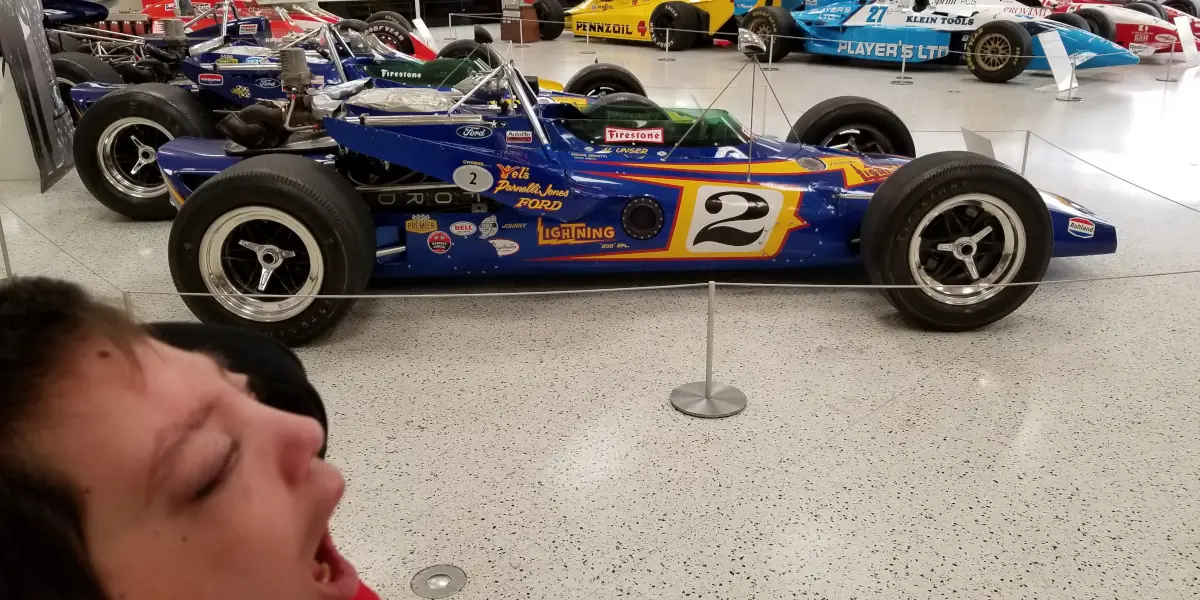
A blue open‑wheel race car with the number 2 sits in the foreground of a museum display. Sponsor decals such as Firestone, Ford, Lightning, and Vels Parnelli Jones Racing cover the body. The car has large slick tires and a low aerodynamic shape typical of classic Indy‑style vehicles. Behind it, additional race cars in yellow and blue are lined up, each with their own numbers and sponsor markings. In the lower left corner, James appears to be yawning. The exhibit space is brightly lit and arranged to showcase historic racing machines.
Indianapolis Motor Speedway Museum


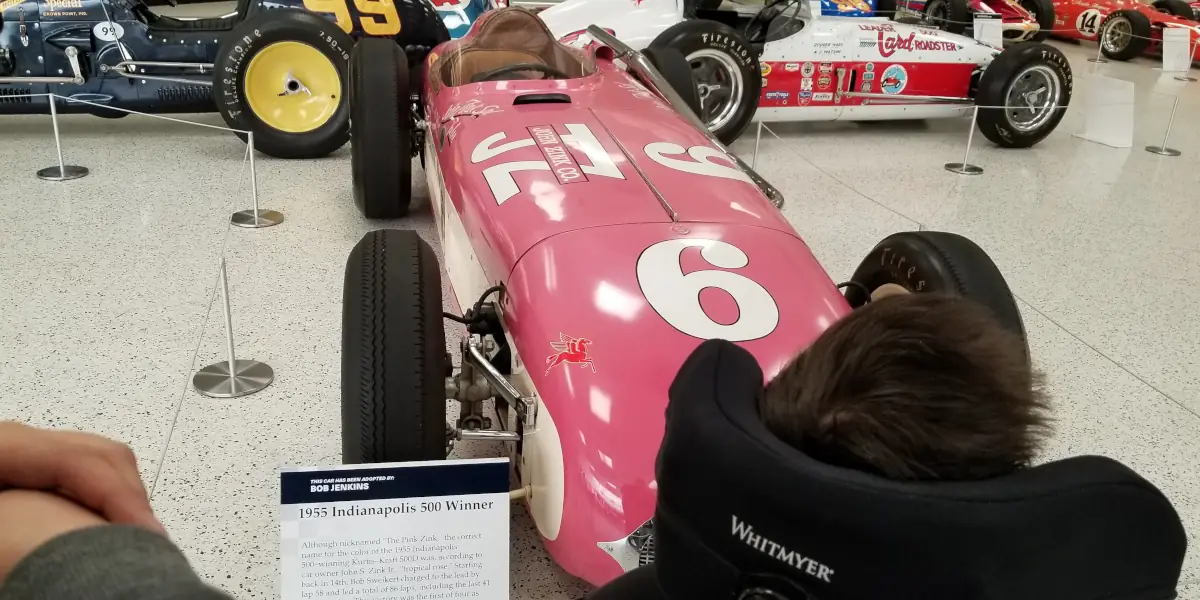
A pink open‑wheel race car with the number 6 is displayed in a museum gallery, identified by a sign as the 1955 Indianapolis 500 winner. The plaque explains that the car, nicknamed “The Pink Zink,” was driven by Bob Sweikert, owned by John Zink, and powered by a 270‑cubic‑inch Offenhauser engine. Other vintage race cars in blue, yellow, and red are arranged behind it. In the foreground, James sits in his wheelchair viewing the exhibit.
Indianapolis Motor Speedway Museum


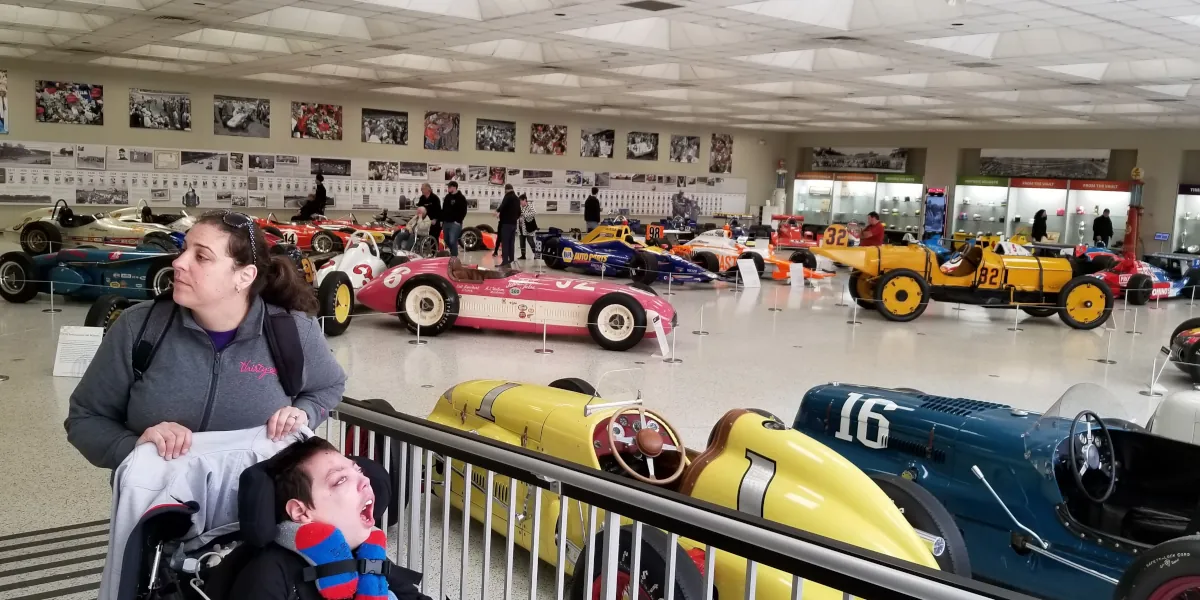
An indoor automobile museum displays rows of vintage race cars arranged across a bright, spacious hall with polished floors. Each car features distinct colors, numbers, and sponsor decals, representing different eras of racing history. The walls are lined with photographs and informational panels that provide context about the vehicles and past events. Several visitors move through the space, and in the foreground James sits in his wheelchair accompanied by Stacy standing behind him as they view the collection.
Indianapolis Motor Speedway Museum


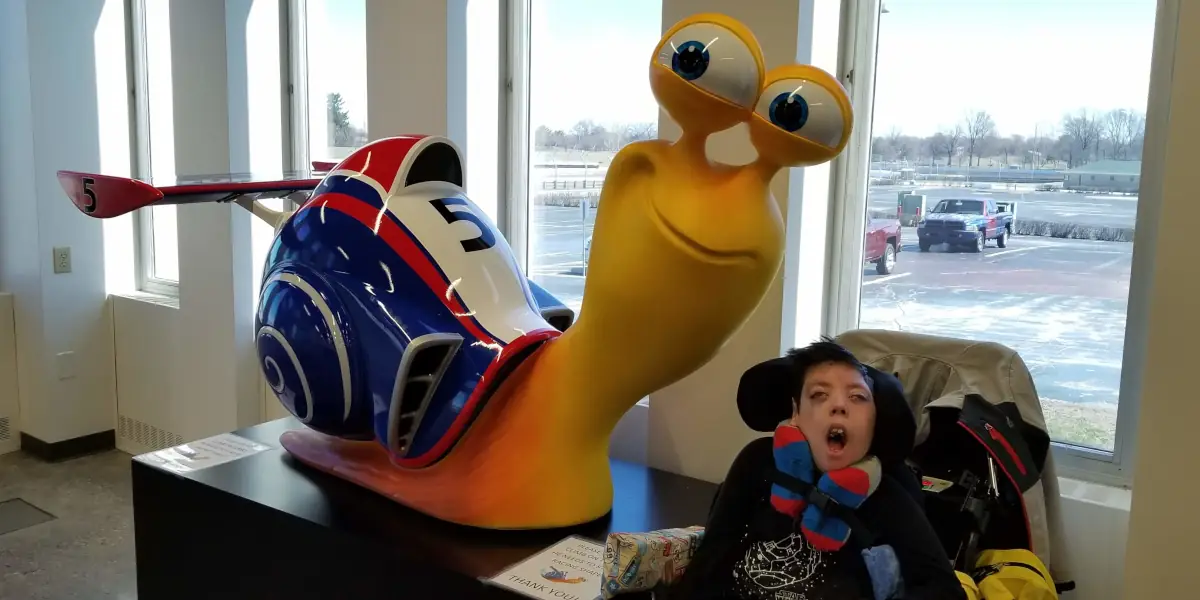
A large, colorful sculpture of Turbo, the animated racing snail, stands indoors near tall windows. The character has a bright yellow face with wide eyes and a blue‑and‑red racing shell marked with the number 5 and a rear spoiler. Next to the sculpture, James sits in his wheelchair wearing a neck pillow and dark jacket. Parking lot scenery is visible outside through the windows.
James liked the movie Turbo


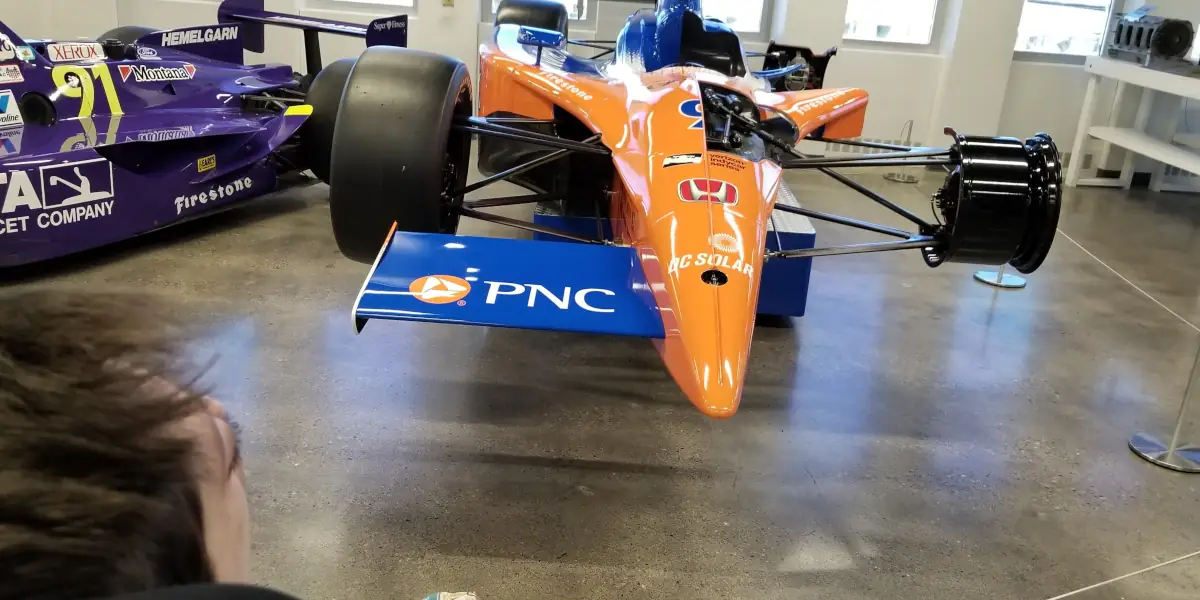
Two IndyCar race cars are displayed indoors on a polished concrete floor. The car in the foreground is bright orange with blue accents and carries the number 9, along with sponsorship logos including PNC, Honda, and AC Solar. Next to itsits a purple number 91 car featuring logos such as Hemelgarn, Xerox, Montana, and Firestone. Both cars have large rear tires, aerodynamic wings, and sleek open‑wheel designs. The space is brightly lit with white walls, giving the display a modern showroom feel.
Indianapolis Motor Speedway Museum


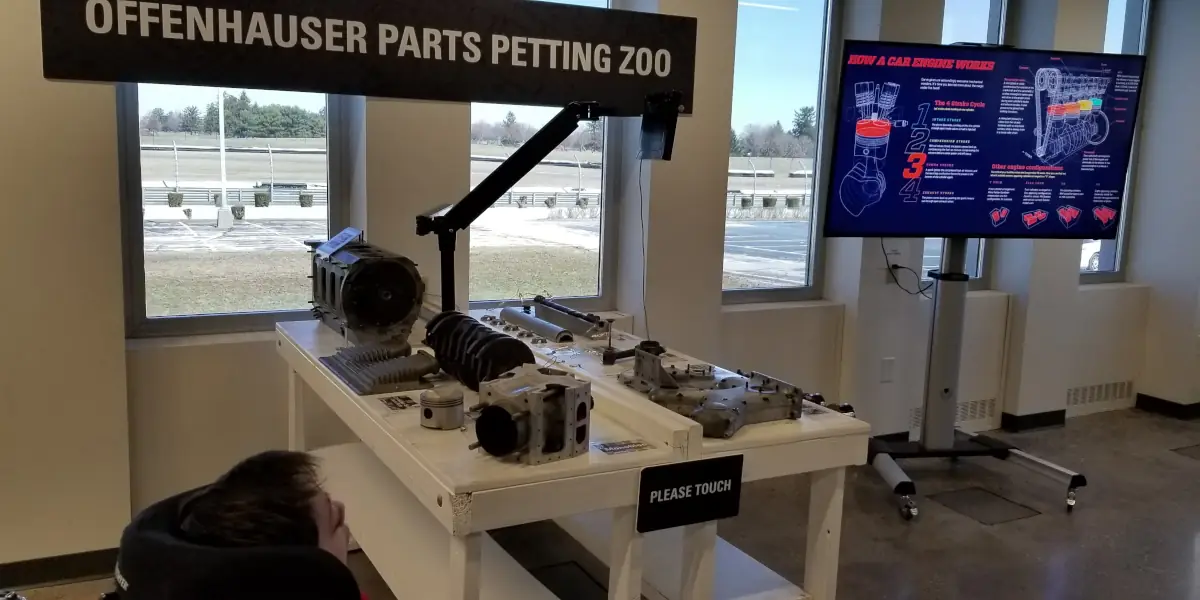
An indoor educational display features a white table covered with mechanical components from an Offenhauser engine, including a crankshaft, pistons, and cylinder heads. A sign on the front reads “PLEASE TOUCH,” inviting visitors to handle the parts. To the right of the table, a large monitor shows a diagram titled “How a Car Engine Works,” illustrating the internal combustion cycle with labeled steps. Large windows in the background reveal an outdoor area, giving the space an open, museum‑style feel.
Offenhauser Parts Petting Zoo in the Indianapolis Motor Speedway Museum


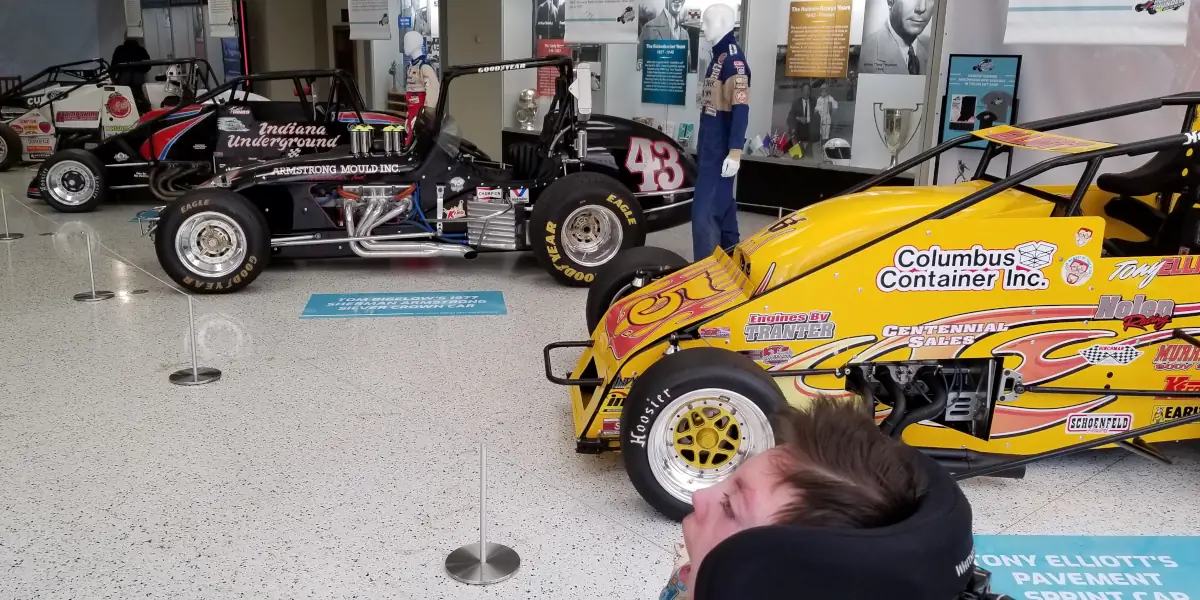
Several sprint race cars are displayed in an indoor museum space. The car closest to the camera is bright yellow with red and orange accents and carries sponsor logos including Columbus Container Inc. and Centennial Sales. Behind it sits a black car labeled Indiana Underground and Armstrong Mould Inc., and farther back a white car with red and blue striping. Informational plaques rest on the floor in front of each vehicle, and a mannequin in a racing suit stands behind the lineup. The exhibit is arranged to highlight different eras and styles of sprint‑car racing.
Indianapolis Motor Speedway Museum


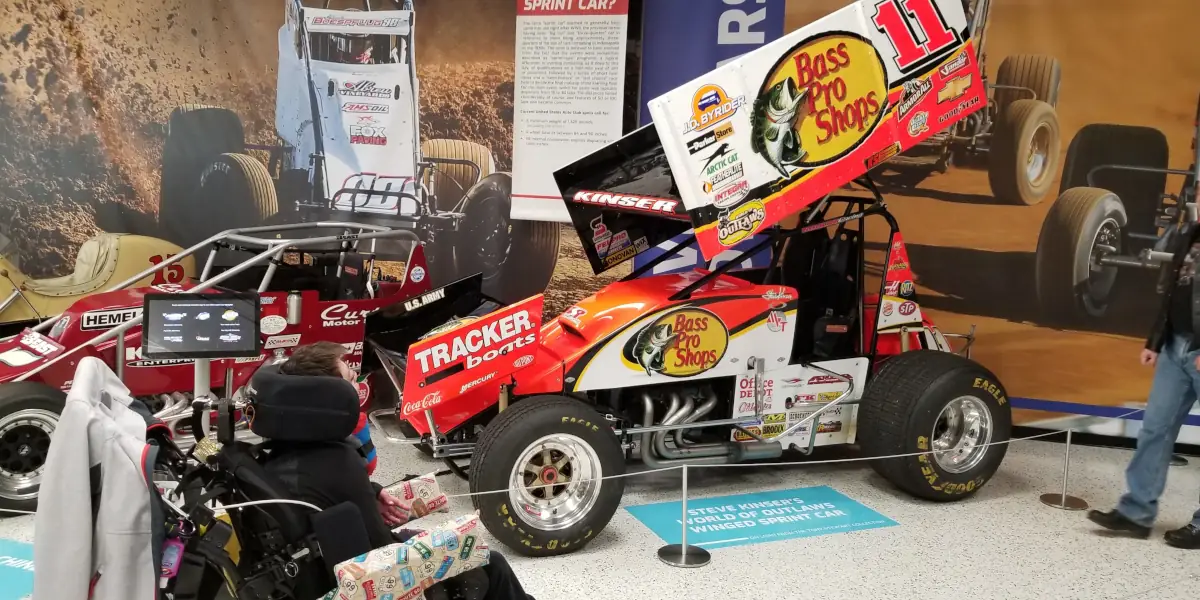
A brightly colored winged sprint car is displayed indoors, featuring a large rear wing marked with the number 11 and prominent Bass Pro Shops branding. Additional sponsor logos such as Tracker Boats and Coca‑Cola appear across the body. A blue floor sign identifies the vehicle as Steve Kinser’s World of Outlaws winged sprint car. Behind the display, a mural shows sprint cars racing on a dirt track. Visitors are visible in the space, including James in his wheelchair positioned near the car.
Indianapolis Motor Speedway Museum


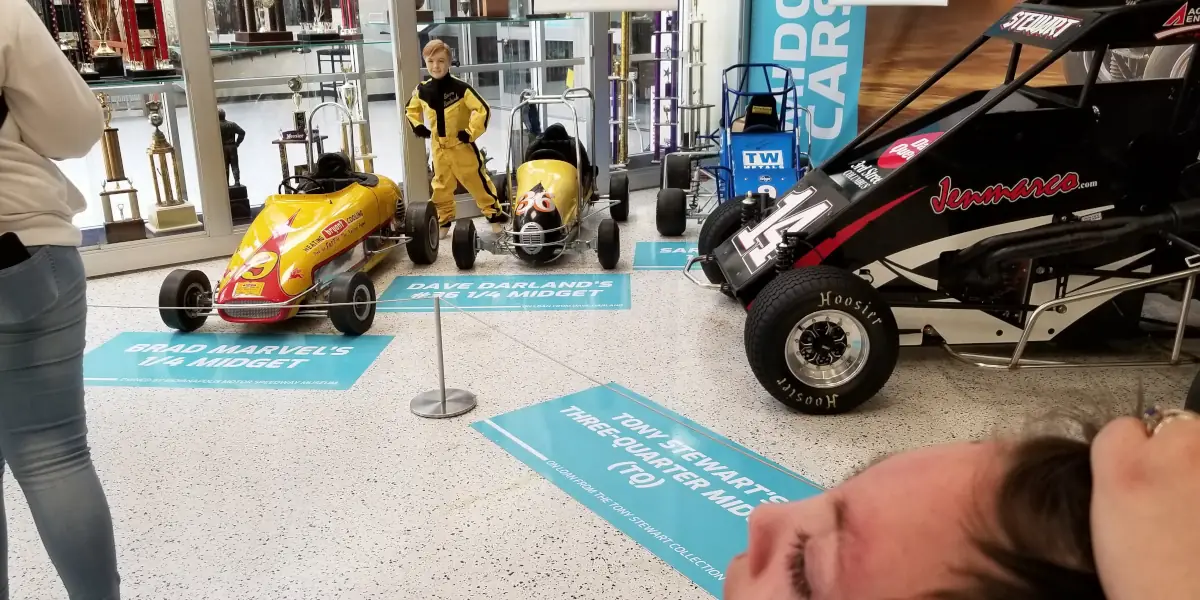
Three small race cars are displayed in a museum setting, each identified by a blue floor sign. Two yellow quarter‑midget cars sit in the front row, labeled as Brad Marvel’s and Dave Darland’s. Behind them is a black three‑quarter midget with red and white accents identified as Tony Stewart’s TQ. A mannequin in a yellow racing suit stands between the first two cars, and glass cases filled with trophies and memorabilia line the wall behind the display. Visitors are visible observing the exhibit.
Indianapolis Motor Speedway Museum


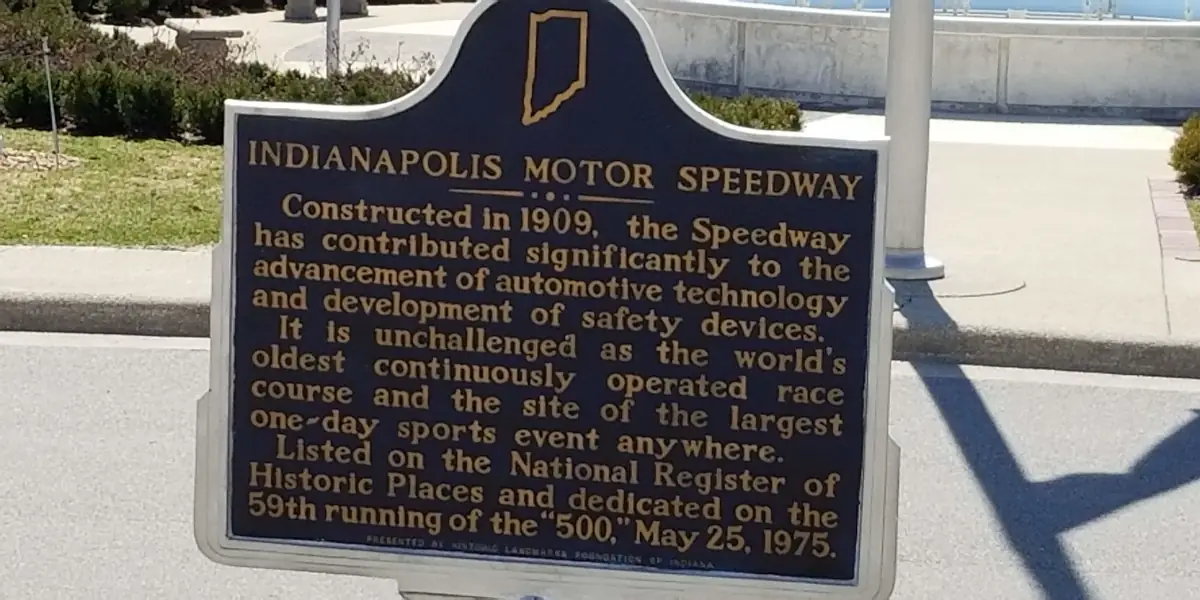
A dark brown historical marker with gold lettering stands beside a sidewalk near landscaped greenery and a nearby building. The plaque is titled “Indianapolis Motor Speedway” and describes the track’s 1909 construction, its role in advancing automotive technology and safety, its status as the world’s oldest continuously operated race course, and its listing on the National Register of Historic Places. The marker is mounted on a post and framed by a simple outdoor setting.


Day 5: Indianapolis Zoo

Up to this point we had something happen every day of the trip. Fortunately, the bedbugs on day 4 were the last of it. No other issues for the remainder of the trip. Thank God!

It’s kind of funny. It seems like whenever we go on vacation, we take James to the zoo. I think we may have gone to our local zoo once when James was a baby. That’s it. We might think about taking him back now that he’s older and can probably process it better.

Anyway, here are a few pics from the Indianapolis Zoo.
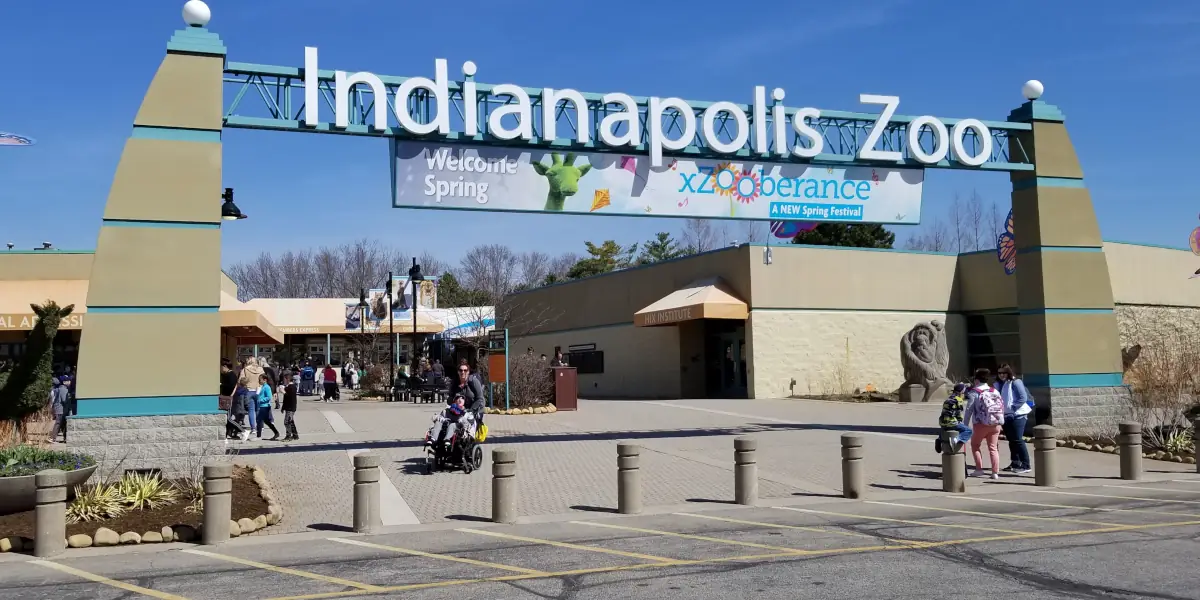
 

The entrance to the Indianapolis Zoo features tall pillars supporting a large sign that reads “Indianapolis Zoo.” A colorful banner below it says “Welcome Spring” and promotes the “xZOOberance” spring festival. Several people walk near the entrance, including Stacyt pushing James in his wheelchair. The area is paved with decorative stonework and surrounded by neatly landscaped plants, creating a bright, welcoming entryway.


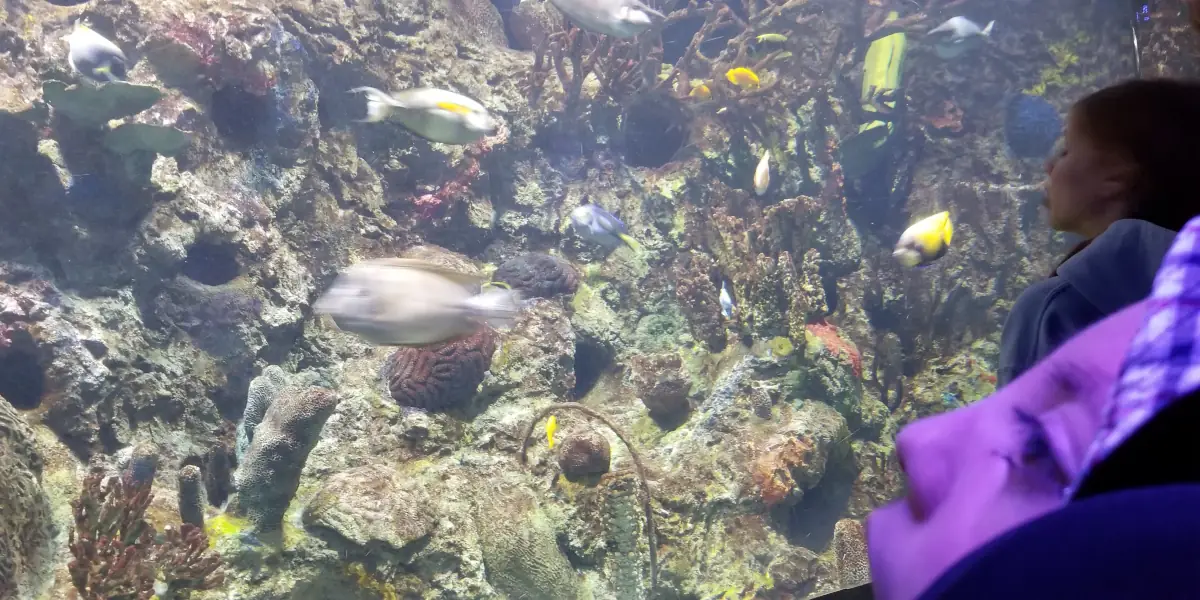
A large aquarium tank is filled with colorful tropical fish swimming among coral formations, sponges, and marine plants. Yellow, blue, and silver fish move through the water, illuminated by the tank’s bright lighting. In the foreground, a person stands close to the glass, their face lit by the glow from the tank as they watch the fish up close.


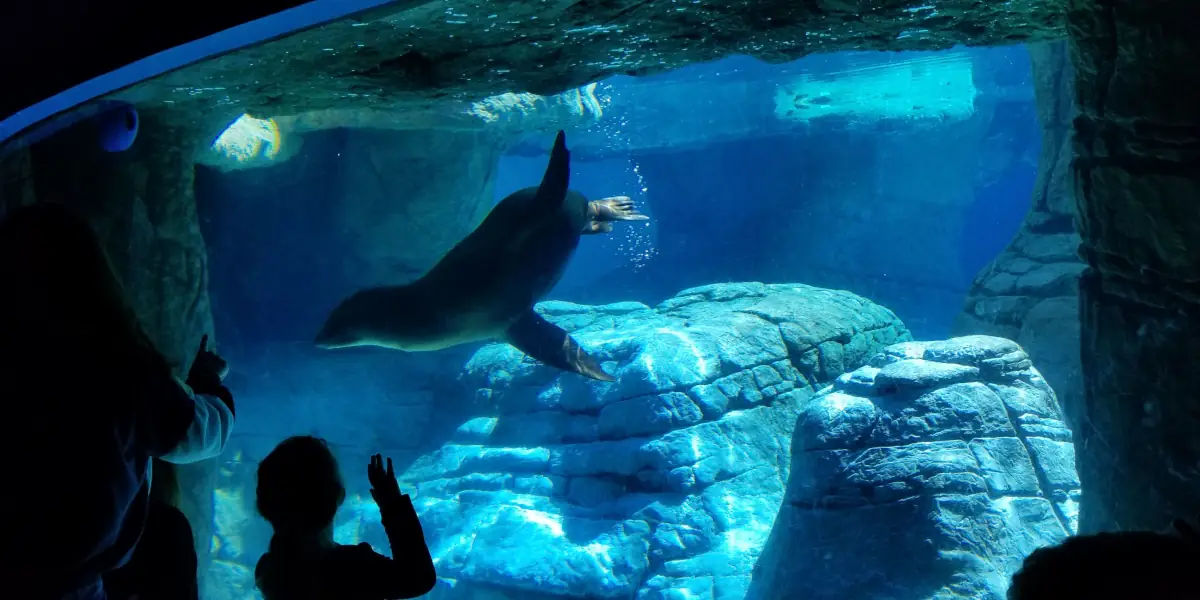
A sea lion swims through a large underwater exhibit, moving between tall rocky formations in clear blue water. Small bubbles trail from its mouth as it glides past. In the foreground, the silhouettes of an adult and a child stand close to the glass, watching the animal’s movement. Soft lighting highlights the textures of the rocks and the fluid motion of the sea lion.


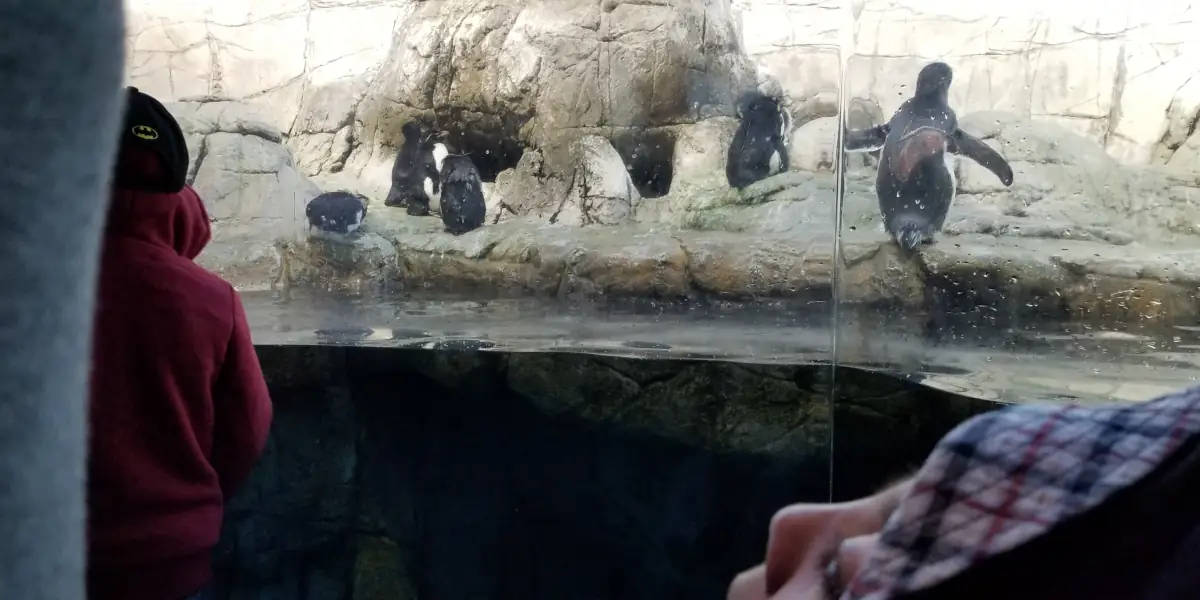
Several penguins stand on a rocky ledge inside an indoor enclosure, with water visible below them. The scene is viewed through glass, and two people are watching from the foreground — one wearing a red hoodie and a black hat with a yellow Batman logo, and James wearing a had with a plaid design. Soft artificial lighting highlights the penguins and the textured rock backdrop.


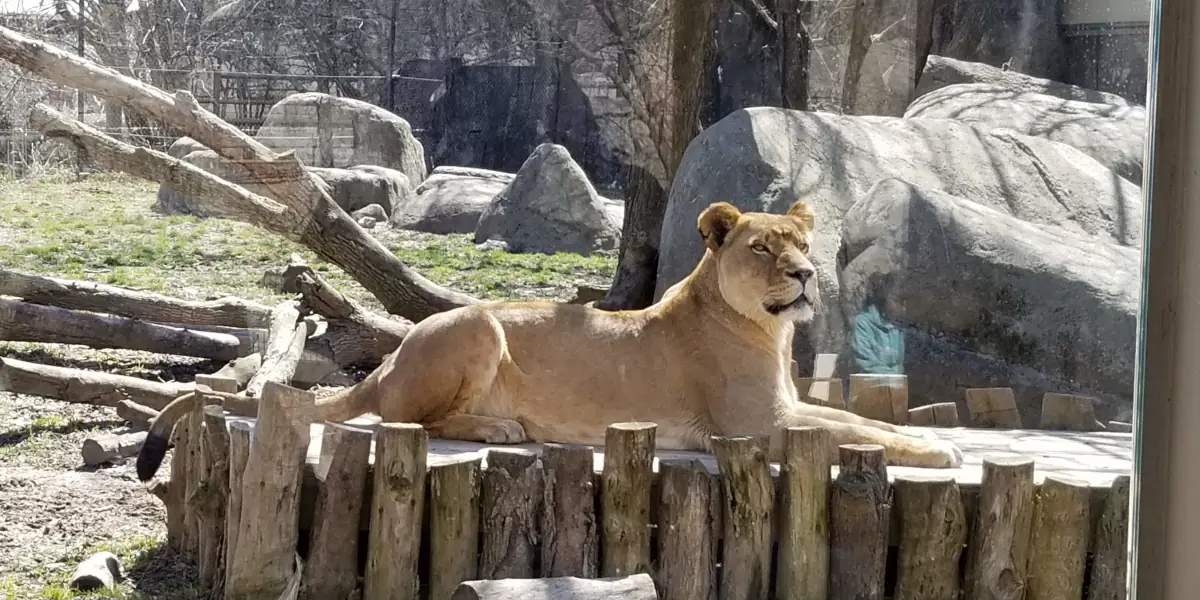
A lioness rests on a raised wooden platform made of upright logs, lying with her front legs extended and her head lifted in an alert posture. The enclosure around her includes large rocks, fallen tree trunks, patches of grass, and leafless trees, creating a naturalistic outdoor habitat.


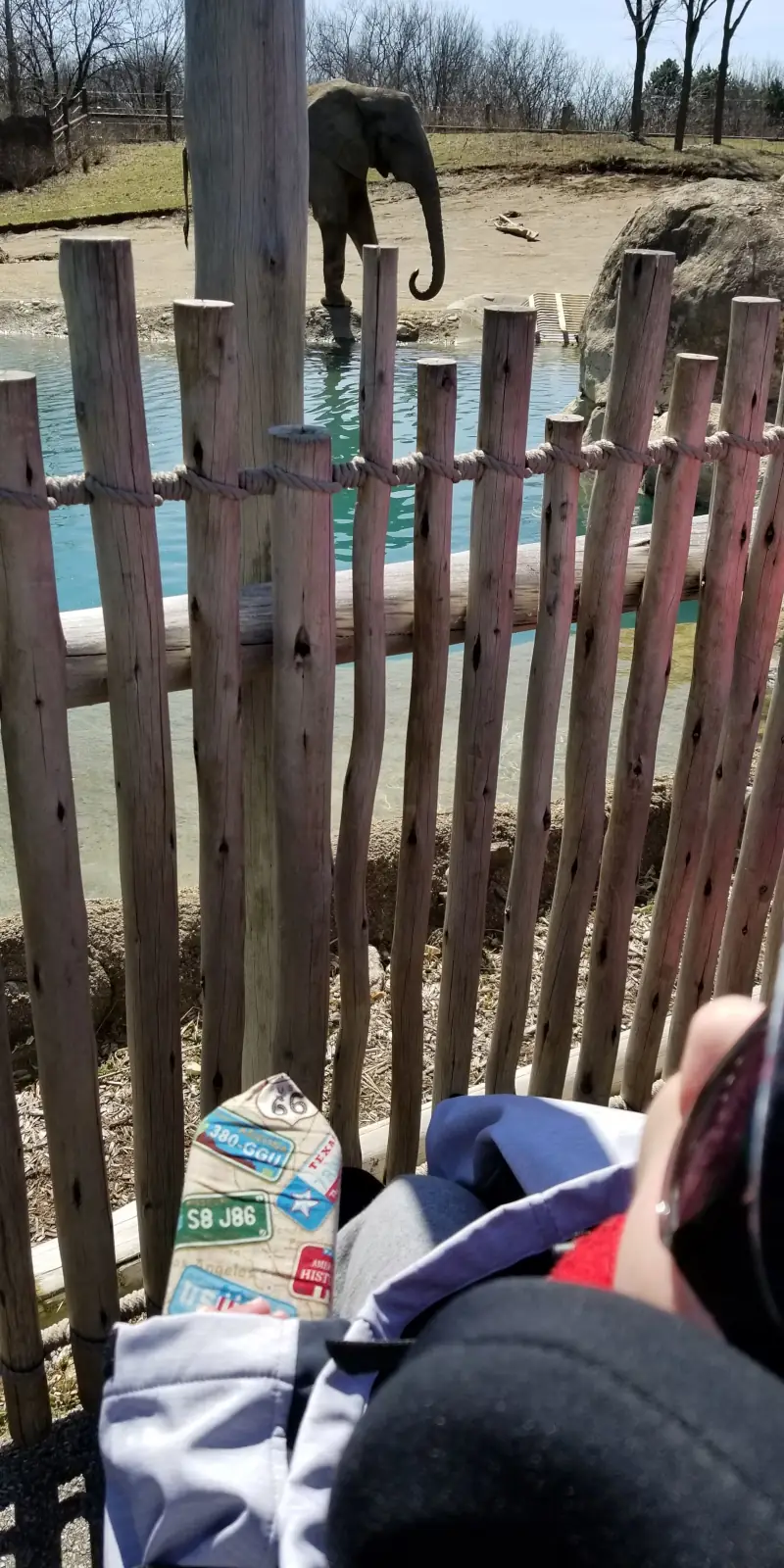
An elephant stands near a shallow pool inside an outdoor zoo enclosure bordered by a fence made of vertical wooden logs. In the foreground, James views the animal from the comfort of his wheelchair, Behind the elephant, the habitat includes leafless trees, grass, and earthy terrain, suggesting a cool‑season setting.


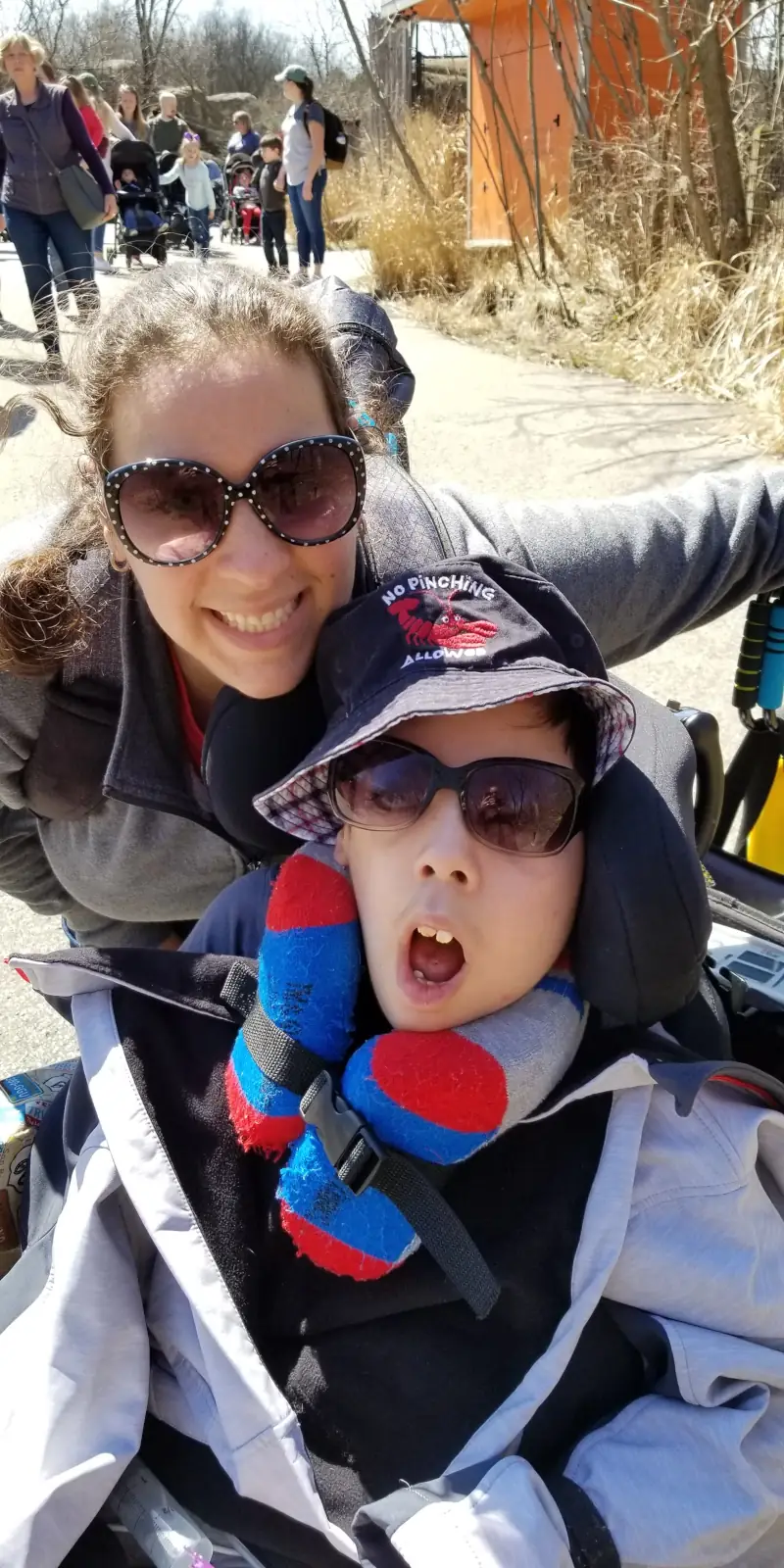
Stacy and James are outdoors on a sunny day, with Stacy standing behind James who is seated in a wheelchair. Both wear sunglasses. James has a hat that reads “NO PINCHING ALLOWED” and a neck pillow with red and blue sections. The background shows a paved path, dry grass, leafless trees, and several other visitors walking or pushing strollers. An orange structure stands to the right side of the scene.


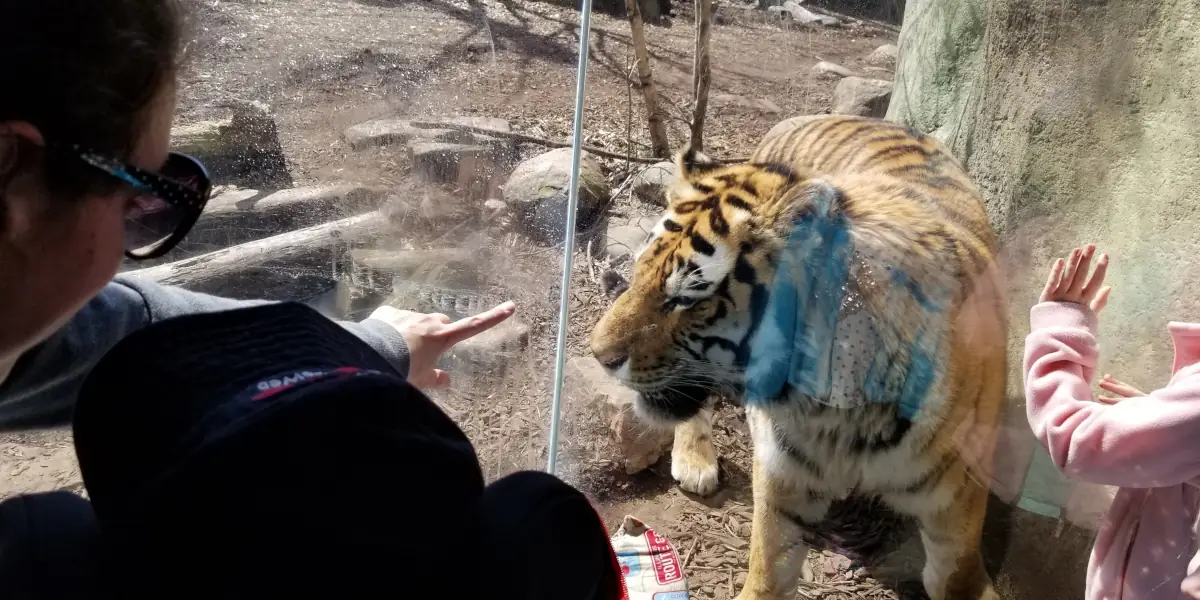
A tiger stands close to a glass barrier in an outdoor zoo habitat, facing two visitors on the other side. Stacy points toward the tiger while a child rests their hand against the glass. The tiger’s orange coat and black stripes are sharply visible. Behind it, the enclosure features rocks, dry ground, and sparse trees, creating a naturalistic setting.


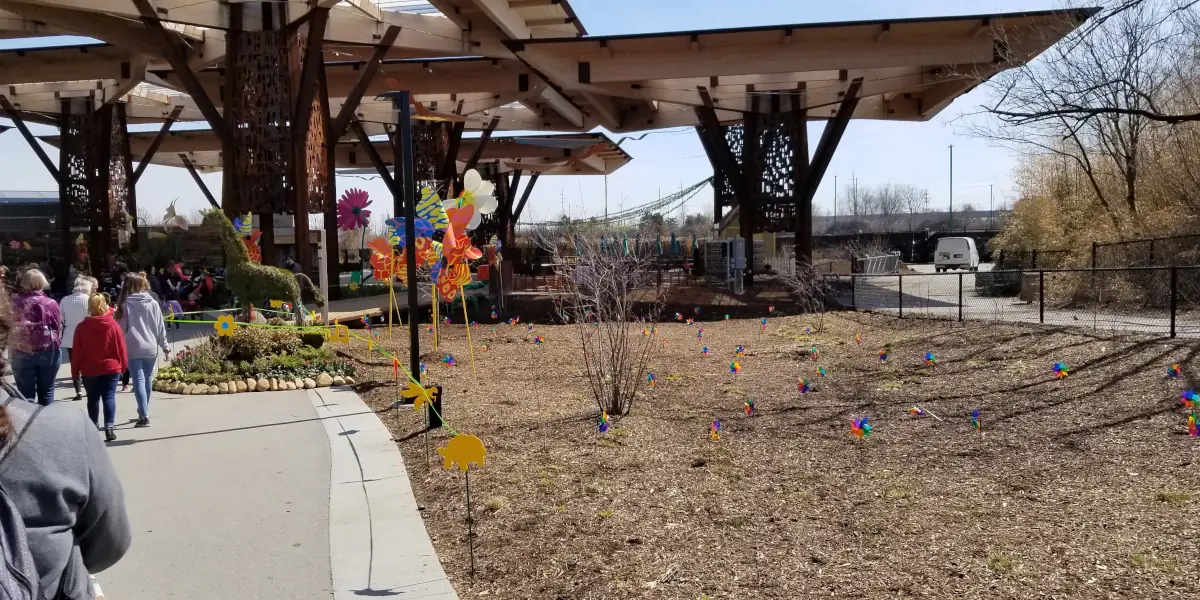
A large wooden canopy structure with decorative beams stands over a walkway where people are gathered and moving through the space. In the foreground, a landscaped bed filled with mulch is covered in colorful pinwheels and small animal‑shaped decorations. A paved path leads toward the canopy, bordered by shrubs and plants, creating a bright, festive outdoor setting.


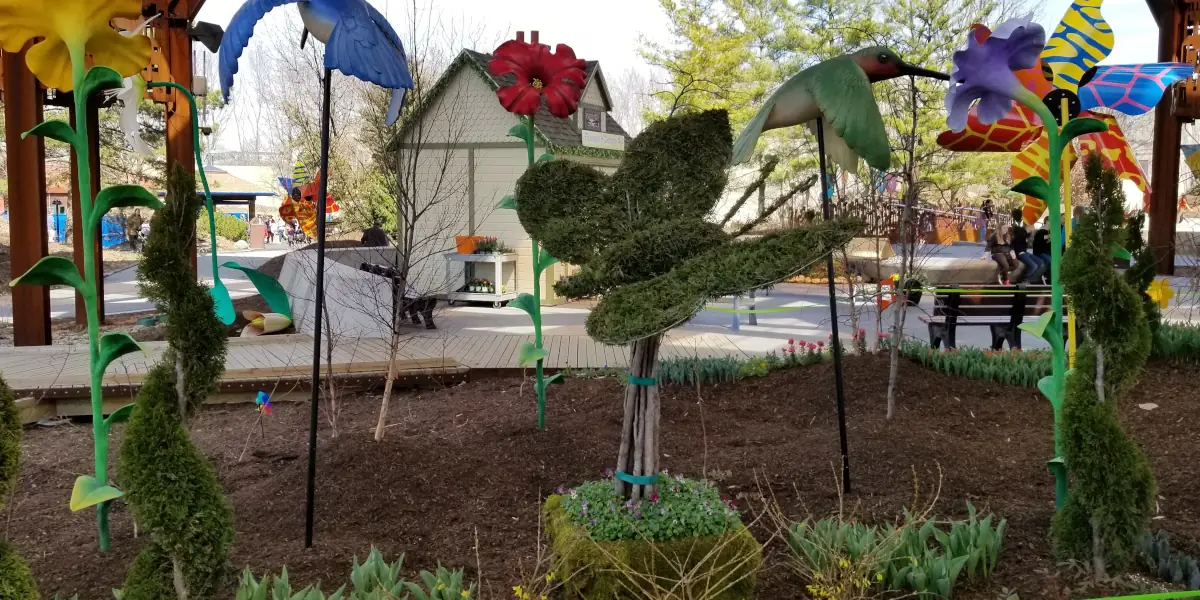
A decorative garden display features large, brightly colored sculpted flowers with hummingbird figures positioned as if hovering near the blooms. At the center stands a butterfly‑shaped topiary made from trimmed greenery, supported by a base wrapped with green ties. The scene is set in a landscaped area with a small building and porch in the background, along with trees showing early spring foliage and a few people seated on benches.


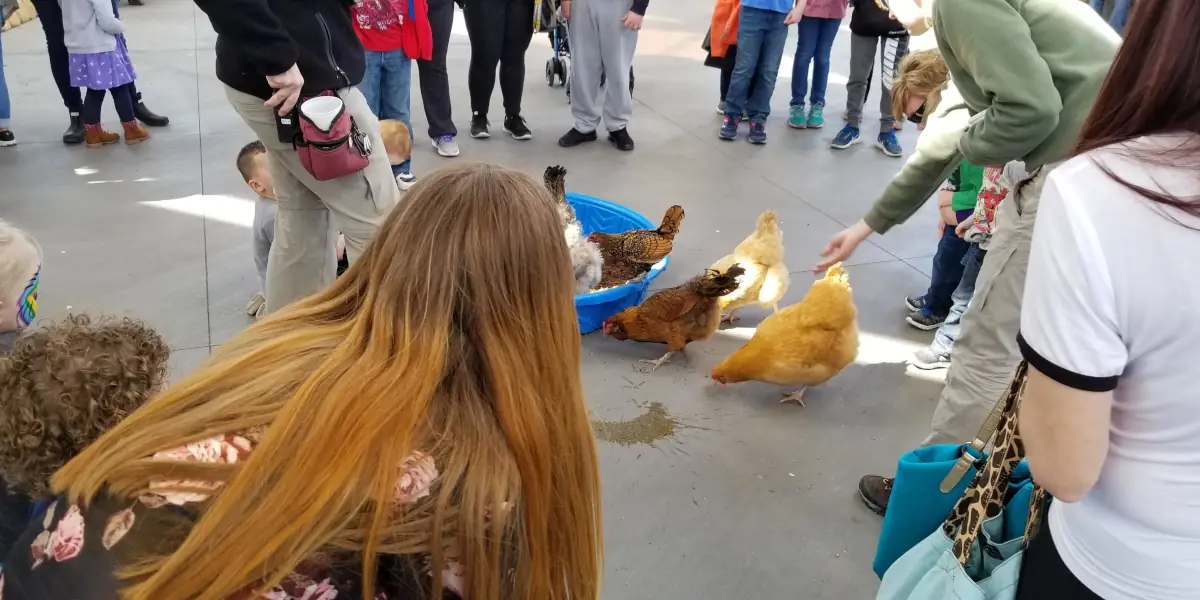
A small group of people gathers around several chickens in a covered area with a concrete floor. A blue plastic container sits in the center while chickens of different colors — brown, black, and golden — move around it. Some visitors crouch or bend down to interact with the birds, while others stand nearby observing the activity.


Day 6: Outlet Mall

By day six of our trip, we had done everything that we had planned to do. We could either go home early, relax in the room and do nothing, or find something to do. We decided to do something so we drove down to the Indiana Premium Outlets in Edinburgh. I don’t really have anything to say (good or bad) about the mall. We just did some browsing at some of the stores and grabbed a bite to eat. One of the stores that we stopped into was Rocket Fizz. We had heard they had a bunch of crazy soda pop flavors, and since we collect bottles to display in our kitchen, we thought we would pick up a couple. This is what we chose:
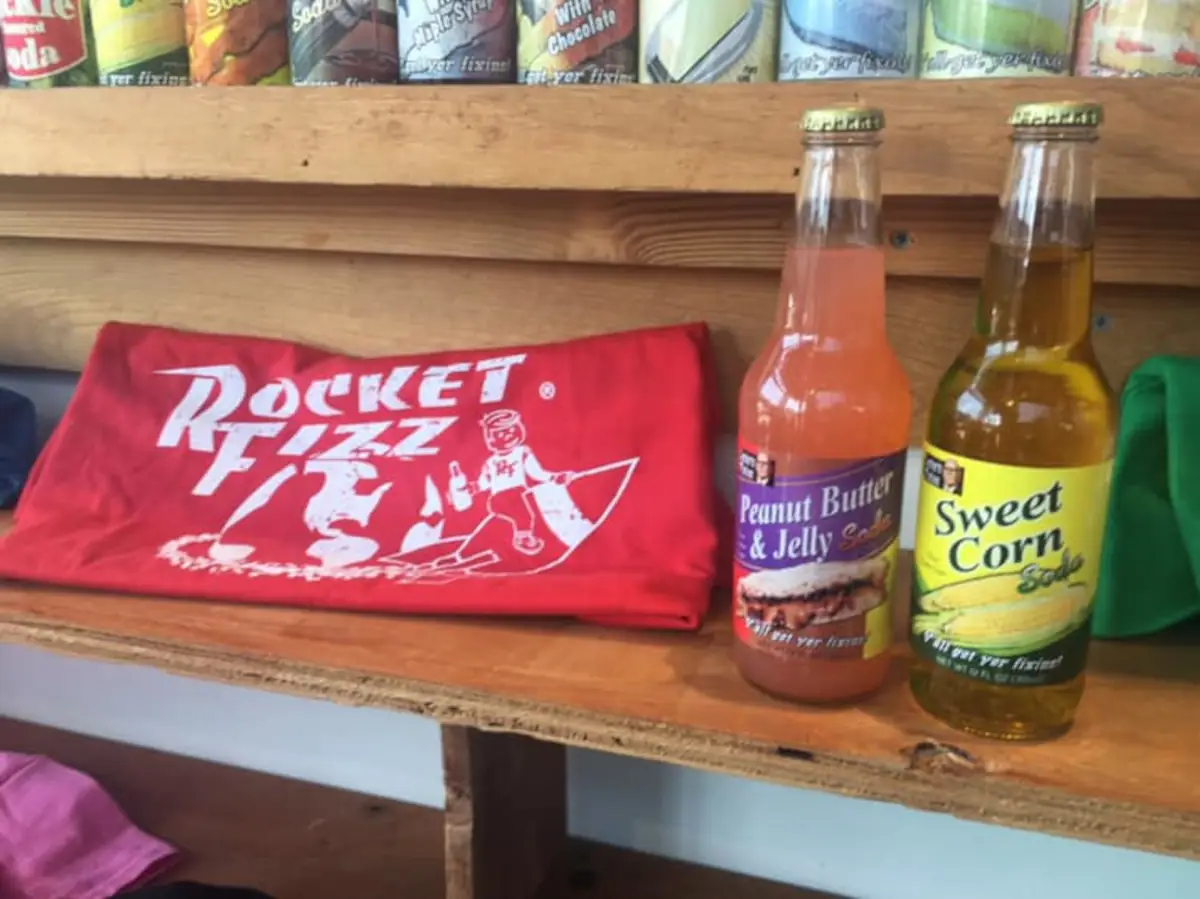
 

A wooden shelf display holds two novelty soda bottles and a folded red T‑shirt. The shirt features white “ROCKET FIZZ” text and a cartoon figure riding a rocket while holding a bottle. Next to it, two sodas in clear‑glass bottles sit side by side, one labeled “Peanut Butter & Jelly Soda” and the other “Sweet Corn Soda,” both with colorful, playful designs. Additional unusual soda flavors line the shelf above them.
Peanut Butter & Jelly and Sweet Corn sodas


Peanut Butter and Jelly for Stacy, and Sweet Corn for me. Stacy didn’t care too much for the PB and J, but that Sweet Corn was damn good! I will definitely have to get that again.


Day 7: Time to Go Home

After a week away from home—and several mishaps—we were ready to get back home. We stopped at Fair Oaks Farms for lunch on the way home. We didn’t do any of the “adventure” stuff. Maybe another time. We just wanted to eat, get back on the road, and get home.
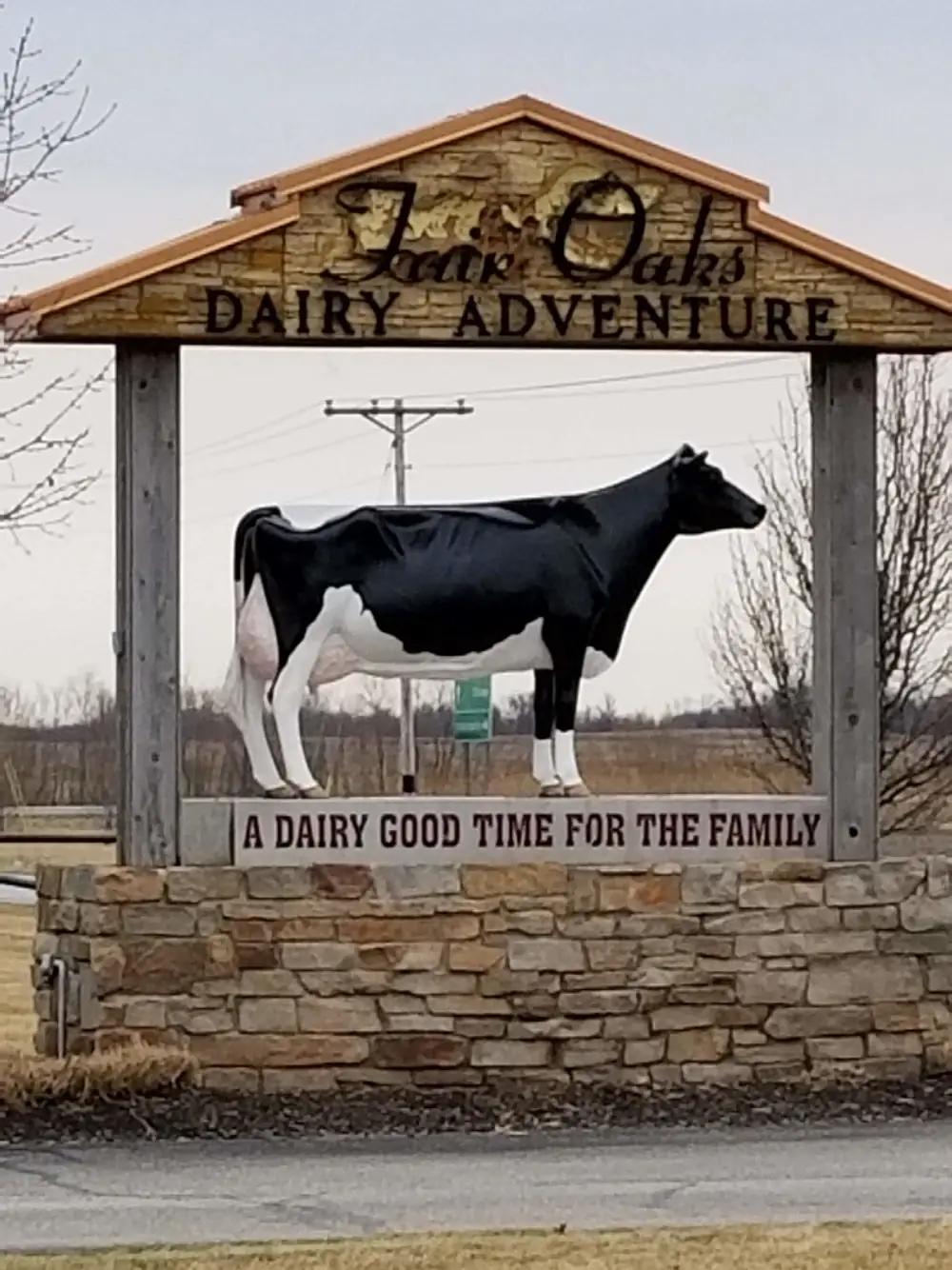
 

A large outdoor sign for Fair Oaks Dairy Adventure stands on a stone base topped with a black‑and‑white cow sculpture. The wooden sign displays the attraction’s name along with a family‑friendly slogan. Behind it, open fields, scattered trees, and power lines stretch across a rural landscape.


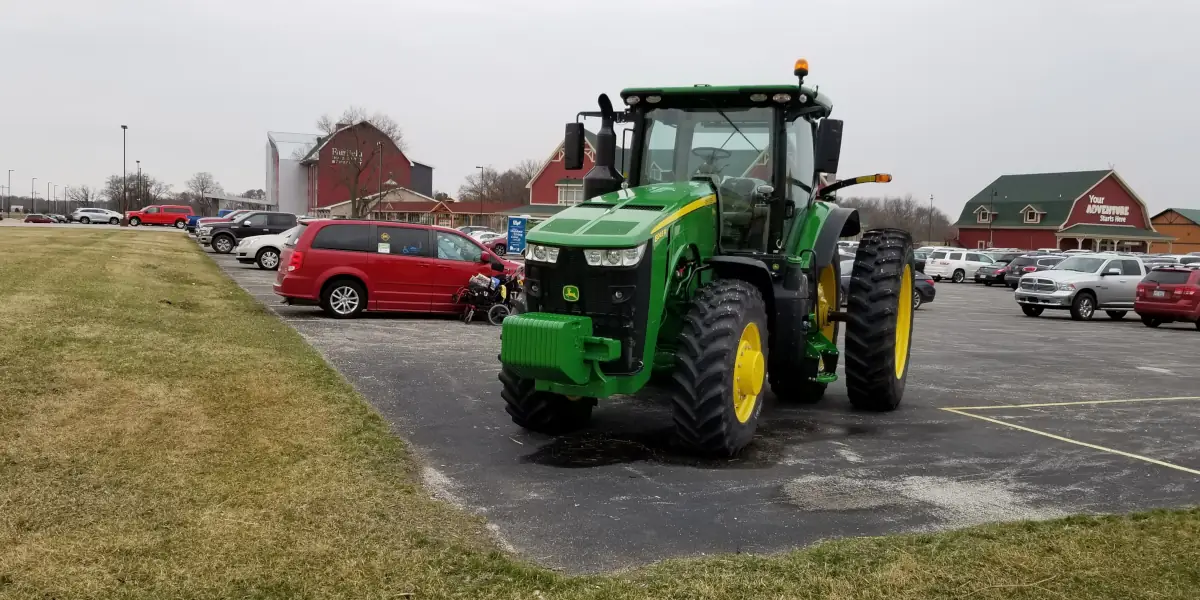
A large green and yellow John Deere tractor is parked in a paved lot beside several cars, including our red minivan. Behind it are two barn‑style buildings with red and green exteriors, one displaying signage with partial phrases. The sky is overcast, and patches of grass and pavement frame the scene, creating a mix of farm equipment and everyday parking‑lot surroundings.
Our van looks tiny next to the tractor


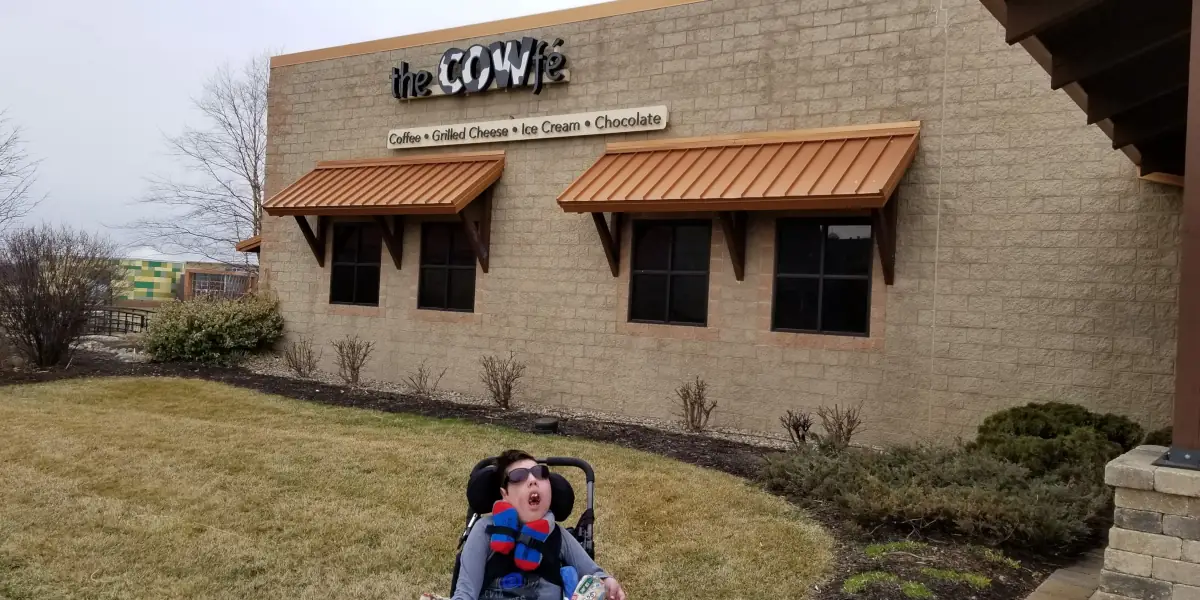
James sits in his wheelchair in front of a tan‑brick building with a sign reading “the COWfé.” Smaller text below lists offerings such as coffee, grilled cheese, ice cream, and chocolate. Three windows with brown awnings line the front of the building, and the surrounding landscaping includes grass, shrubs, and small leafless plants. The sky is overcast, giving the scene a muted outdoor feel.
We had lunch at their COWfe before getting back on the road to head home


Overall, I thought it was a good trip. Yes, we had some issues in the first half of the trip that made us wonder if we were cursed for some reason. For the most part, it was enjoyable. Stacy doesn’t think we’ll ever go back. We’ll see.

James seemed to enjoy himself. He didn’t have any of his respiratory episodes the entire time we were gone, which was a relief. That is one of the things we worry about when travelling. If James has respiratory issues when we’re out of town, where to we take him? Will he receive good care? Do they know how to handle kids like James?

He was perfectly fine on this trip, though. But for whatever reason, the night we got home, he was up at 3 am having one of his episodes. Low sats and high heartrate. We’re still trying to figure this out. Stacy thought maybe a little bit of oxygen at night might help. He hadn’t used oxygen at all on our trip—nighttime included—so why does he need it at home? Maybe there’s something in our house. I don’t even know where to begin trying to figure that out.