• Post category:Educational / Epilepsy
  • Reading time:1 min read

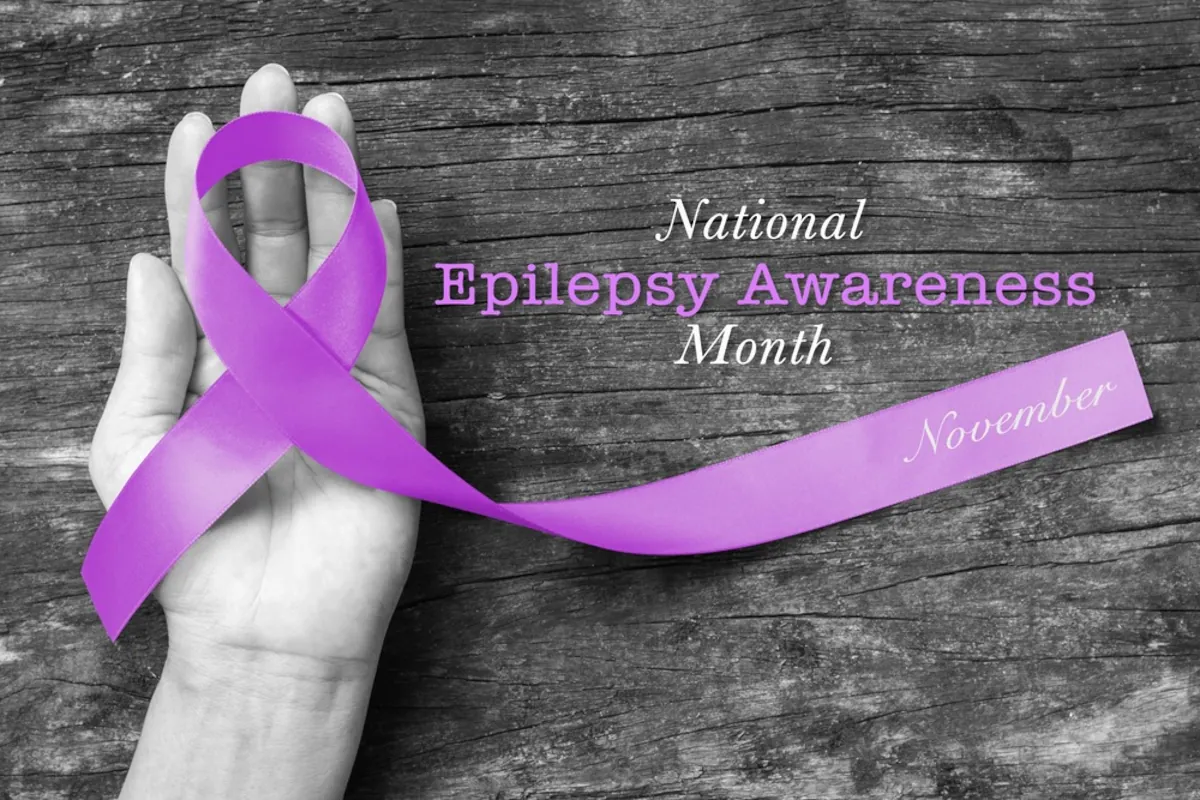
A hand holds a purple awareness ribbon against a grayscale wooden background, making the ribbon stand out vividly. Text on the image highlights November as National Epilepsy Awareness Month, giving the scene a calm but purposeful advocacy feel.


November is Epilepsy Awareness Month. Stacy has been posting daily epilepsy facts on James’ Facebook page, and I will be compiling those facts here. As I have done in the past, I will be splitting the facts into two separate posts. This first post will be a collection of the first fifteen days. At the end of the month, I will post the remaining fifteen daily facts.

As part of Epilepsy Awareness Month, Stacy is having an online Thirty-One event and will donate 20% of sales to the Epilepsy Foundation Greater Chicago. Get some holiday shopping done and help support a good cause.

https://www.mythirtyone.com/627441/shop/Party/EventDetail/10926852

Thank you, K.I.P. Epilepsy Coalition for creating these images for us to use to spread awareness about epilepsy.


Day 1
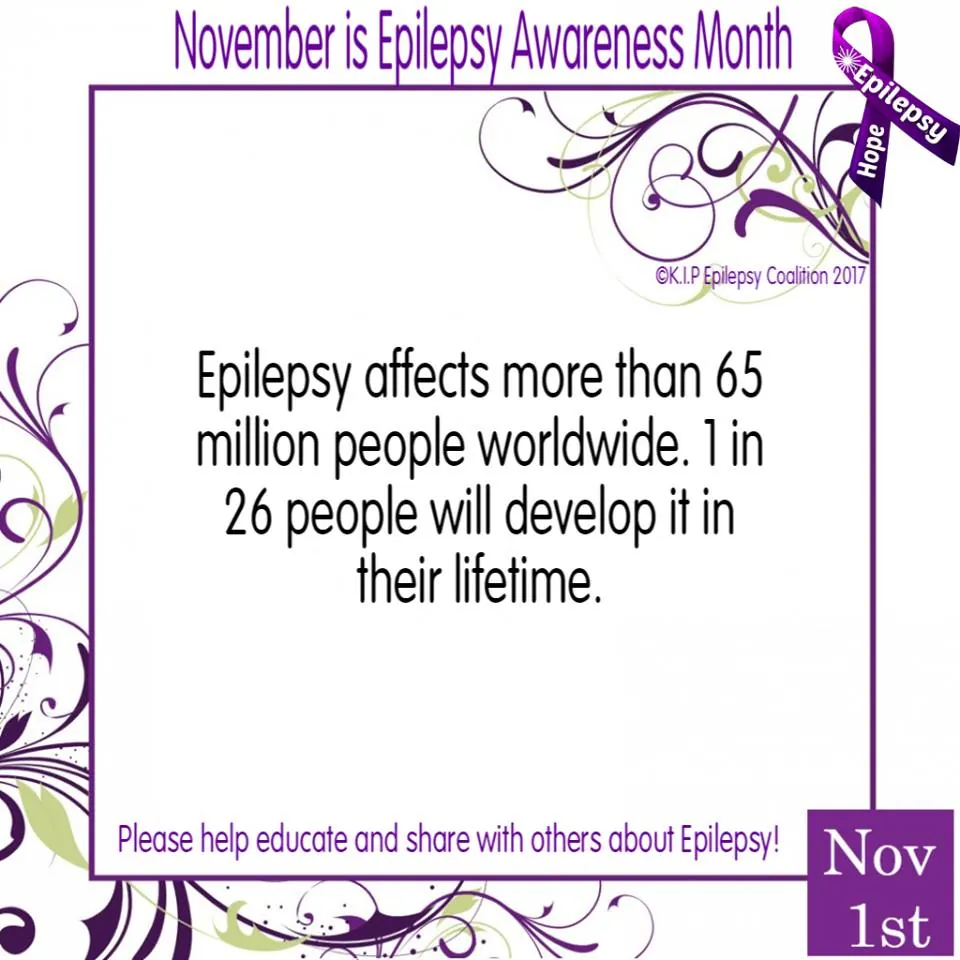
A purple‑and‑green awareness poster highlights November as Epilepsy Awareness Month. Decorative swirls frame a purple ribbon, and the text shares key facts — including that epilepsy affects more than 65 million people worldwide and that 1 in 26 people will develop it. The message encourages others to learn and help spread awareness, with “Nov 1st” noted at the bottom.


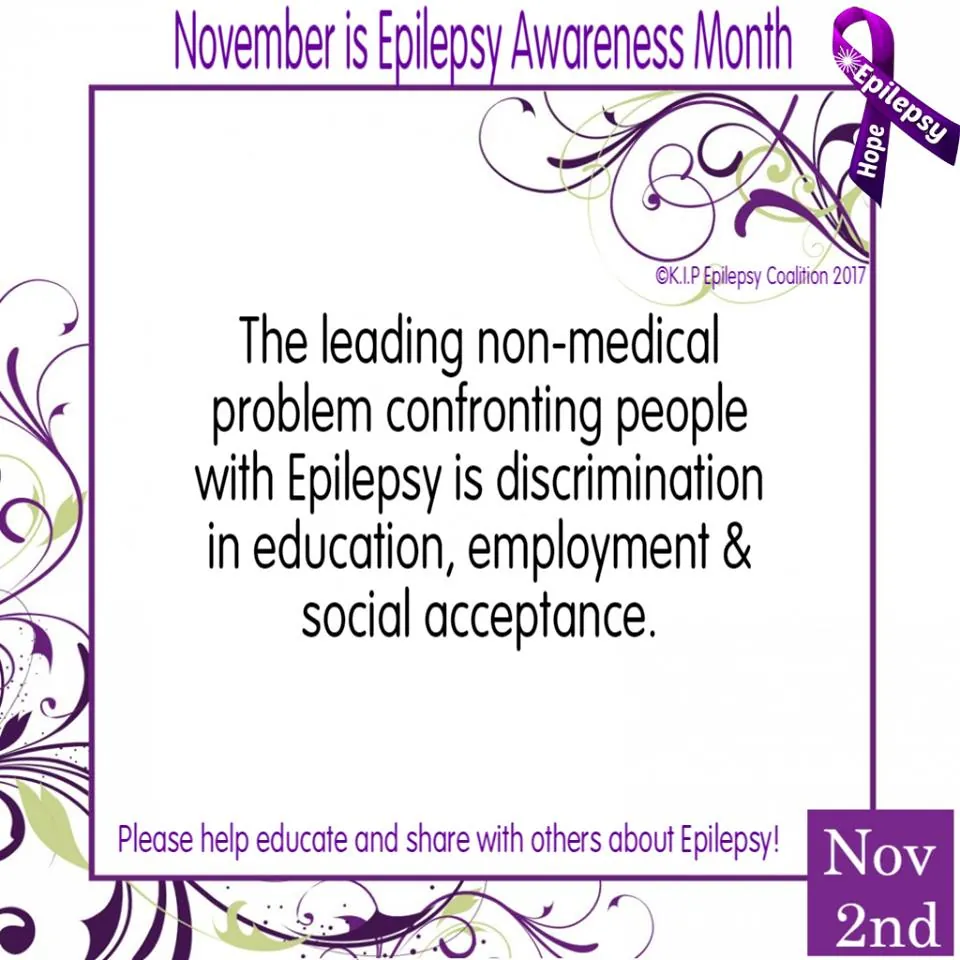
Day 2

A purple‑and‑green awareness poster marks November as Epilepsy Awareness Month. Decorative floral designs frame a purple ribbon, and the text highlights that discrimination in education, employment, and social acceptance remains a major non‑medical challenge for people with epilepsy. The poster encourages others to learn and share information, with “Nov 2nd” noted at the bottom.


Day 3

This is a BIG fear in our house:
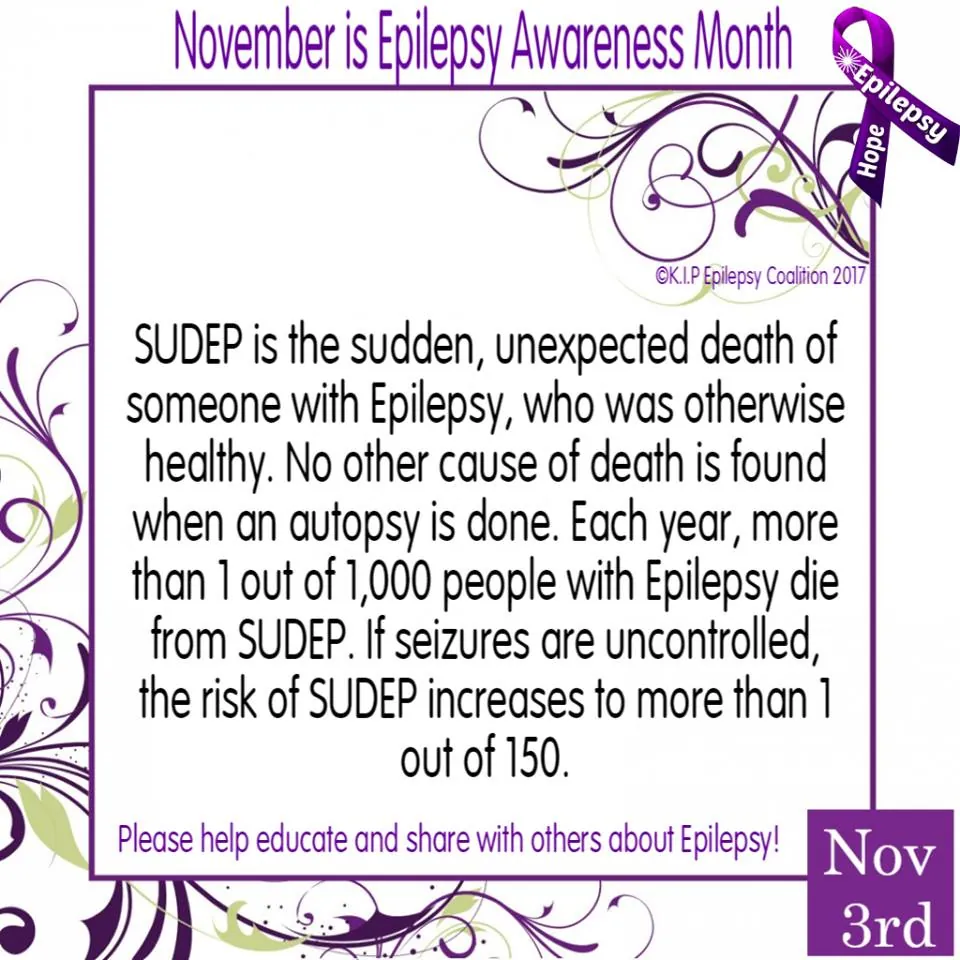
A purple‑and‑green epilepsy‑awareness poster marks November as Epilepsy Awareness Month. A purple ribbon labeled “Epilepsy Hope” sits near decorative floral designs. The text explains SUDEP — sudden unexpected death in epilepsy — noting that it affects more than 1 in 1,000 people with epilepsy each year, with higher risk when seizures are uncontrolled. The poster encourages education and awareness, with “Nov 3rd” at the bottom.


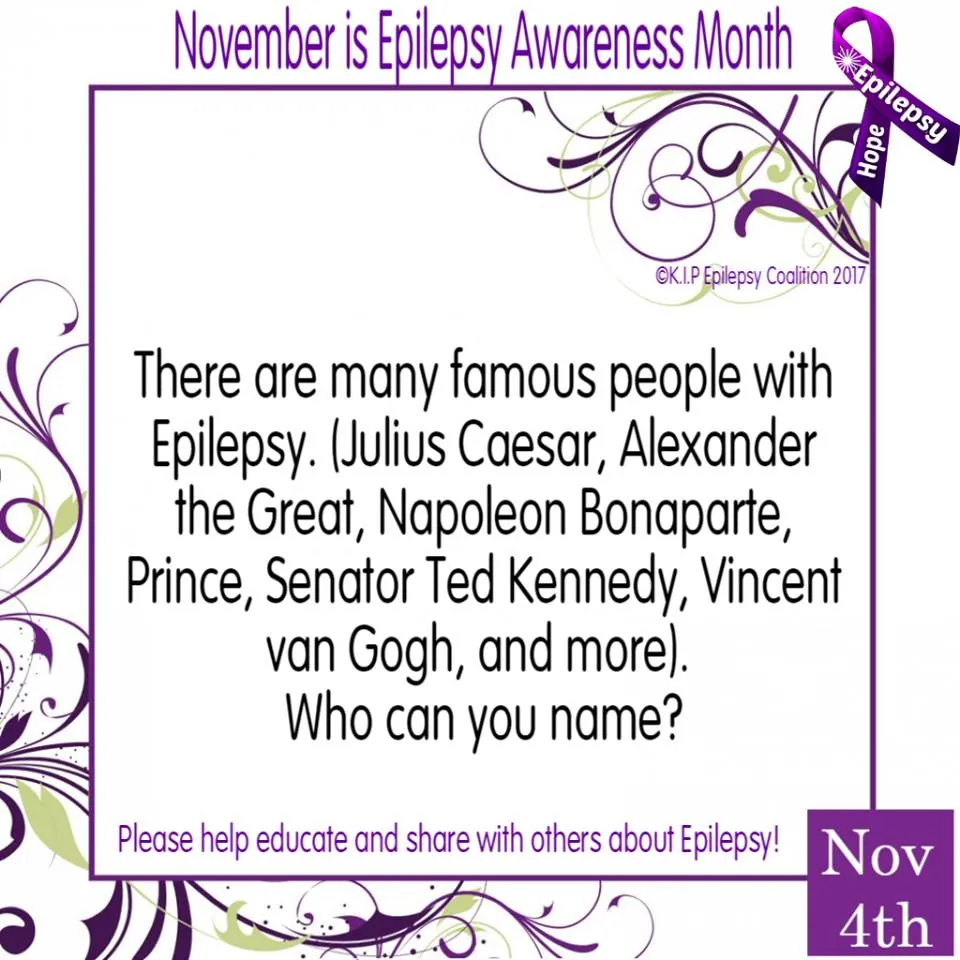
Day 4

A purple‑and‑green epilepsy‑awareness poster marks November as Epilepsy Awareness Month. Decorative floral designs frame a purple ribbon labeled “Epilepsy Hope.” The text highlights that many well‑known historical and public figures had epilepsy — including Julius Caesar, Alexander the Great, Napoleon Bonaparte, Prince, Senator Ted Kennedy, and Vincent van Gogh — and invites viewers to think of others they can name. The poster encourages education and awareness, with “Nov 4th” at the bottom.


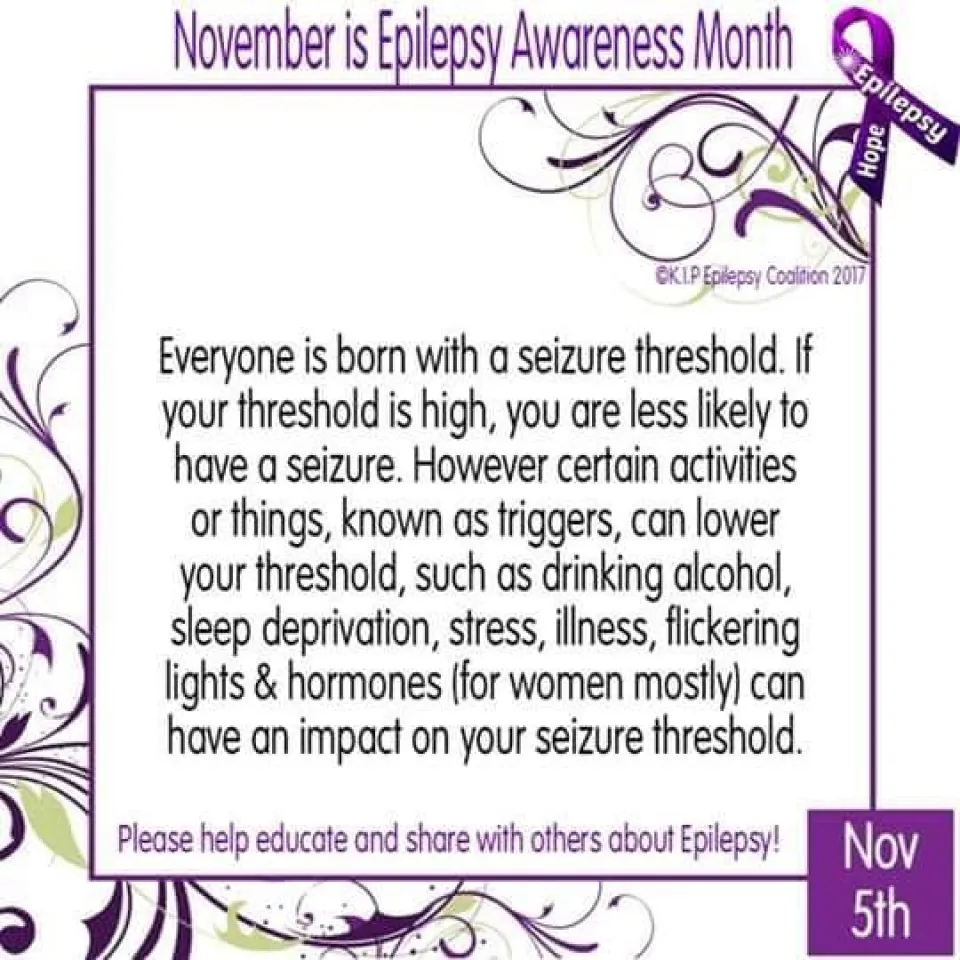
Day 5

A purple‑and‑green epilepsy‑awareness poster marks November as Epilepsy Awareness Month. A purple ribbon labeled “Epilepsy Hope” sits beside decorative swirls. The text explains that everyone has a seizure threshold and that certain triggers — such as alcohol, lack of sleep, stress, illness, flickering lights, and hormonal changes — can lower it and increase seizure risk. The poster encourages education and awareness, with “Nov 5th” noted at the bottom.


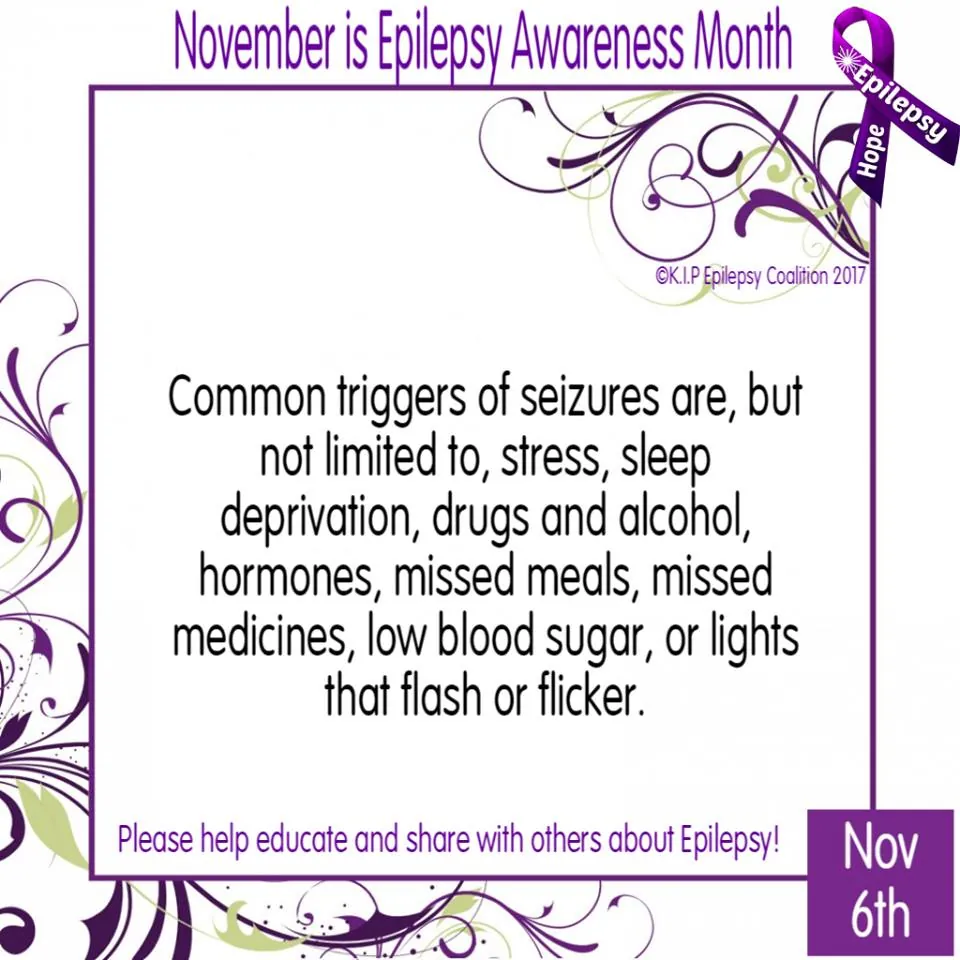
Day 6

A purple‑and‑green epilepsy‑awareness poster marks November as Epilepsy Awareness Month. Decorative swirls frame a purple ribbon, and the text lists common seizure triggers, including stress, lack of sleep, drugs or alcohol, hormonal changes, missed meals or medication, low blood sugar, and flashing or flickering lights. The poster encourages education and awareness, with “Nov 6th” noted at the bottom.


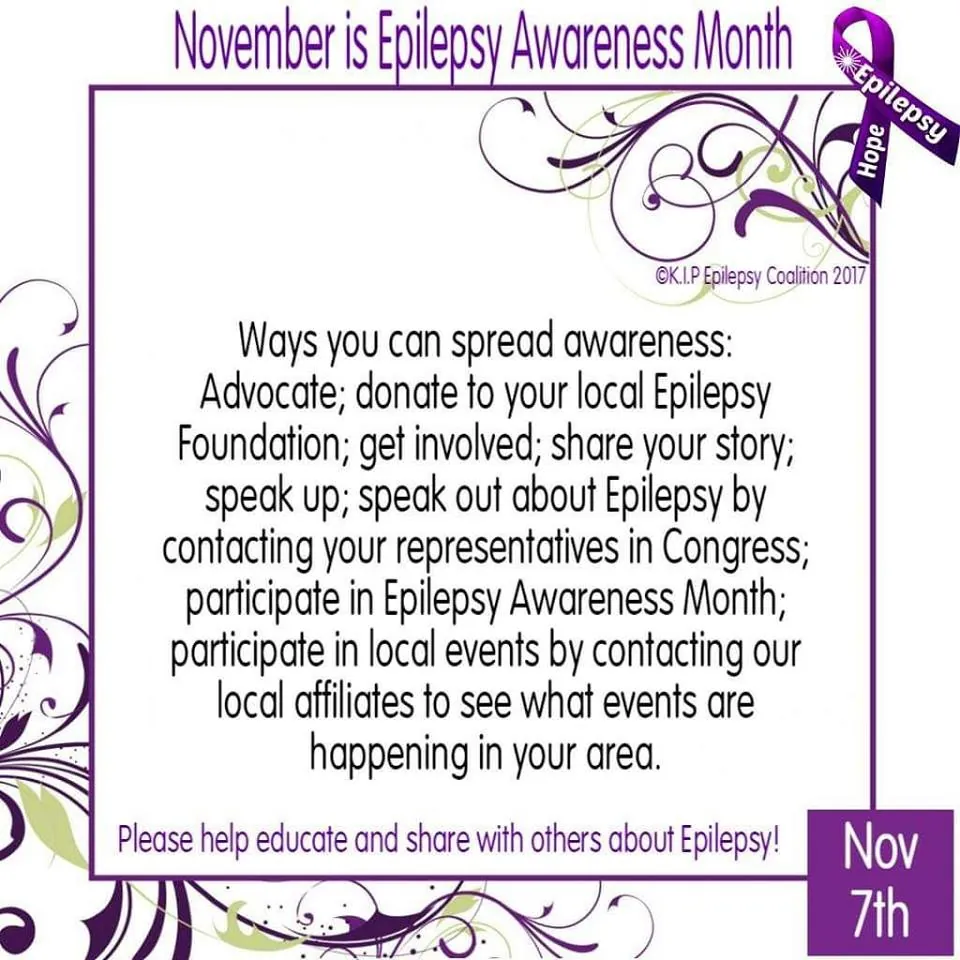
Day 7

A purple‑and‑green epilepsy‑awareness poster marks November as Epilepsy Awareness Month. Decorative swirls frame a purple ribbon labeled “Epilepsy Hope.” The text lists ways people can help spread awareness — advocating, donating to local epilepsy foundations, sharing personal stories, contacting representatives, and participating in local events. The poster encourages education and community involvement, with “Nov 7th” noted at the bottom.


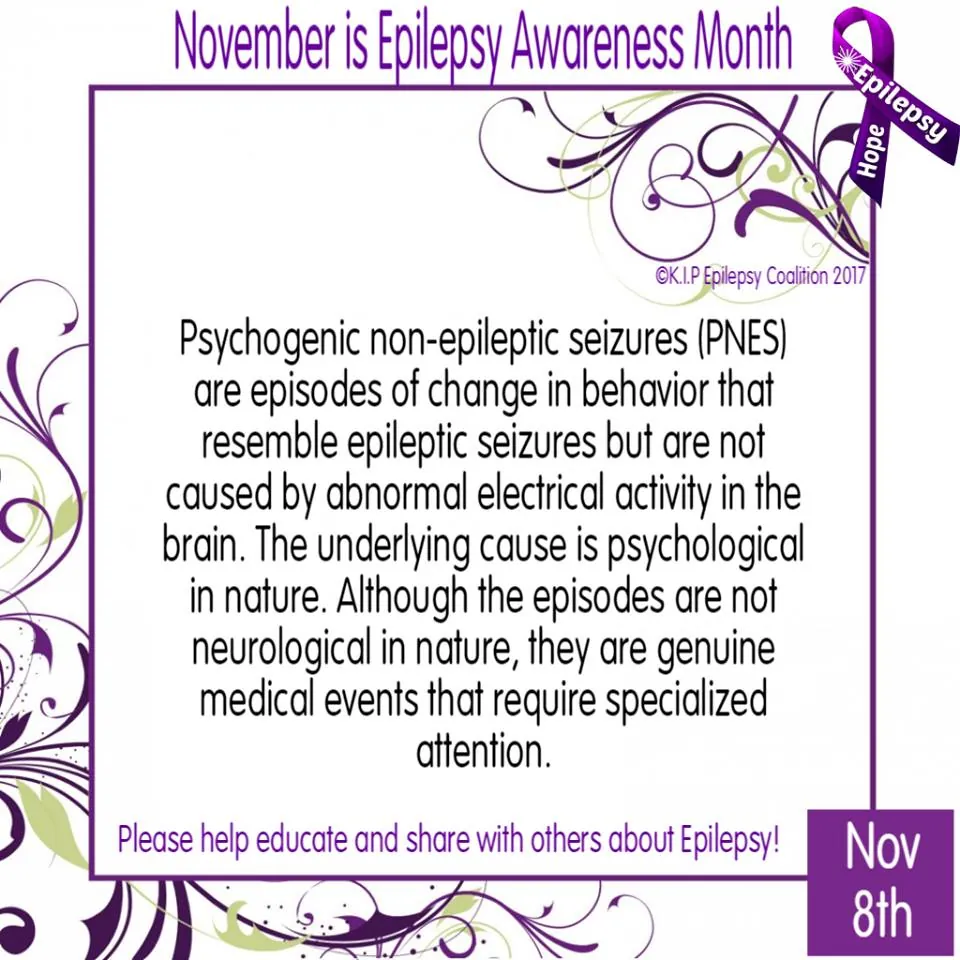
Day 8

A purple‑and‑green epilepsy‑awareness poster marks November as Epilepsy Awareness Month. Decorative swirls frame a purple ribbon labeled “Epilepsy Hope.” The text explains psychogenic non‑epileptic seizures (PNES), noting that although they resemble epileptic seizures, they are not caused by electrical activity in the brain and stem from psychological factors. It emphasizes that PNES episodes are real medical events requiring specialized care. A purple box in the corner reads “Nov 8th.”


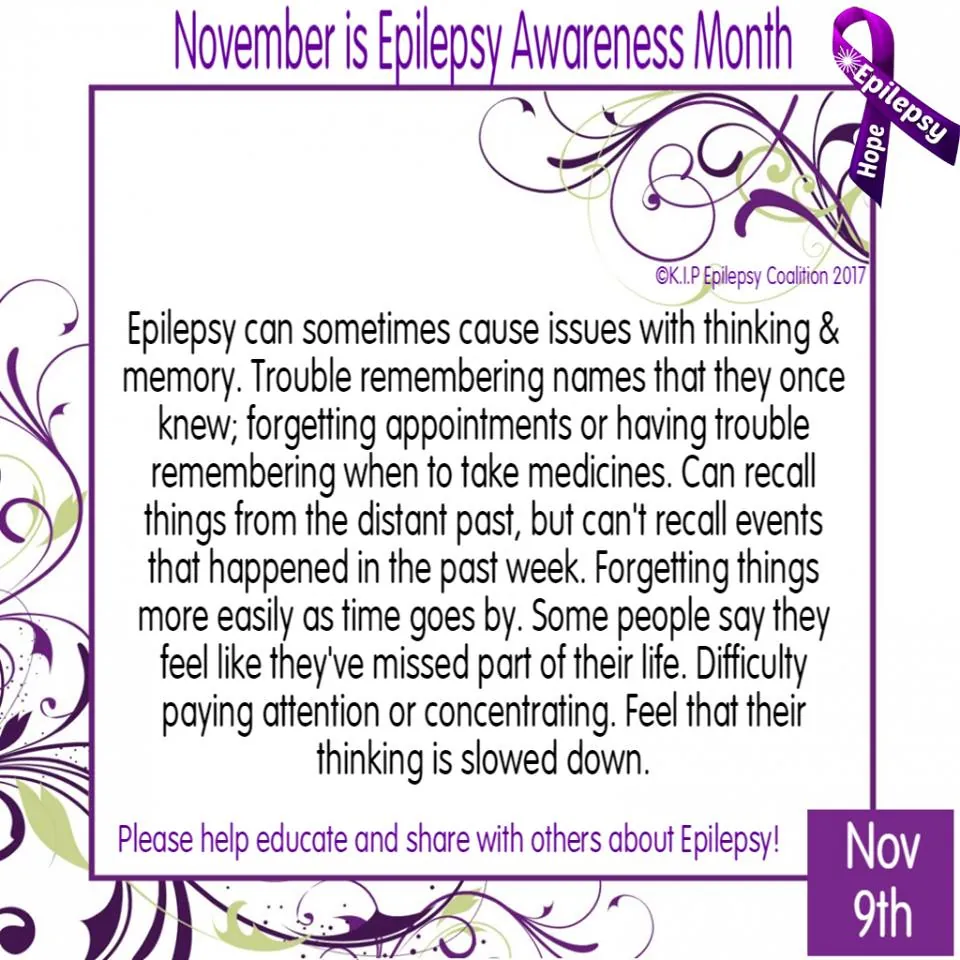
Day 9

A purple‑and‑white epilepsy‑awareness poster marks November as Epilepsy Awareness Month. Decorative floral patterns frame a purple ribbon labeled “Epilepsy Hope.” The text explains that epilepsy can affect thinking and memory — including trouble remembering names, forgetting appointments or medications, recalling distant memories more easily than recent ones, feeling like parts of life are missing, difficulty concentrating, and a general sense of slowed thinking. The poster encourages education and awareness, with “Nov 9th” in a purple box at the bottom.


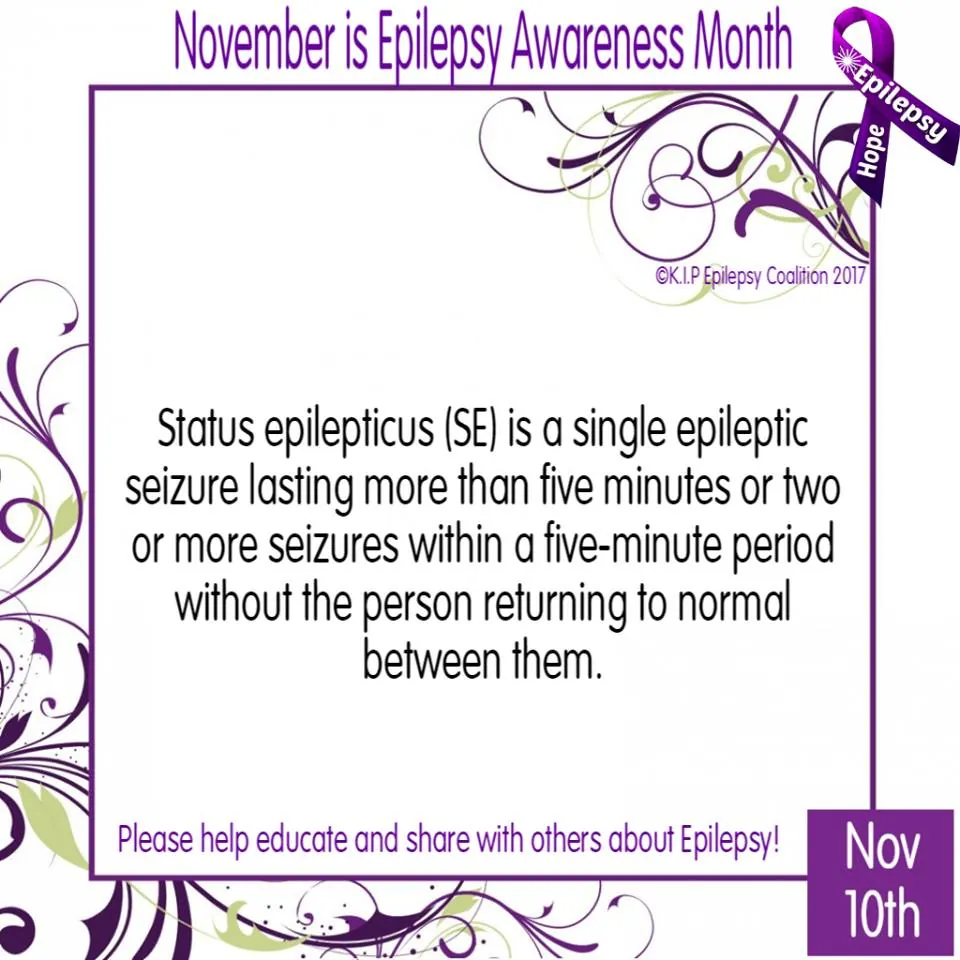
Day 10

A purple‑and‑green epilepsy‑awareness poster marks November as Epilepsy Awareness Month. Decorative swirls frame a purple ribbon labeled “Epilepsy Hope.” The text explains status epilepticus as a seizure lasting more than five minutes or repeated seizures without recovery in between. A purple box in the corner reads “Nov 10th,” and the poster encourages education and awareness.


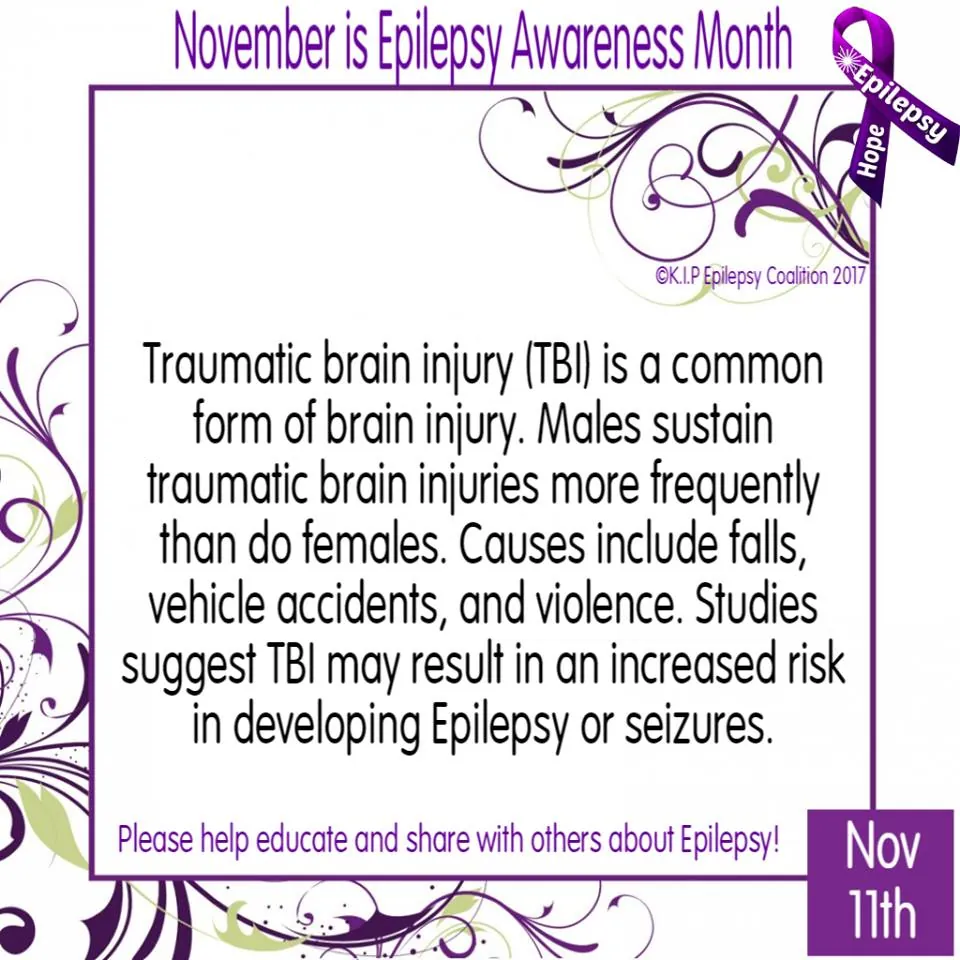
Day 11

A purple‑and‑green epilepsy‑awareness poster marks November as Epilepsy Awareness Month. Decorative floral designs frame a purple ribbon labeled “Epilepsy Hope.” The text explains that traumatic brain injury (TBI) is a common type of brain injury, occurring more often in males, with causes including falls, vehicle accidents, and violence. It notes that TBI can increase the risk of developing epilepsy or seizures. A purple box in the corner reads “Nov 11th,” and the poster encourages education and awareness.


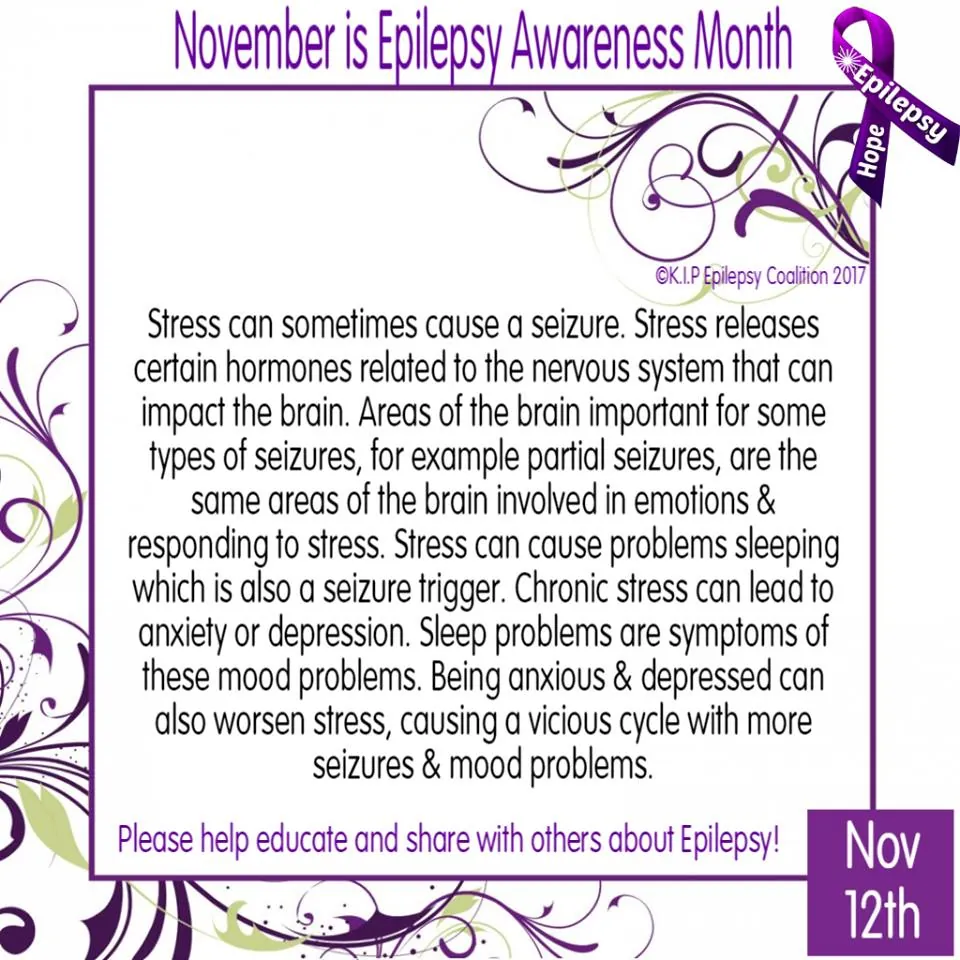
Day 12

A purple‑and‑green epilepsy‑awareness poster marks November as Epilepsy Awareness Month. Decorative floral designs frame a purple ribbon labeled “Epilepsy Hope.” The text explains how stress can contribute to seizures — through hormone release, effects on brain regions tied to emotion, disrupted sleep, and the cycle of anxiety or depression that can worsen both stress and seizure activity. A purple box in the corner reads “Nov 12th,” and the poster encourages education and awareness.


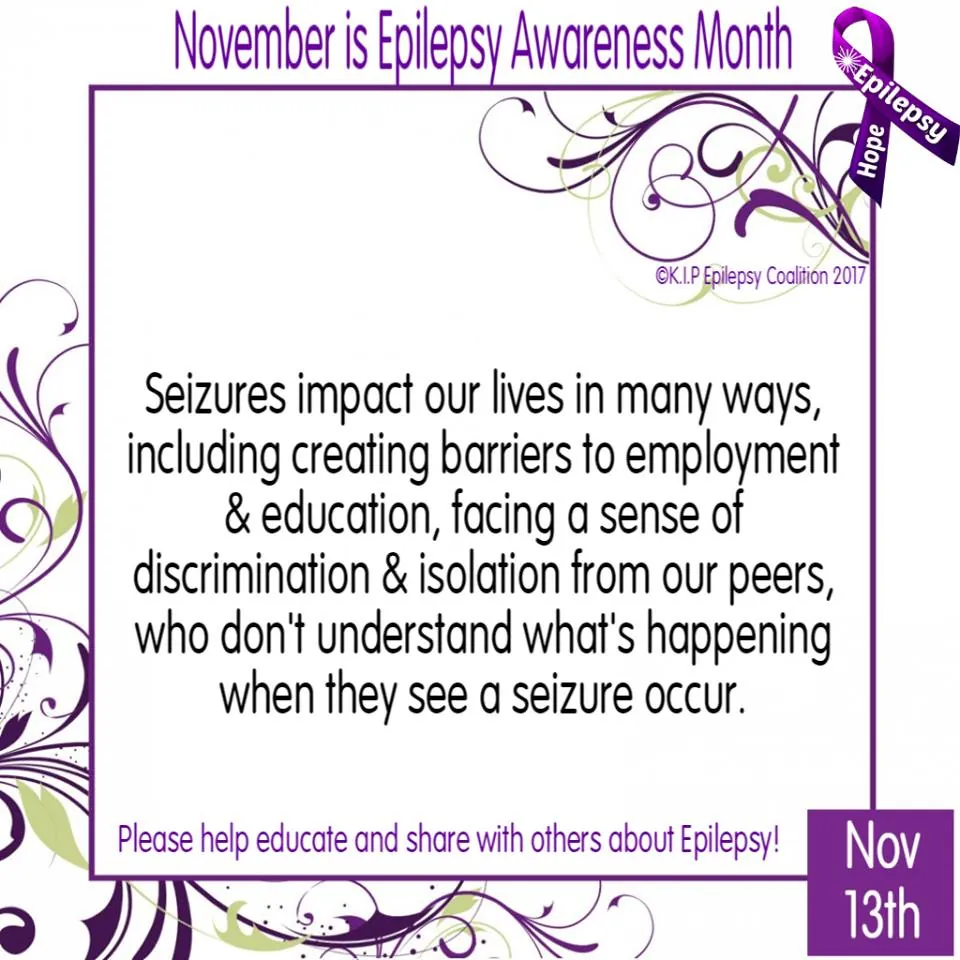
Day 13

A purple‑and‑green epilepsy‑awareness poster marks November as Epilepsy Awareness Month. Decorative swirls frame a purple ribbon labeled “Epilepsy Hope.” The text explains that seizures can affect daily life in many ways — creating barriers in employment and education, and contributing to feelings of discrimination or isolation when others don’t understand what they’re seeing during a seizure. A purple box in the corner reads “Nov 13th,” and the poster encourages education and awareness.


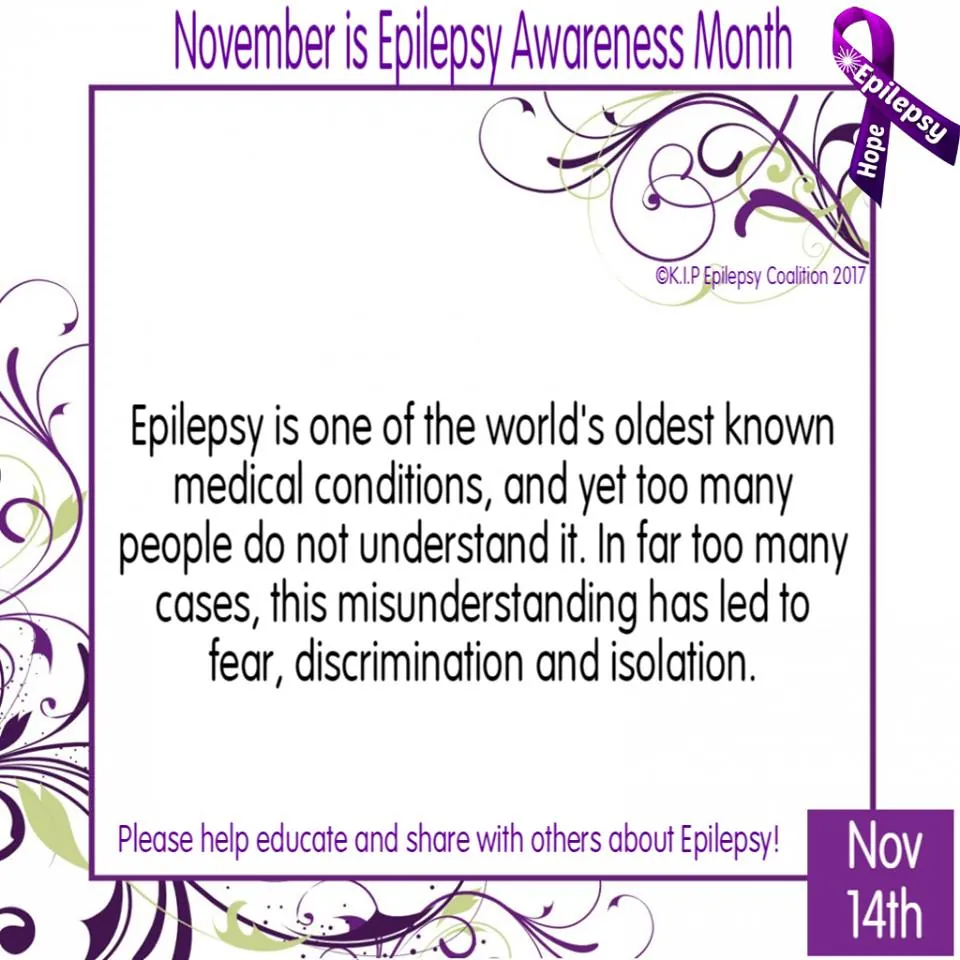
Day 14

A purple‑and‑green epilepsy‑awareness poster marks November as Epilepsy Awareness Month. Decorative swirls frame a purple ribbon labeled “Epilepsy Hope.” The text explains that epilepsy is one of the world’s oldest known medical conditions, yet misunderstanding still leads to fear, discrimination, and isolation for many people. A purple box in the corner reads “Nov 14th,” and the poster encourages education and awareness.


Day 15

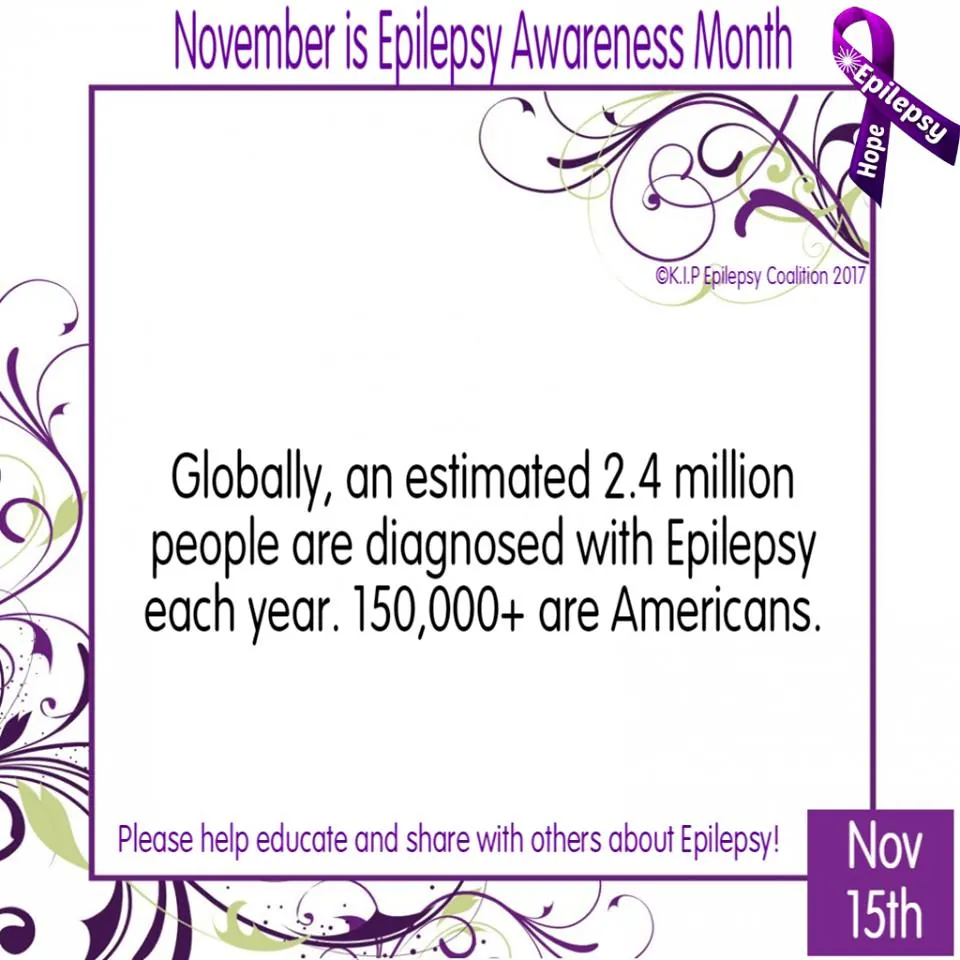
A purple‑and‑green epilepsy‑awareness poster marks November as Epilepsy Awareness Month. Decorative swirls frame a purple ribbon labeled “Epilepsy Hope.” The text shares global statistics, noting that an estimated 2.4 million people are diagnosed with epilepsy each year, including more than 150,000 in the United States. A purple box in the corner reads “Nov 15th,” and the poster encourages education and awareness.