• Post category:Educational / Epilepsy
  • Reading time:1 min read


This is Part 2 of the daily epilepsy facts that Stacy has been posting on James’ Facebook page and will include days 16 through 30. Click here to jump back to Part 1.

Thanks again, K.I.P. Epilepsy Coalition for creating these images for us to use to spread awareness about epilepsy.

And thanks to all of you that made a purchase in Stacy’s online Thirty-One fundraiser or made a donation directly to the Epilepsy Foundation Greater Chicago.

Day 16
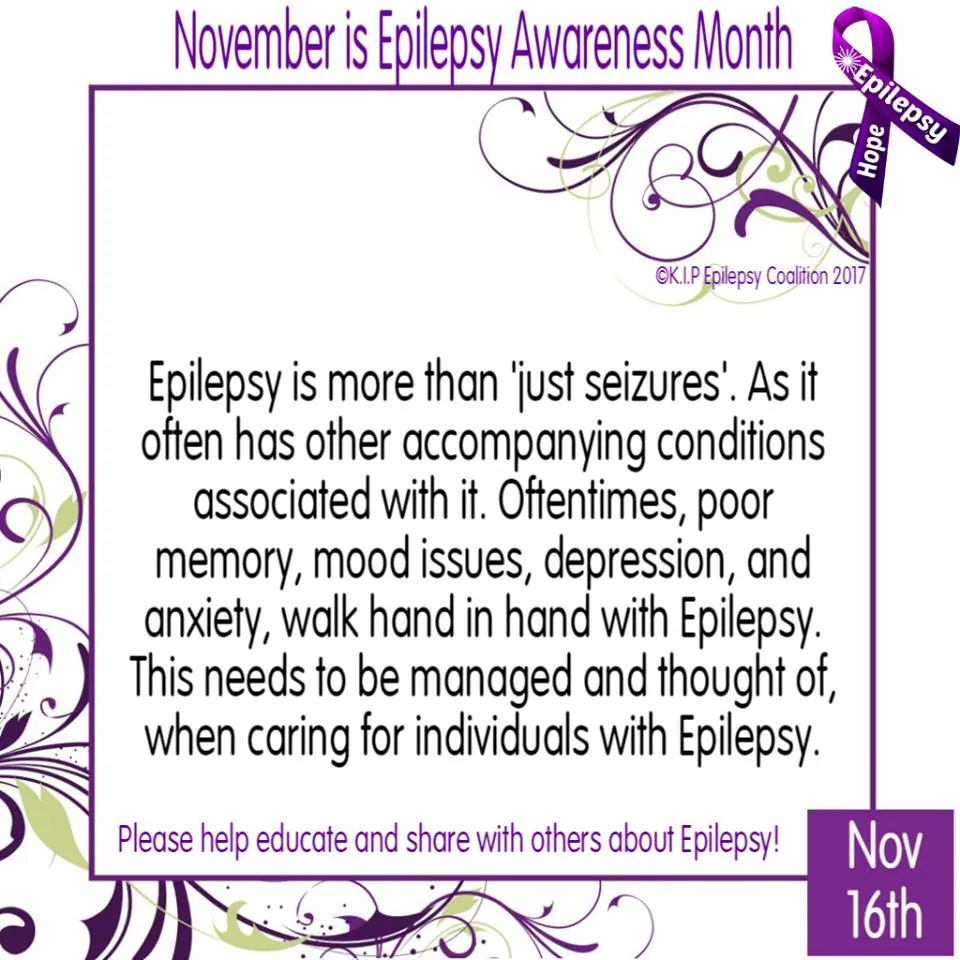
A purple‑themed epilepsy awareness poster features swirling green and purple designs and a purple ribbon labeled “Epilepsy Hope.” The text explains that epilepsy involves more than seizures, noting challenges such as memory issues, mood changes, depression, and anxiety, and encourages education and support. “November is Epilepsy Awareness Month” appears at the top, with “Nov 16th” highlighted near the bottom.


Day 17

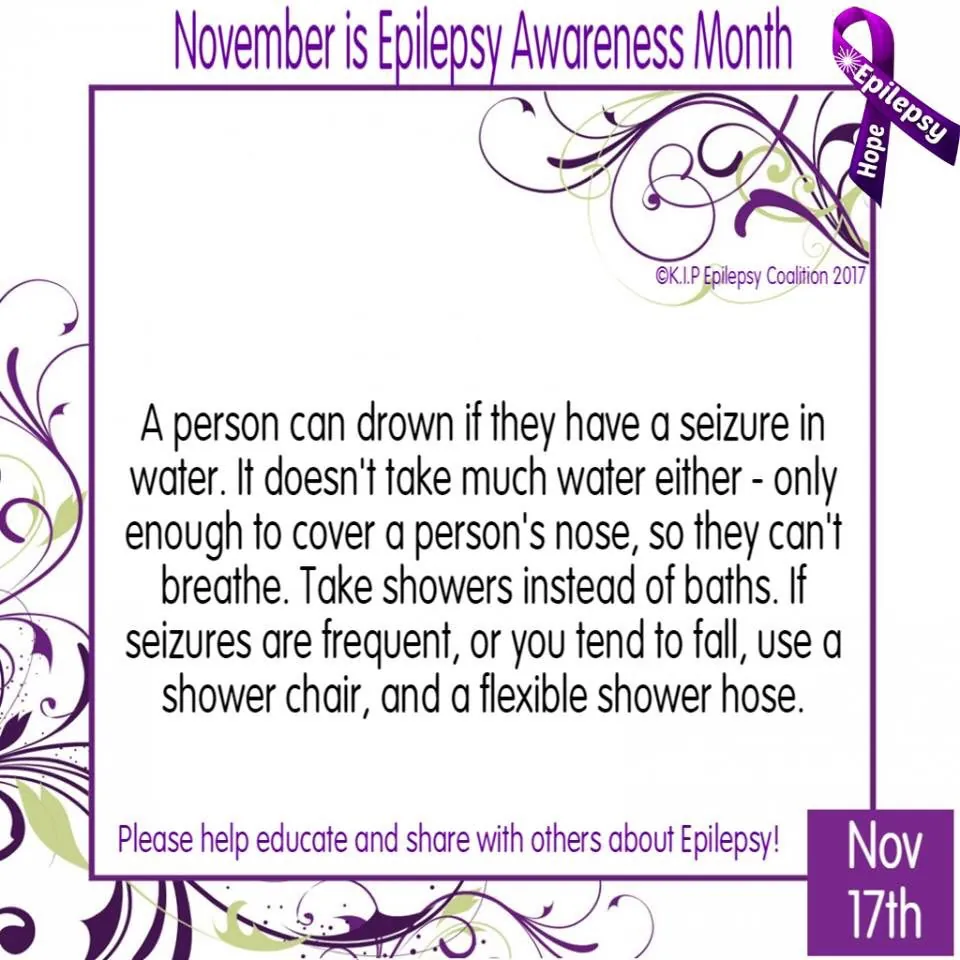
A purple‑themed epilepsy awareness poster features decorative green and purple floral designs and a purple ribbon labeled “Epilepsy Hope.” The text highlights November as Epilepsy Awareness Month and explains the risk of drowning during a seizure, recommending showers instead of baths and the use of a shower chair or flexible hose if seizures are frequent. A purple box in the lower right corner displays “Nov 17th.” The overall tone is educational and safety‑focused.


Day 18

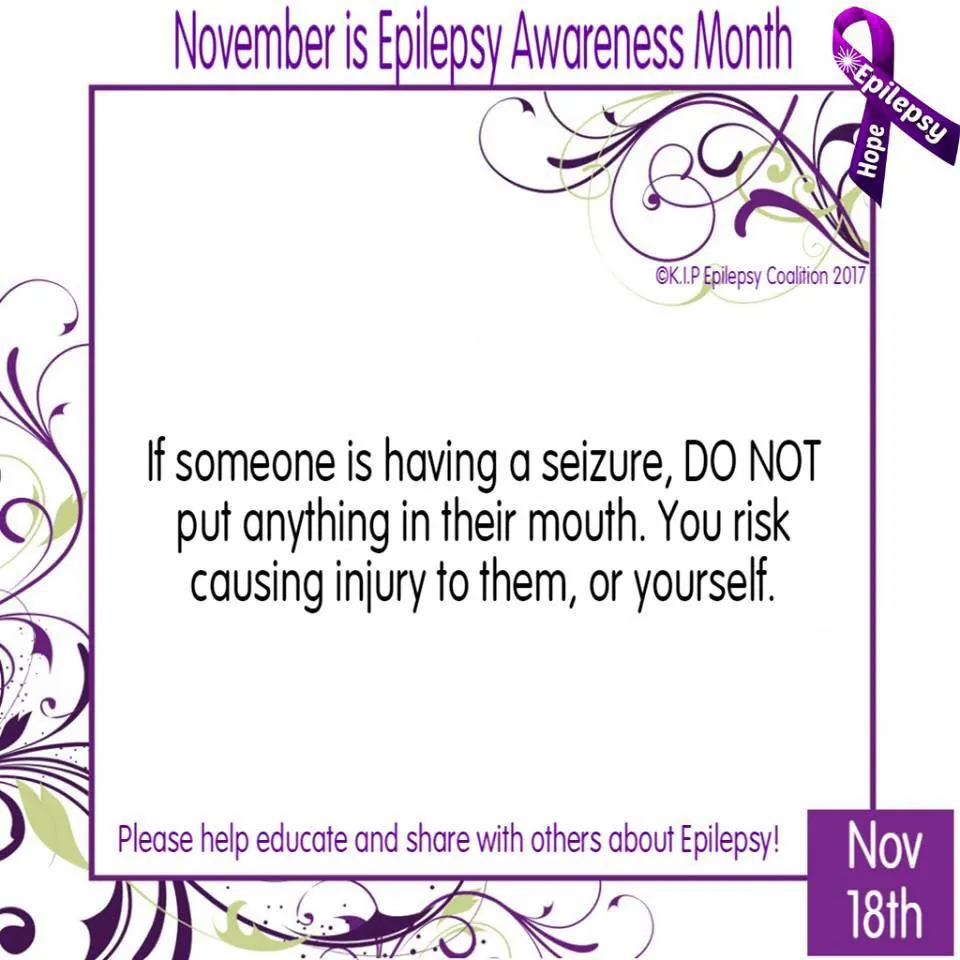
A purple‑themed epilepsy awareness poster features decorative green and purple floral accents and a purple ribbon symbolizing epilepsy awareness. The text highlights November as Epilepsy Awareness Month and explains that if someone is having a seizure, nothing should be placed in their mouth because it can cause harm. A note at the bottom encourages education and sharing, with “Nov 18th” displayed in a purple box.


Day 19

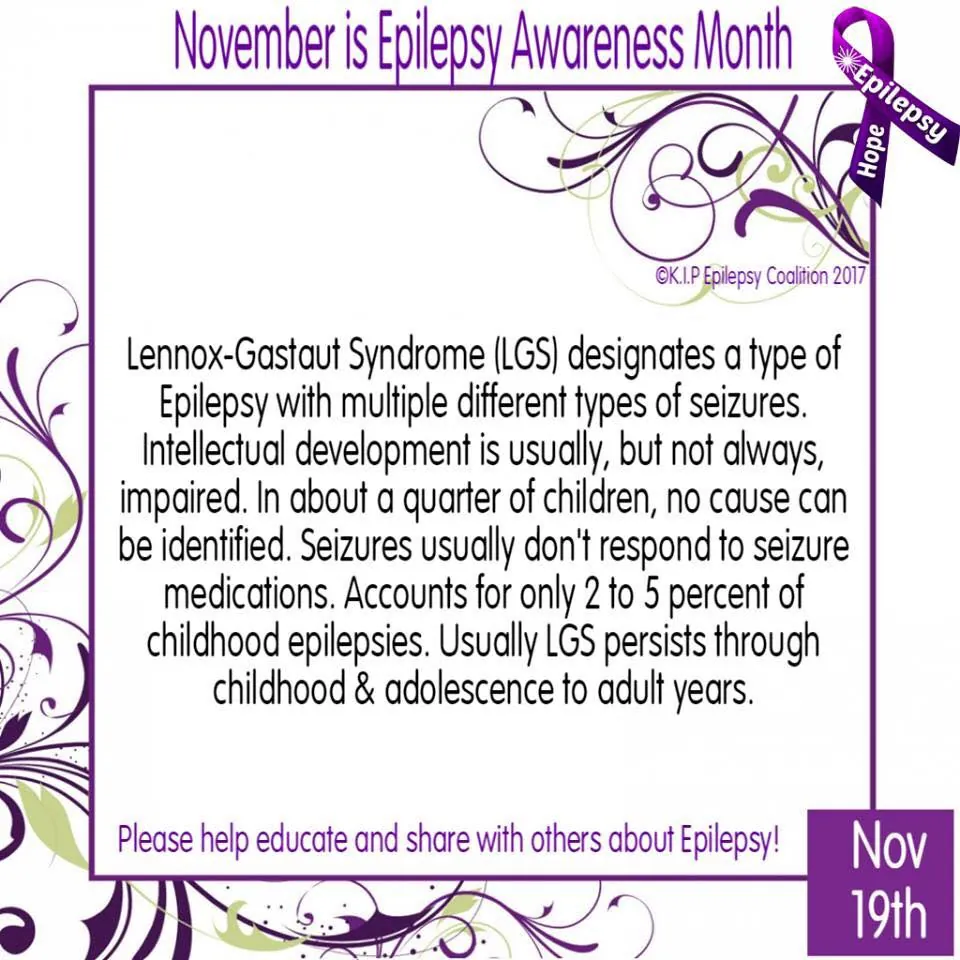
A purple‑themed epilepsy awareness poster features decorative floral designs and a purple ribbon labeled “Epilepsy Hope.” The text explains that Lennox‑Gastaut Syndrome (LGS) is a form of epilepsy involving multiple seizure types, often accompanied by intellectual impairment, with causes sometimes unknown and seizures that are typically resistant to medication. It notes that LGS accounts for a small percentage of childhood epilepsies and often continues into adulthood. A purple box in the lower right corner displays “Nov 19th,” and the poster encourages education and awareness.


Day 20

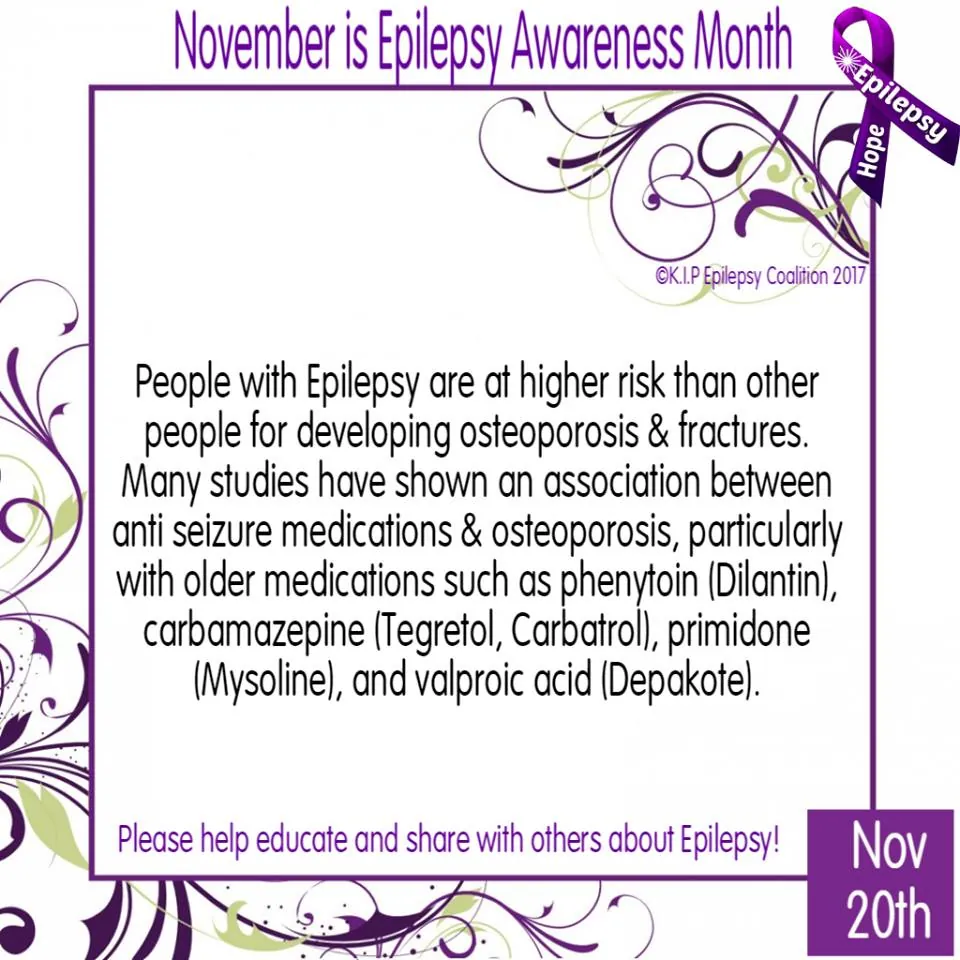
A purple‑themed epilepsy awareness poster features swirling green and purple decorative accents and a purple ribbon symbolizing epilepsy awareness. The text explains that people with epilepsy have a higher risk of osteoporosis and fractures, noting that several older anti‑seizure medications are associated with bone loss. A purple box in the lower right corner displays “Nov 20th,” and the poster encourages education and sharing during Epilepsy Awareness Month.


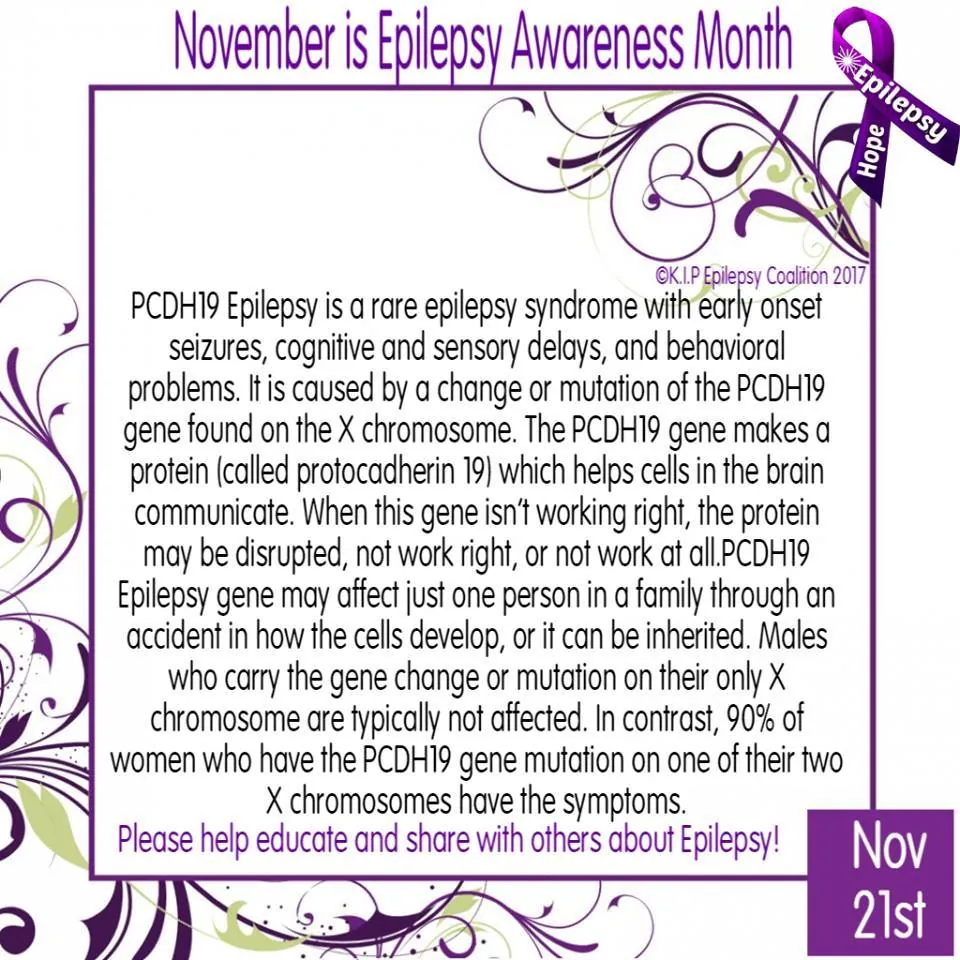
Day 21

A purple‑themed epilepsy awareness poster features decorative green and purple floral designs and a purple ribbon labeled “Epilepsy Hope.” The text explains that PCDH19 Epilepsy is a rare genetic epilepsy syndrome involving early‑onset seizures, cognitive and sensory delays, and behavioral challenges. It notes that the condition is caused by mutations in the PCDH19 gene on the X chromosome, affecting how brain cells communicate, and describes how the mutation can occur spontaneously or be inherited. The poster also explains that males with the mutation are typically unaffected, while most females with one mutated copy show symptoms. A purple date box reads “Nov 21st,” and the poster encourages education and awareness.


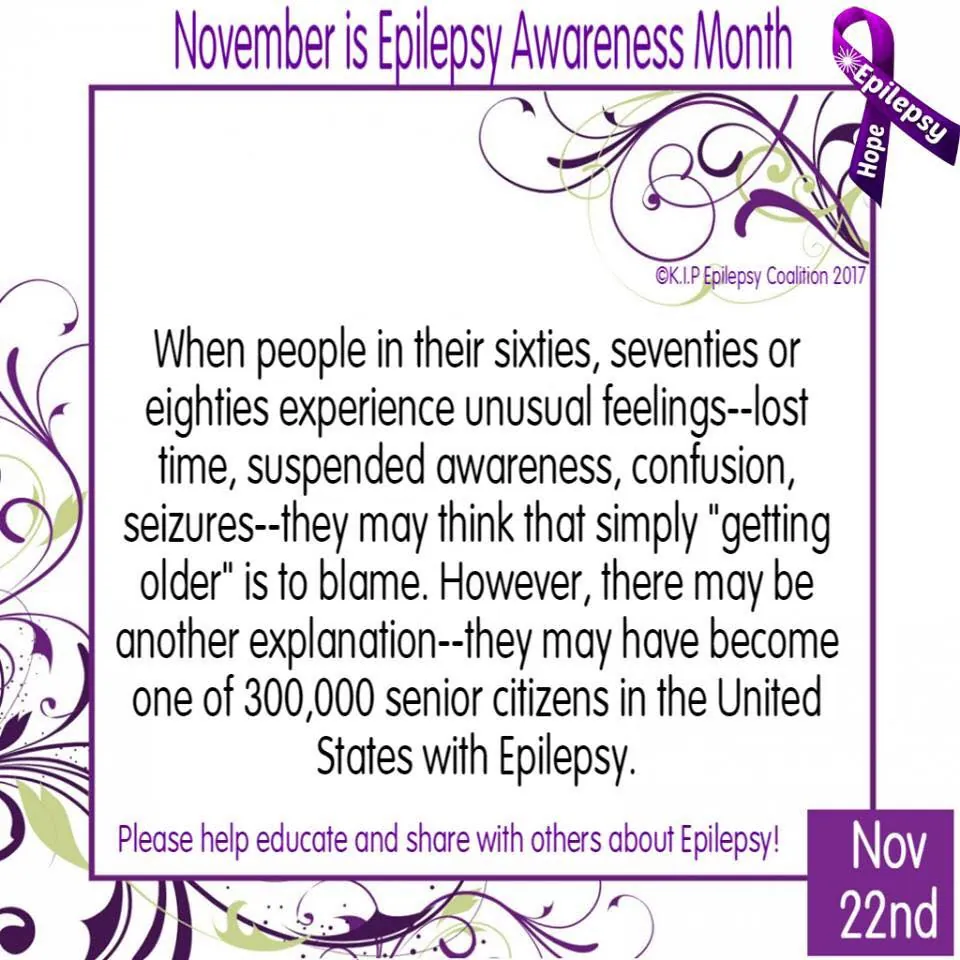
Day 22

A purple‑themed epilepsy awareness poster features decorative floral accents and a purple ribbon labeled “Epilepsy Hope.” The text explains that older adults who experience confusion, lost time, unusual sensations, or seizures may assume it’s simply aging, but these symptoms can indicate epilepsy. It notes that an estimated 300,000 senior citizens in the United States live with the condition. A purple box in the lower right corner displays “Nov 22nd,” and the poster encourages education and awareness.


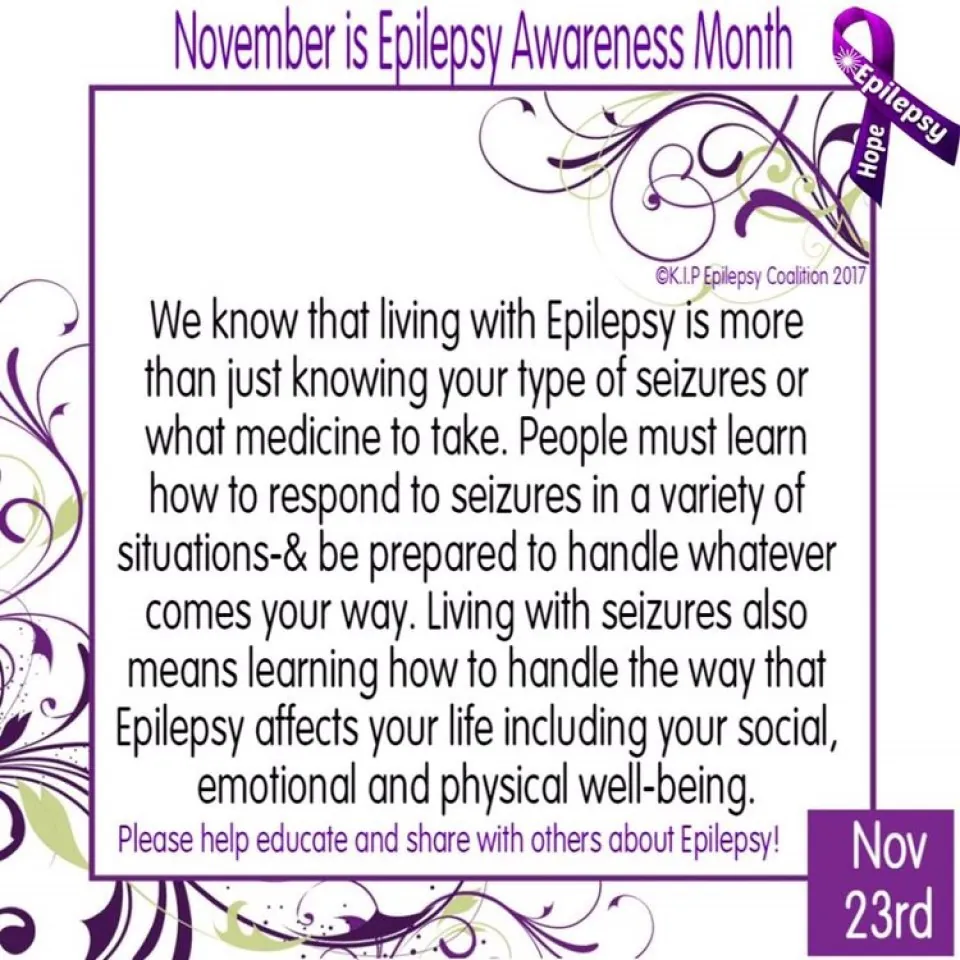
Day 23

A purple‑themed epilepsy awareness poster features swirling green and purple decorative accents and a purple ribbon labeled “Epilepsy Hope.” The text explains that living with epilepsy involves more than knowing seizure types or medications — it also requires learning how to respond to seizures in different situations and managing the social, emotional, and physical effects of the condition. A purple date box in the lower right corner reads “Nov 23rd,” and the poster encourages education and awareness.


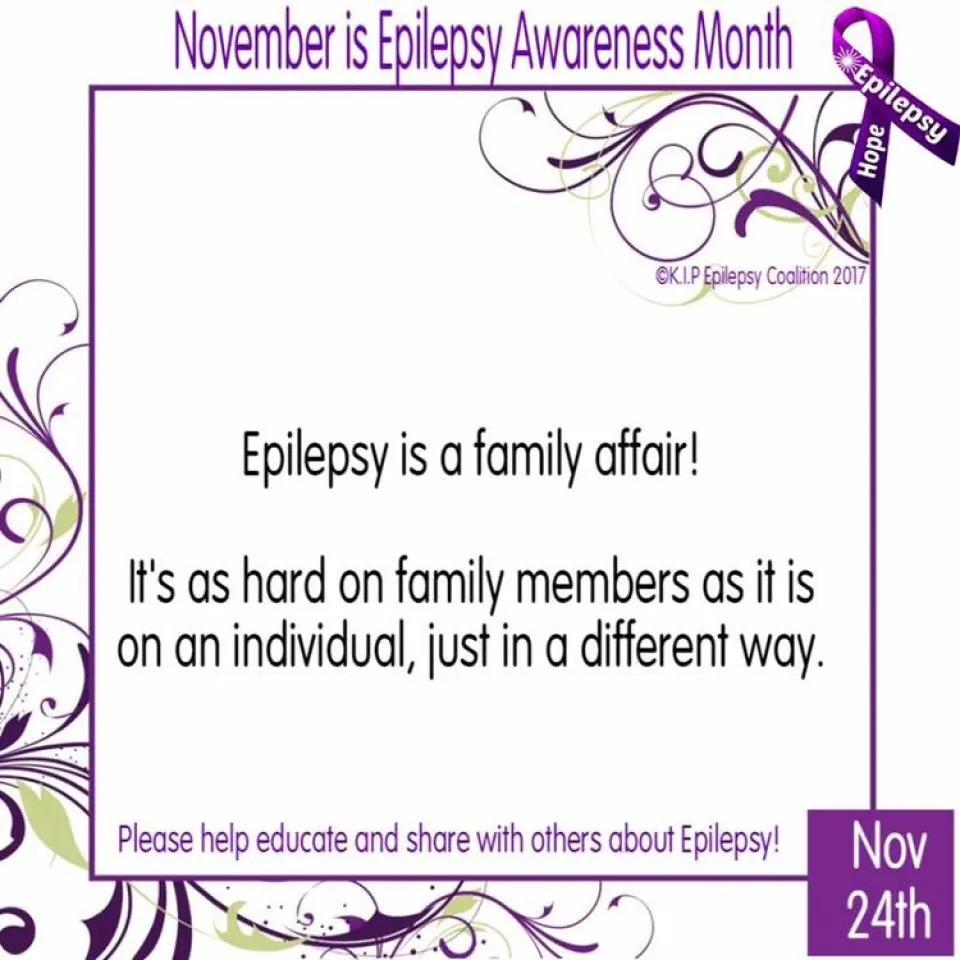
Day 24

A purple‑themed epilepsy awareness poster features decorative green and purple swirls and a purple ribbon labeled “Epilepsy Hope.” The text emphasizes that epilepsy affects the entire family, noting that while the challenges differ between the individual and their loved ones, the impact is shared. A purple date box in the lower right corner reads “Nov 24th,” and the poster encourages education and awareness.


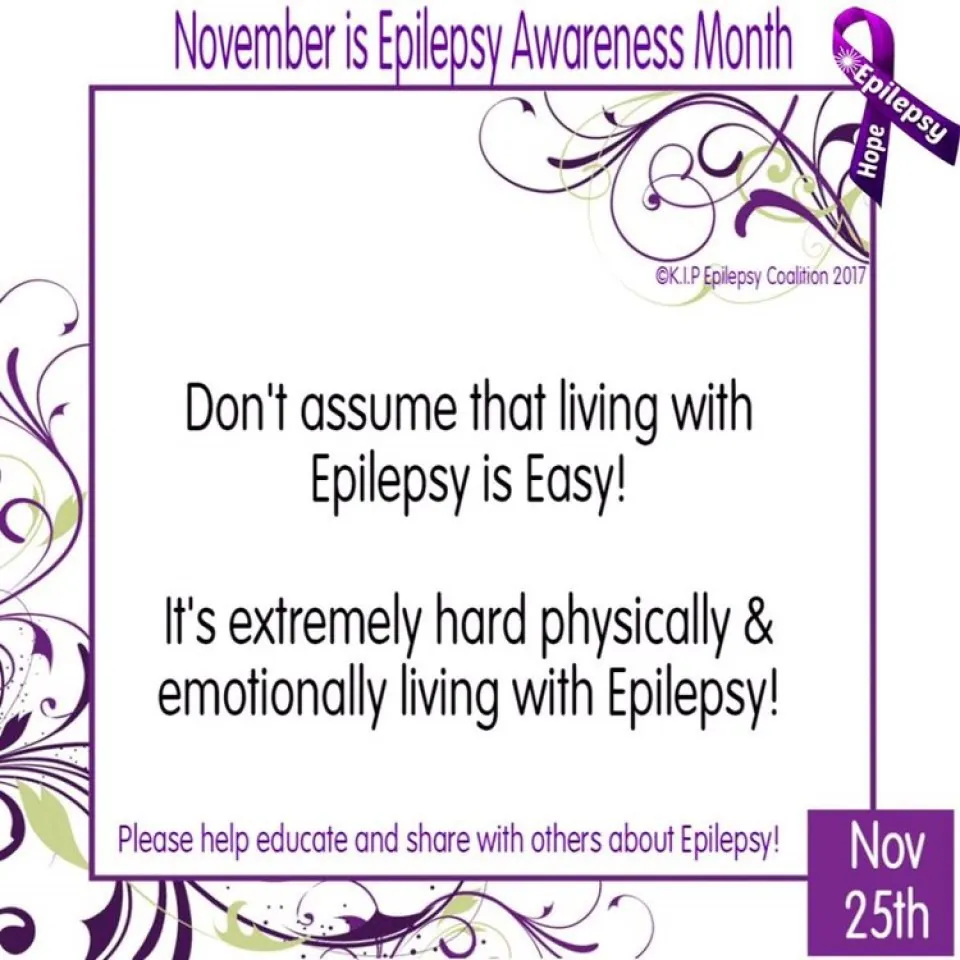
Day 25

A purple‑themed epilepsy awareness poster features decorative green and purple swirls and a purple ribbon labeled “Epilepsy Hope.” The text emphasizes that living with epilepsy is not easy, describing the physical and emotional challenges involved. A purple date box in the lower right corner reads “Nov 25th,” and the poster encourages education and awareness during Epilepsy Awareness Month.


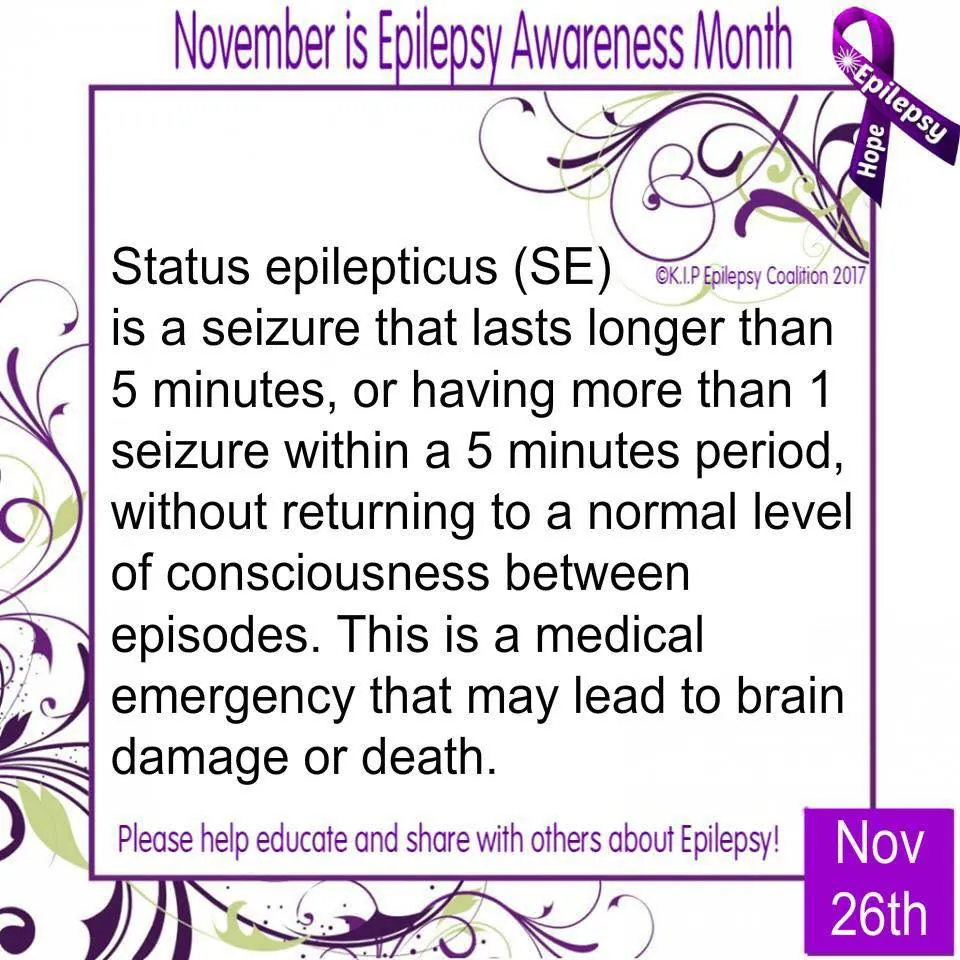
Day 26

A purple‑themed epilepsy awareness poster features swirling green and purple decorative accents and a purple ribbon labeled “Epilepsy Hope.” The text defines status epilepticus as a seizure lasting longer than five minutes or repeated seizures without recovery in between, noting that it is a medical emergency that can cause brain damage or death. A purple date box in the lower right corner reads “Nov 26th,” and the poster encourages education and awareness during Epilepsy Awareness Month.


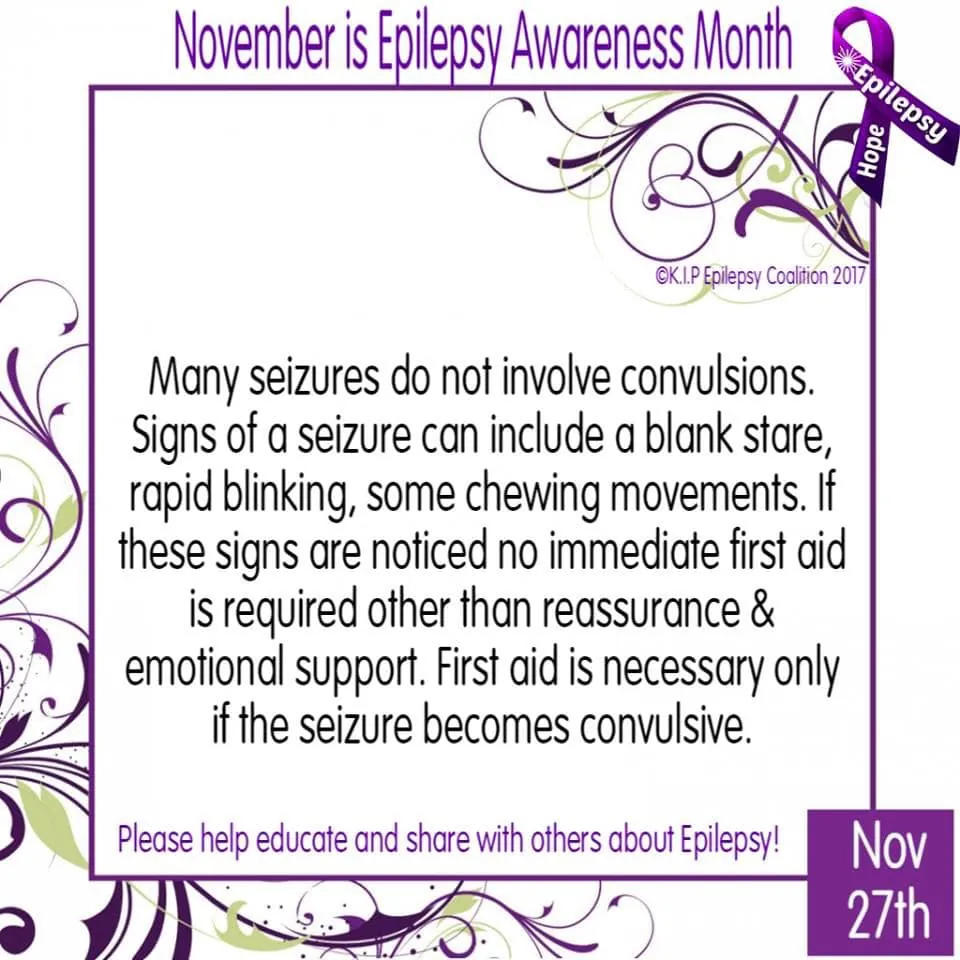
Day 27

  
A purple‑themed epilepsy awareness poster features decorative green and purple floral designs and a purple ribbon labeled “Epilepsy Hope.” The text explains that many seizures do not involve convulsions and may appear as a blank stare, rapid blinking, or chewing movements. It notes that reassurance and emotional support are usually sufficient unless the seizure becomes convulsive. A purple date box in the lower right corner reads “Nov 27th,” and the poster encourages education and awareness.


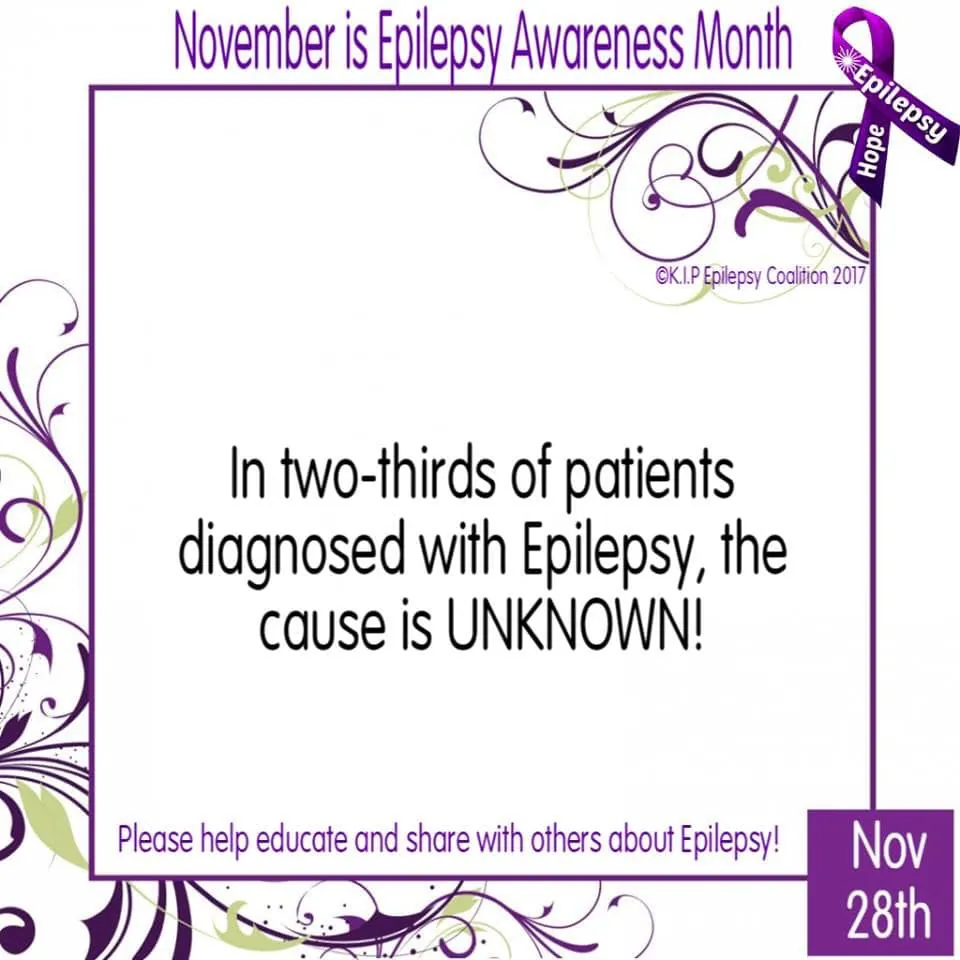
Day 28

A purple‑themed epilepsy awareness poster features decorative green and purple swirls and a purple ribbon labeled “Epilepsy Hope.” The text highlights that in two‑thirds of epilepsy diagnoses, the cause is unknown, emphasizing how common unexplained cases are. A purple date box in the lower right corner reads “Nov 28th,” and the poster encourages education and awareness during Epilepsy Awareness Month.


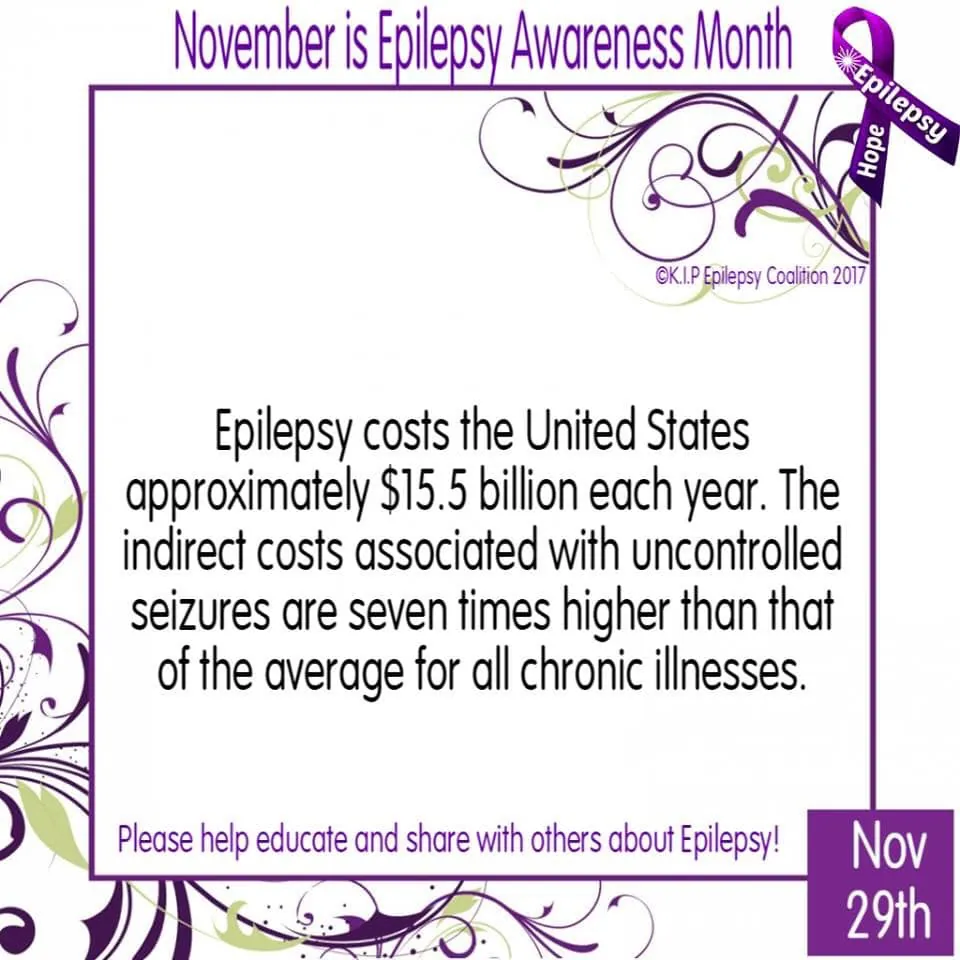
Day 29

A purple‑themed epilepsy awareness poster features swirling green and purple decorative accents and a purple ribbon labeled “Epilepsy Hope.” The text explains that epilepsy costs the United States an estimated $15.5 billion each year, noting that the indirect costs of uncontrolled seizures are significantly higher than those of most chronic illnesses. A purple date box in the lower right corner reads “Nov 29th,” and the poster encourages education and awareness.


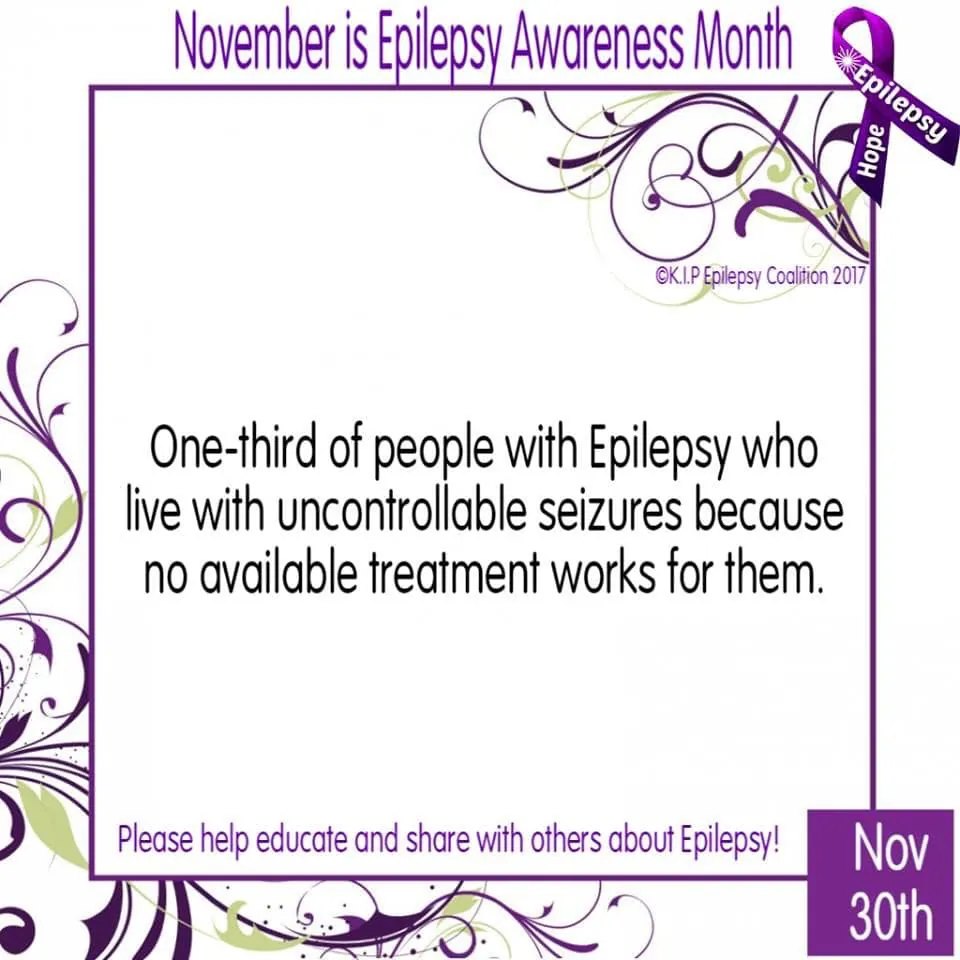
Day 30

A purple‑themed epilepsy awareness poster features swirling green and purple decorative accents and a purple ribbon labeled “Epilepsy Hope.” The text explains that one‑third of people with epilepsy live with seizures that cannot be controlled by any available treatments. A purple date box in the lower right corner reads “Nov 30th,” and the poster encourages education and awareness during Epilepsy Awareness Month.